
Exploring the Historical Impact of RSS in Delhi: A Documentary Insight

Significant Expansion of RSS in Delhi and Punjab
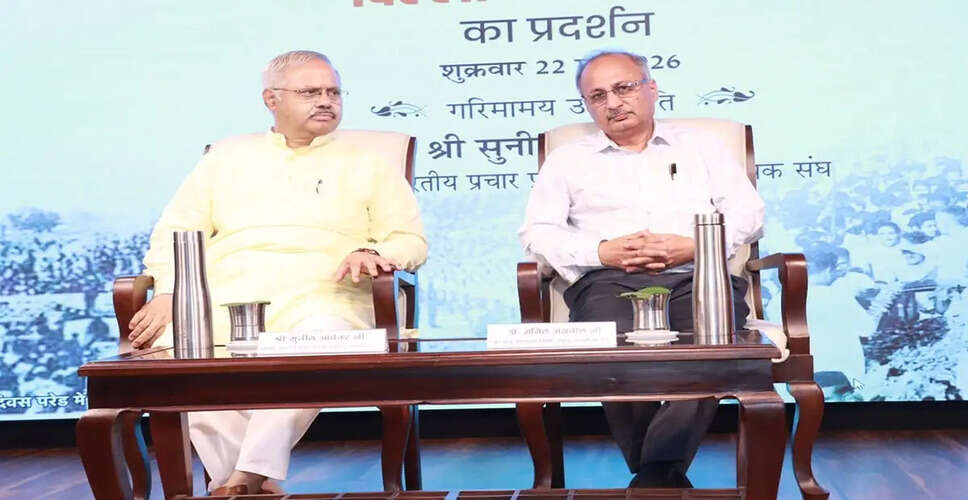
In New Delhi, Sunil Ambekar, the All India Publicity Chief of the Rashtriya Swayamsevak Sangh (RSS), highlighted the rapid and profound growth of the organization in Delhi and across Punjab between 1942 and 1947. He noted that many individuals began to engage actively with the RSS, but the organization's influence was not strong enough to prevent the partition of the country. Ambekar spoke during the screening of the documentary 'Delhi Mein Sangh Yatra' at the Indraprastha World Dialogue Center on May 22, 2026.
Protection of Hindus During Partition
He emphasized that as depicted in the documentary, the directive from Guruji at that time was to ensure the complete safety of Hindus in the newly formed Pakistan, with volunteers committed to their protection until the last individual could return safely. The sacrifices and hardships endured by countless volunteers during this period are immeasurable. Numerous camps were established for the displaced, housing millions. While chaos reigned in August 1947, Guruji was in Karachi, guiding volunteers on how to safeguard the Hindu community.
RSS's Cultural Mission
Ambekar remarked that if Dr. Hedgewar, the founder of the RSS, had intended to engage in politics, he would have formed a new political party. Instead, his goal was to uplift society and foster a cultural renaissance, which led to the establishment of the RSS. The organization's mission has always been to serve society, strengthen it, and instill confidence in the nation through self-reliance.
Historical Roots of RSS in Delhi
He pointed out that the RSS's activities in Delhi began during its formative years, initiated by Dr. Hedgewar himself. Thus, the history of the RSS is deeply intertwined with its operations in Delhi over the past century.
Delhi's Role in National Events
Over the years, significant events in the country have underscored Delhi's importance, and the RSS's contributions in this context have been noteworthy. As the political center of power, Delhi has remained a hub for party politics even after independence. During this time, the RSS has operated through its branches as a social and cultural organization, aiming to unite society beyond just its programs.
Key Features of RSS Work
On this occasion, Dr. Anil Agarwal, the Delhi Province Chief of the RSS, mentioned that continuity and adaptability are hallmarks of the organization's work.
Documentary Highlights RSS Journey
Ritesh Agarwal, the publicity chief of RSS Delhi Province, stated that the documentary presented by the Indraprastha World Dialogue Center narrates the story of the RSS's inception and expansion in Delhi through evidence, memories, and historical events. It illustrates the journey from the first branch in Delhi to the organization's extensive growth today, capturing the pain of partition and the efforts made by the RSS during that tumultuous time.
Research and Interviews for the Documentary
Agarwal shared that over 60 senior workers from Delhi were formally and informally interviewed for the special issue of the magazine 'Rashtra Seva Ke 100 Varsh' and the documentary. More than 85 books were reviewed, along with articles and newspapers, and materials were gathered from various archives. The research involved reviewing over 100 hours of video footage, including old videos and interviews from the Indraprastha World Dialogue Center's archives, as well as speeches and interviews from former RSS officials.
Notable Attendees at the Event
The event was graced by the presence of Ashok Porwal, Secretary of the RSS Central Office, Vishal, RSS Delhi Province Publicity Chief, Rajesh, RSS Delhi Province Co-Organizer, Dilip, a member of the RSS Central Office Management Team, and Rajveer, Secretary of the RSS North Zone Office.