
Exploring the Hajj Journey: Memoirs of Assamese Women Pilgrims

A Unique Collection of Hajj Memoirs
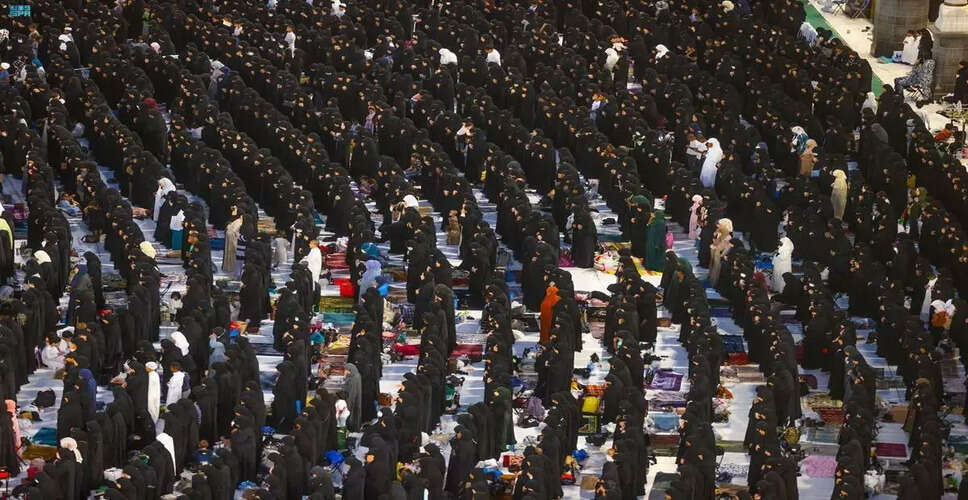
File image of women Hajj pilgrims. (Representational picture/theholymosques/X)
New Delhi, Sep 27: A newly released book compiles the poignant Hajj experiences of eleven women from Assam, addressing a range of real-life issues, practical insights, and emotional reflections tied to their pilgrimage.
In Her Hajj Story, authored by journalist Teresa Rehman and published by Speaking Tiger, these women embody various roles—mothers, daughters, sisters, grandmothers, professionals, and community representatives.
Their stories, often referred to as "Hajj yatras" or "Hajj kathas", were primarily intended for private sharing among family and friends.
Rehman notes that while these narratives may not find a place in history books, they are powerful testimonies of bravery, compassion, healing, and personal agency that deserve to be shared.
"In Assam and Meghalaya, it is a cherished tradition for Muslim women to document their Hajj experiences. These memoirs, mostly written in Assamese and one in Bangla, were typically circulated privately among loved ones," Rehman explains.
Many of these women painstakingly penned their stories by hand, had them typeset, and then sent them to printing houses.
"Over time, some tales have faded from memory, while others have transformed into local legends, retold countless times," she adds.
Rehman emphasizes that these unscripted narratives, often shared in intimate settings, are profound and reflective, creating a serene and contemplative image of a sacred place.
She gathered these memoirs from various sources, stating, "Through a mix of borrowing and persistence, I compiled an extensive collection of women-authored Hajj memoirs, some dating back to when travel was undertaken by ship from Mumbai due to the absence of flights."
"Most families had only one copy, and they reluctantly provided me with a photocopy instead," she recalls.
The process of working on these memoirs was intricate. Besides translating the original writings, Rehman also transcribed oral histories collected through interviews with the authors' families and friends.
She describes these women as resilient, courageous, and articulate writers. "Delving into their stories has been a nostalgic journey, filled with cherished family histories and the richness of diverse experiences, alongside my own rediscovery of a faith I was born into," she reflects.
Syeda Suraiya Begum, who served at the Food Corporation of India, authored Ebaar Jumi Sao (Let Us Have a Glance) after her Hajj pilgrimage in 2015, aiming for a title that felt more accessible. She printed 1,000 copies of her bilingual memoir.
The memoirs also capture the varied experiences of women who traveled by ship. For instance, Zebunissa, a single woman, faced challenges in finding a mehram to accompany her when her designated companion backed out at the last moment.
Sirajun Nessa, a well-known social worker, penned a concise booklet resembling a survival guide about her sea journey for Hajj.
The mother-daughter pair, Syeda Sakina Ashraf and Ayesha Ashraf Ahmed, both documented their Hajj experiences separately with their husbands at different times.
Khairun Nessa Choudhury, a poet, author, social worker, and politician, shares her observations with a touch of humor in her memoir.
Jahanara Hazarika, now in her 90s, hopes her memoir will motivate others to undertake the Hajj pilgrimage.
Mallika Rahman, a social worker from Jorhat who manages an old age home, recounts her prayers at holy sites for the residents, who are women from various faiths.