
Exploring the Cinematic Legacy of Rainer Werner Fassbinder


A Glimpse into Fassbinder's Impact
Choosing just one film from the extensive works of Rainer Werner Fassbinder is a daunting task. The influential German filmmaker passed away in 1982 at the young age of 37, leaving behind an impressive legacy that includes 40 films, 24 plays, and two television series. While his death was attributed to a possible drug overdose, a close collaborator noted in the 2015 documentary Fassbinder: To Love Without Demands that overwork was likely a significant factor.
Fassbinder's Prolific Career
From 1969 onwards, Fassbinder emerged as a pivotal figure in the German New Wave, consistently challenging societal norms surrounding marriage, family, sexuality, politics, and capitalism. His multifaceted talents encompassed writing, directing, acting, producing, cinematography, and editing.
His extensive body of work, often featuring a recurring ensemble of talented actors, is marked by raw honesty, sharp critique, and dark humor that continues to resonate. Films like Katzelmacher (1969) and Ali: Fear Eats the Soul (1974) tackle themes of xenophobia through the experiences of a Greek and an Arab immigrant, respectively.
Exploring Gender Dynamics
In The Bitter Tears of Petra Von Kant (1972) and Martha (1974), Fassbinder meticulously examines the dynamics of power among women and between genders. Margit Carstensen, a frequent collaborator, portrays characters who both inflict and endure various forms of humiliation.
Chinese Roulette (1976) delivers a scathing critique of bourgeois family life through the lens of a sadistic young girl who compels her parents and their lovers to confront their deepest secrets.
The BRD Trilogy: A Turning Point
Fassbinder's earlier raw aesthetic evolved into a more refined style by the time he created the BRD trilogy, which offers a nuanced critique of the post-WWII German economic boom through the narratives of three complex women. Lola (1981) serves as a cynical reinterpretation of Josef von Sternberg’s The Blue Angel (1930), while the striking black-and-white Veronika Voss (1982) explores the decline of a drug-dependent former star.
The Marriage of Maria Braun
The trilogy begins with The Marriage of Maria Braun (1979), featuring the remarkable Hanna Schygulla. Their collaboration was significant until a fallout over payment issues. Schygulla previously starred in Katzelmacher, where she is part of a group of friends in Munich disrupted by a Greek immigrant's arrival.
Among her notable performances with Fassbinder is Effie Briest (1974), an adaptation of Theodor Fontane’s novel. Schygulla's portrayal in The Marriage of Maria Braun is compelling, set against a backdrop of explosions and chaos.
Maria's Journey
The film opens in 1943, shortly after Maria's wedding, when her husband Hermann (Klaus Lowitsch) is called to war and presumed dead. Living with her widowed mother and grandfather, Maria frequently visits the train station, hoping to see Hermann return. However, she soon adopts a pragmatic approach to survive in a harsh new economy.
“I prefer to make miracles rather than wait for them,” she asserts, leading her to make tough decisions, including taking a black American soldier, Bill (George Byrd), as her lover.
Navigating Ambition and Survival

Maria acknowledges, “This is no time for feelings,” as she transitions to a relationship with businessman Oswald (Ivan Desny), who provides her with the wealth and status she desires. Hermann eventually returns but is imprisoned for a crime Maria commits, yet he remains a guiding figure in her life.
“I am a master of disguises; a tool of capitalism by day and an agent of the working class by night,” she tells the husband of her childhood friend, showcasing her dual existence.
Fassbinder's Themes of Reconstruction

Fassbinder's works often reflect on the personal costs associated with Germany's post-war recovery. In Maria Braun, the film's climax poignantly illustrates the sacrifices made in pursuit of material success and the erasure of a Nazi-influenced past.
The film's ambiguous ending has sparked much discussion, yet it is clear that Maria is determined to shape her own fate. From the moment she discards her husband's name and chooses to exploit her sexuality for advancement, she asserts her agency.
A Lasting Legacy
“I am the Mata Hari of the economic miracle,” she declares, and Schygulla's portrayal of Maria's emotional journey stands out as one of her finest performances.
Maria Braun is often regarded as one of Fassbinder’s most accessible films, produced during a time when he gained significant recognition from American audiences and critics.
His filmography during this period also includes English-language works like Despair (1978) and Querelle (1982), showcasing his exploration of complex themes. Maria Braun marked one of his final collaborations with the talented cinematographer Michael Ballhaus, who later found success in Hollywood.
Diverse Works to Explore
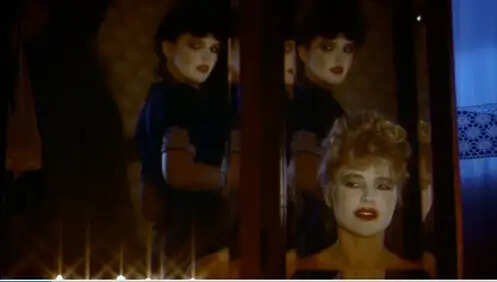
Fassbinder's extensive oeuvre allows for entry points into his cinematic world from 1969 to 1982. Films like The Merchant of Four Seasons (1971) and Beware of a Holy Whore (1971) offer insights into his unique storytelling style.
For those new to Fassbinder, the BRD trilogy serves as an excellent introduction, showcasing his mastery and the recurring themes that define his impactful career.