
Experts Affirm Gradual Transition to E20 Ethanol Blending in India

E20 Ethanol Blending Programme Explained
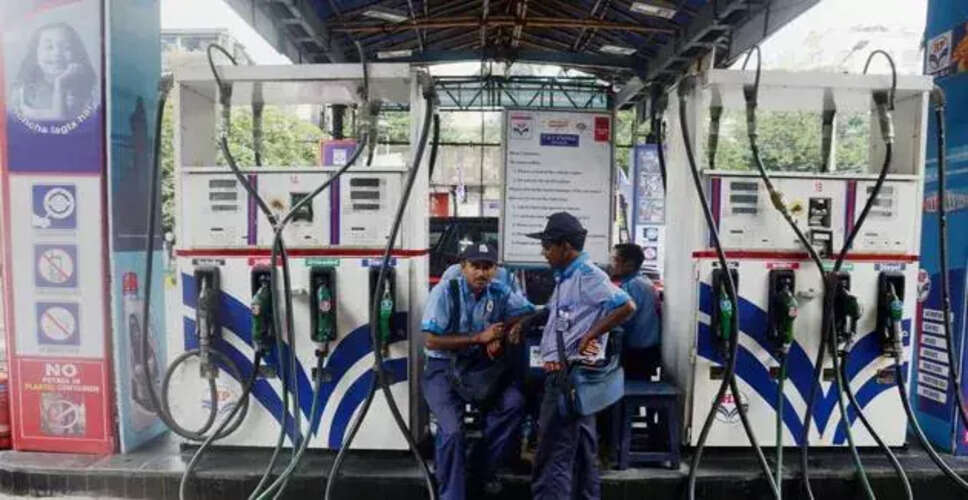
File image of a petrol pump. (Photo:PTI)
New Delhi, July 4: Following a comprehensive response from the government regarding misinformation about India's E20 ethanol blending initiative, industry experts in the automotive and energy sectors emphasized that the shift to ethanol-blended petrol has been a gradual process, scientifically validated, and thoroughly tested.
During a press conference, Rahul Bharti, Senior Executive Officer (Corporate Affairs) at Maruti Suzuki India Ltd., clarified that the introduction of E20 fuel was not abrupt but rather a phased implementation.
"In recent days, we have encountered various doubts and concerns regarding ethanol usage in vehicles. India mandated E20 for compliance starting in 2023, with E10 being the standard prior to that. After 2023, both vehicles and fuel will adhere to E20 standards," Bharti explained.
Vartika Shukla, former Chairman and Managing Director of Engineers India Ltd., noted that the ethanol blending initiative was executed systematically, involving consultations with stakeholders and supported by scientific data.
She highlighted that India began blending approximately 1.5% ethanol with petrol in 2013-14, aiming for a 20% blend, which is expected to be achieved by December 2025, five years ahead of the original timeline.
"The program was developed methodically, opened for discussions among stakeholders, and is backed by scientific research and extensive testing by automotive manufacturers, the Automotive Research Association of India (ARAI), and SIAM, aligning with global best practices to reduce carbon emissions," Shukla stated.
Vikram Gulati, Country Head and Executive Vice President (Corporate Affairs and Governance) at Toyota Kirloskar Motor, emphasized that the automotive sector adheres to strict regulatory standards before introducing any vehicle or fuel specifications.
"The testing process is rigorous, involving not just the original equipment manufacturers (OEMs) but also certification and homologation before a vehicle is launched. In light of climate change and the need for rapid decarbonization, ethanol serves as a zero-carbon fuel derived from plants," Gulati remarked.
These comments followed a 10-point clarification issued by the Ministry of Petroleum and Natural Gas, which dismissed various claims regarding the E20 program, including assertions that ethanol production consumes excessive water, damages engines, invalidates insurance, and harms the environment.
The ministry asserted that the initiative is supported by scientific research, international experiences, and regulatory measures. It refuted claims that producing one liter of ethanol requires 10,000 liters of water, stating that only surplus rice, after fulfilling national food security needs, is utilized for ethanol production. Furthermore, it noted that ethanol distilleries use approximately 3-5 liters of processed water for each liter of ethanol produced and are increasingly implementing Zero Liquid Discharge systems for water recycling.
Additionally, the ministry mentioned that maize, which constitutes over 40% of the ethanol supplied under the program, requires significantly less irrigation compared to paddy and is being encouraged through higher minimum support prices.