
Exciting Discovery: Royal Bengal Tiger Spotted in Himachal Pradesh's Khara Forest

Significant Sighting in Khara Forest
Munish Sood
Mandi
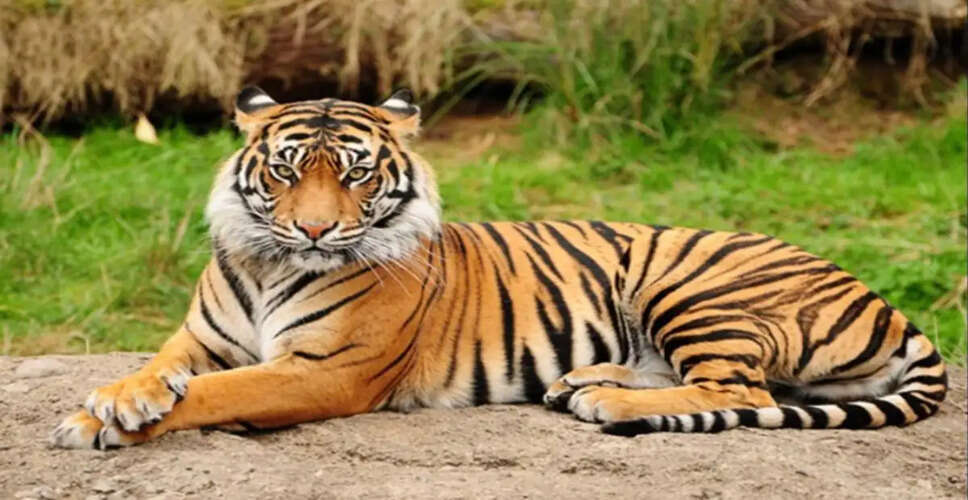
The recent confirmation of a Royal Bengal Tiger in the Khara forest area of Paonta Sahib has sparked considerable enthusiasm among wildlife advocates and forestry officials, marking a pivotal moment for biodiversity efforts in Himachal Pradesh. The rare appearance of India's national animal in this region has led to increased vigilance from forest authorities in both Himachal Pradesh and the adjacent Uttarakhand.
The tiger's presence was verified through a camera trap set up in the Khara Block on June 18, indicating its existence in a location where such sightings are notably uncommon. Officials noted that claw marks on nearby trees suggest the tiger had been in the vicinity for at least two to three days.
Enhanced Monitoring Efforts
In response, the Forest Department has ramped up surveillance by installing additional camera traps throughout the forest range. Authorities suspect that this tiger may be the same one that went missing from Rajaji National Park nearly a year ago.
Considering that Rajaji National Park is located about 80 kilometers from Khara, wildlife specialists believe it is feasible for a tiger to traverse between the two states via forest corridors. Forest officials from both Himachal Pradesh and Uttarakhand are collaboratively tracking the animal's movements.
It remains unclear whether the tiger is male or female. The administration of Rajaji National Park has been notified, and a team of wildlife experts is anticipated to visit the area soon.
Community Awareness Initiatives
Understanding the necessity of public awareness, the Forest Department held a meeting with local villagers and Panchayat representatives at the Khara Forest Rest House. During this gathering, officials urged residents to stay calm, avoid panic, and adhere strictly to the safety protocols set by the department.
Officials reassured the community that while vigilance is crucial, there is no cause for alarm. Residents were encouraged to fully cooperate with the Forest Department and to report any tiger sightings immediately, without attempting to approach or disturb the animal.
Special advisories have also been issued to Gaddi shepherds and others who frequently navigate through the forested regions.
Positive Indicators for Ecosystem Health
Forest officials characterized the tiger's presence as a promising sign of the ecological vitality in the area. They highlighted that wildlife conservation has garnered significant national focus in recent years, particularly regarding tiger preservation.
The remote Khara forest has now attracted national attention, and authorities expressed hope that ongoing monitoring and conservation efforts will lead to favorable outcomes for wildlife protection in the region.
Evidence Supporting Local Claims
Residents have previously reported sightings of a tiger in the area over the years, but those claims lacked photographic or digital proof. The recent camera trap footage has now provided the first scientific validation of the tiger's presence.
In another positive development for wildlife conservation in Himachal Pradesh, forest officials recently captured images of a snow leopard on a camera trap in the Great Himalayan National Park in Kullu district, at an altitude of approximately 3,000 to 3,500 meters above sea level. Officials noted that this elusive species had not been documented in the area for nearly six years, underscoring the state's rich and recovering wildlife habitat.