
Ex-Bureaucrats Demand Comprehensive Minority Representation in 2027 Census
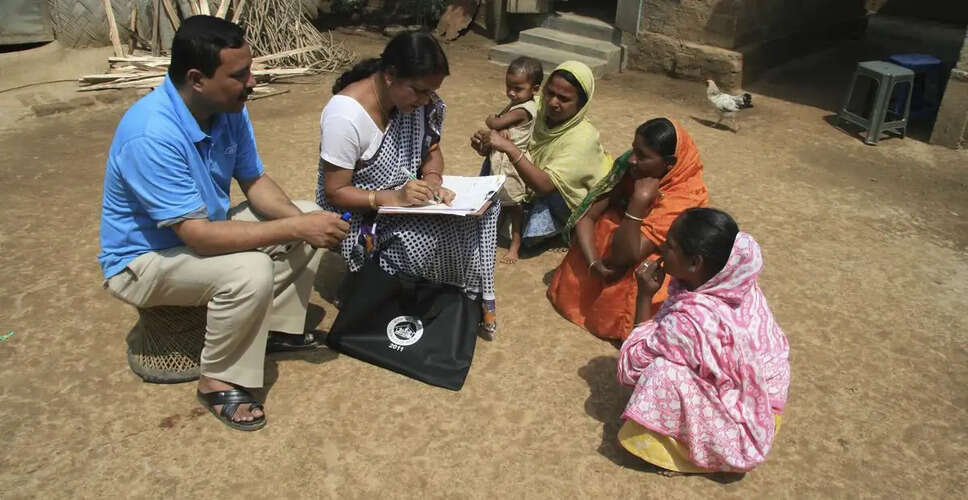
Call for Inclusive Census Representation
A collective of 90 former bureaucrats has reached out to the census commissioner, advocating for the thorough documentation of minority populations in the forthcoming 2027 Census.
Members of the Constitutional Conduct Group expressed concerns, stating, “In light of political figures openly opposing the inclusion of so-called ‘Bangladeshi Muslims’ in electoral rolls, it is crucial that the Census accurately reflects the demographics of various minority groups, including distinctions of religion, caste, and tribe.”
In their correspondence to Mrityunjay Kumar Narayan, the Registrar General and Census Commissioner of India, the ex-officials raised issues regarding the “lack of transparency” surrounding the six-year delay of the decennial Census.
This opacity, they argued, has fostered “unnecessary public apprehensions” that the Census is being timed to facilitate the delimitation process ahead of the 2029 Lok Sabha elections.
“We sincerely hope that no external factors have influenced the scheduling of the 2027 Census,” the letter stated.
Delimitation refers to the process of redrawing electoral constituency boundaries. The upcoming Census will be conducted in two stages: house listing from April to September 2026, followed by population enumeration in February 2027.
The last Census was conducted in 2011. Although India planned to initiate the first phase in 2020, the onset of the coronavirus pandemic necessitated a postponement.
On Monday, the former bureaucrats acknowledged the impact of the pandemic on the 2021 Census but questioned why the process could not be finalized by 2023.
They expressed hope that the Census would adhere to the United Nations guidelines outlined in the Principles and Recommendations for Population and Housing Censuses (Revision 4 March 2025), to which India is a signatory.
Reflecting on past experiences from the 2001 and 2011 Censuses, they noted that advancements in technology do not guarantee quicker data release. They emphasized the importance of acknowledging potential errors and implementing robust measures to ensure data integrity.
“Equipping enumerators with mobile devices to code data at the field level, where they must select the correct option from a dropdown menu, does not permit error correction in the recorded data,” they pointed out.