
EU Commits €900 Million for Gaza Reconstruction Amid Ongoing Challenges

EU's Financial Commitment to Gaza
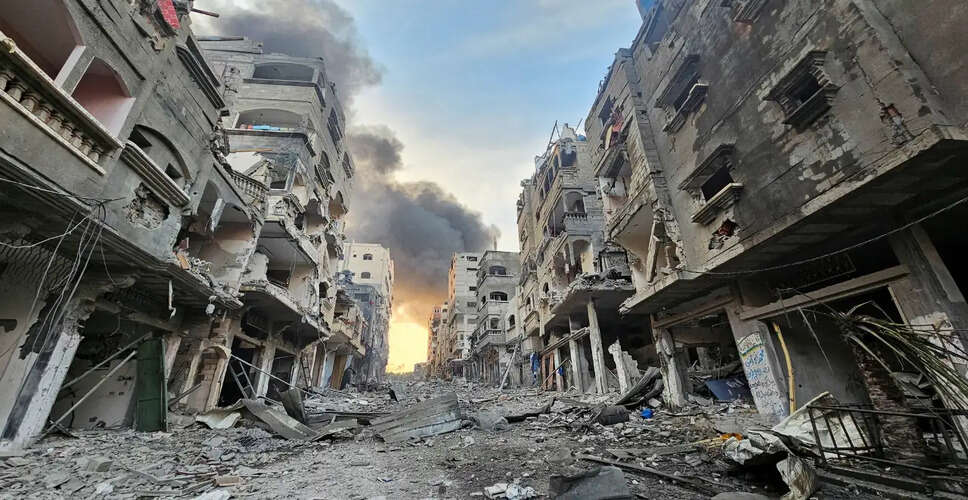
The European Union has announced a commitment of 900 million euros (approximately $1 billion) to aid in the reconstruction of Gaza, which has suffered extensive damage due to two years of conflict and Israeli airstrikes. This funding was revealed following a meeting of the Palestine Donors Group held in Brussels, which included EU member nations, Middle Eastern representatives, international organizations, and financial institutions. However, officials have expressed concerns regarding the timeline for the disbursement of these funds and the commencement of large-scale rebuilding efforts, given the fragile ceasefire between Israel and Hamas.
Dubravka Šuica, the European Commissioner for the Mediterranean, highlighted the worsening humanitarian conditions in Gaza, stating, "The ceasefire in Gaza remains fragile, and the situation on the ground for civilians is not improving." She noted that the aid would be distributed through reliable partners.
According to estimates from the United Nations, the World Bank, and the EU, the total cost for rebuilding Gaza is projected to be around $70 billion. The area is currently filled with over 60 million tonnes of debris, which the UN estimates could take more than seven years to clear, not accounting for the time required for demining efforts.
Political Challenges to Reconstruction
The meeting in Brussels also featured Nickolay Mladenov, who leads the Board of Peace, a reconstruction initiative initiated during Donald Trump's presidency, alongside Jared Kushner, Palestinian Authority Prime Minister Mohammad Mustafa, and members of the new Palestinian administrative committee for Gaza. Mladenov pointed out that progress in implementing the ceasefire has been hindered by disagreements over Hamas's disarmament.
Mustafa emphasized that reconstruction efforts should be tied to a long-term political resolution, stating, "We are investing not only in the Palestinian future but also in regional stability, shared security, and a just and lasting peace for everyone," while advocating for the establishment of a sovereign and viable Palestinian state.
EU's Response to West Bank Settlements
In a separate discussion, EU foreign ministers deliberated potential actions in response to the rising violence from Israeli settlers in the occupied West Bank. Among the options being considered is the suspension of trade with Israeli settlements, a proposal that has garnered support from countries like Ireland and Spain. Conversely, nations such as Germany and the Czech Republic have called for a more cautious approach, warning that such measures could escalate tensions further.
Kaja Kallas, the EU's foreign policy chief, indicated that the bloc's legal advisors have determined that ending trade with settlements could be achieved with a qualified majority vote, rather than requiring unanimous consent from all member states. Luxembourg's Foreign Minister Xavier Bettel noted an increasing consensus within the EU for more decisive action, arguing that the bloc should transition from political discussions to implementing tangible measures.