
Escalation of Conflict: Iran Targets Energy Infrastructure in the Gulf
New Phase of Conflict in the Gulf
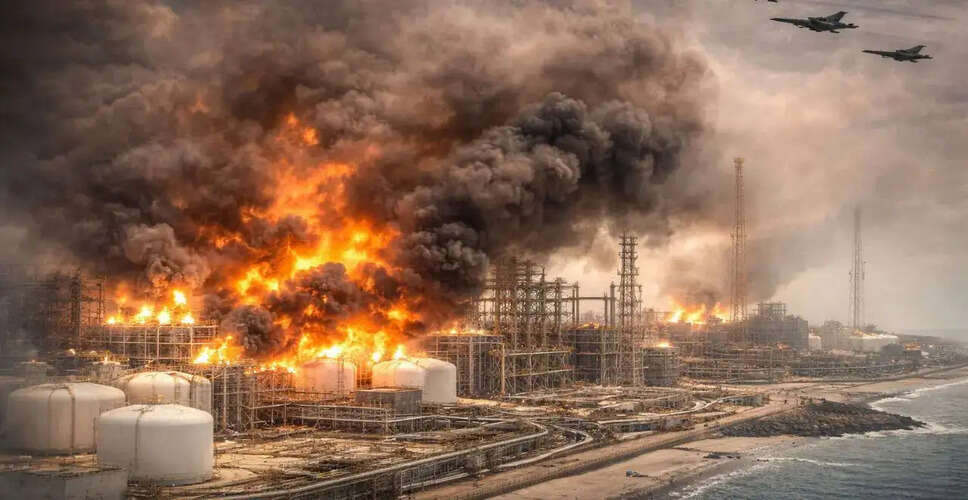
A significant escalation in the ongoing conflict involving Iran has emerged, characterized by direct assaults on energy facilities throughout the Gulf region. Iranian leaders have articulated this intensification in stark terms, declaring a state of "an eye for an eye" following Israeli attacks on the South Pars gas field, Iran's most vital energy asset. This declaration indicates a strategic shift towards retaliatory strikes targeting the oil and gas infrastructure of neighboring countries. Almost immediately, missiles struck Ras Laffan Industrial City, a crucial hub for liquefied natural gas, resulting in substantial damage. In Riyadh, air defense systems intercepted incoming ballistic missiles and drones, with debris causing injuries to civilians. Meanwhile, authorities in the United Arab Emirates reported successful interceptions of attacks aimed at significant gas and oil installations. The emerging trend is evident: energy infrastructure, previously spared from conflict, is now at the forefront of hostilities.
Fire at Ras Laffan refinery in northern Qatar following an Iranian strike pic.twitter.com/4AenppK1Dq
— Faytuks Network (@FaytuksNetwork) March 18, 2026
Energy Infrastructure as a Battlefield
This escalation follows a direct strike on Iran's South Pars gas field, the largest globally, which resulted in fires and a halt in some production. This attack seems to have crossed a critical line. Iran's retaliation has focused not on military installations but on the economic lifelines of its regional adversaries — targeting oil fields, refineries, and gas terminals that are essential for both local economies and the global energy supply. Analysts interpret this as a transition from military confrontation to what one Iranian official termed an "economic war." The Gulf region is not merely another battlefield; it is the epicenter of the global energy network. Approximately 20% of the world's oil transits through the nearby Strait of Hormuz, making any disruption there immediately impactful. Even minor interruptions have already slowed shipping and heightened concerns about a broader supply crisis. Consequently, oil prices have surged towards — and in some instances exceeded — $110 per barrel as traders factor in the risk of extended disruptions.
🚨 IRAN HIT HARD: Fires have broken out at Iran’s South Pars gas field, the world’s largest, after strikes by Israeli-American forces, critically damaging multiple processing units and taking them offline. pic.twitter.com/9i1vlAqgQu
— Breaking911 (@Breaking911) March 18, 2026
Currently, much of the rise in oil prices is attributed to fear — a phenomenon traders refer to as a "risk premium." However, this situation could evolve. If attacks persist and continue to damage critical infrastructure, particularly large facilities like Ras Laffan or major oil fields, the disruption could transition from temporary to structural. This shift would have serious implications: not only would prices rise, but actual shortages could occur. The stakes are particularly high for natural gas, as Qatar, home to Ras Laffan, is the leading exporter of liquefied natural gas, serving vital markets in Asia and Europe. A prolonged outage could have cascading effects on electricity markets, industries, and even water supplies in certain areas.
Implications of the Attacks
Experts suggest that the ramifications could extend beyond immediate price increases. Rachel Ziemba from the Center for a New American Security indicated that damage to facilities like Ras Laffan could keep natural gas prices "more elevated for longer" and may lead to supply shortages even after hostilities subside. Maksim Sonin, an energy executive associated with Stanford University's Center for Fuels of the Future, noted that the nature of the disruption could shift from short-term logistical issues to long-term production limitations. "When gas infrastructure is damaged, timelines stretch from weeks into months," he explained, emphasizing that what began as a geopolitical risk could evolve into a tangible supply shortage.
Potential Global Supply Disruption
The potential for global supply disruption hinges on the duration of the damage and whether attacks persist. Qatar's status as the largest exporter of liquefied natural gas, with Ras Laffan being central to that operation, means that any extended disruption could reverberate through global energy markets, especially in Asia and Europe. Ziemba pointed out that since production had already been paused earlier in the conflict, the immediate shock might be limited. However, she cautioned about increasing pressure on regional power systems, including electricity and desalination capabilities.