
Escalating Tensions: US Condemns Iran's Missile Attack on Kuwait Amid Ceasefire Talks
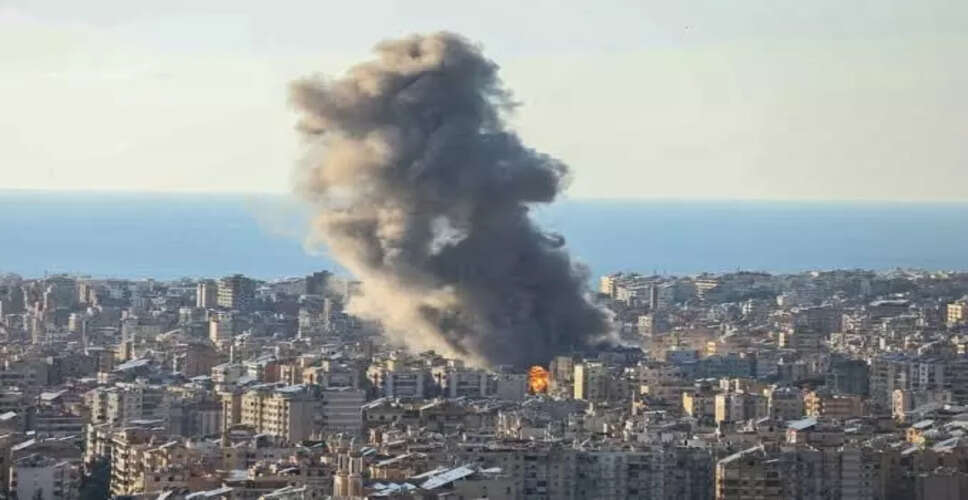

US Military Responds to Iranian Aggression
Dubai: On Thursday, the US military criticized Iran for breaching a delicate ceasefire following missile attacks reported in Kuwait, raising concerns over ongoing peace negotiations aimed at resolving the conflict.
The US Central Command stated that Kuwait successfully intercepted missiles launched by Iran late Wednesday, labeling the Iranian assault on a key US ally in the Persian Gulf as an "egregious violation of the ceasefire."
Earlier, Kuwait had reported an attack on its territory, with Iran claiming it retaliated against strikes from earlier in the week by targeting a US base in an unnamed Gulf state.
Despite ongoing strikes exchanged between the US and Iran throughout the week, President Donald Trump expressed optimism regarding progress in negotiations to conclude the war.
On Monday, the Pentagon announced that the US executed what it termed "defensive" strikes against missile launch sites and minelaying vessels in southern Iran. US officials later confirmed that additional strikes were carried out, including the downing of four drones that posed a threat in the region and targeting an Iranian ground control station in Bandar Abbas that was preparing to launch another drone.
Officials, who requested anonymity due to the sensitivity of the information, were not authorized to speak publicly.
Iran's paramilitary Revolutionary Guard, through the state-run IRNA news agency, acknowledged the attack near Bandar Abbas International Airport and claimed to have retaliated against the air base responsible for the initial assault, though it did not clarify if this was directed at Kuwait.
Kuwait's military confirmed that its air defense systems intercepted incoming missiles and drones on Thursday but did not disclose further details about the targets. As a host to US Army Central's forward headquarters, along with air and naval bases, Kuwait has faced repeated attacks from Iran and Iranian-backed militias in Iraq prior to the ceasefire established in April.
This announcement comes at a time when the Middle East is experiencing heightened tensions, and discussions to end the war remain uncertain.
Trump aims to secure an agreement that would allow the reopening of the Strait of Hormuz, a crucial passage for approximately one-fifth of the world's traded oil and natural gas. He also seeks to compel Iran to relinquish its stockpile of highly enriched uranium, while Iran demands the lifting of economic sanctions and the release of frozen assets to support its struggling economy. The war has faced significant unpopularity in the US, and Iran's closure of the strait has led to soaring oil prices, impacting fuel costs globally.