
Escalating Tensions: The Interconnection of the Russia-Ukraine and Iran-US Conflicts

Growing Links Between Major Global Conflicts
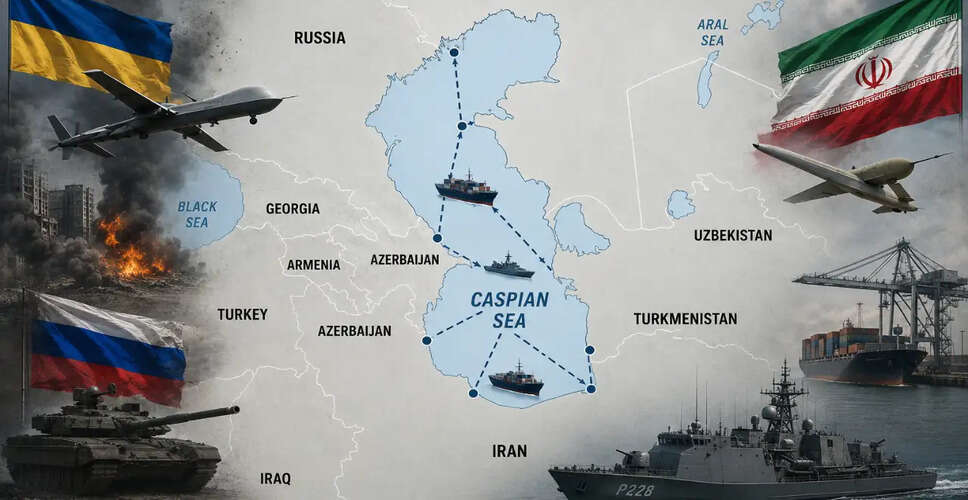
Recent developments indicate that two significant global conflicts, namely the Russia-Ukraine war and the Iran-US tensions, are increasingly converging. This shift follows Ukraine's drone operations targeting military supply routes in the Caspian Sea that connect Russia and Iran. Experts have long cautioned about the potential overlap of these conflicts, driven by geographical factors and the strengthening alliance between the opposing factions. The United States has provided military support to Ukraine against Russia, while Moscow has solidified its position as a key ally of Tehran. As both conflicts escalate, there has been a notable increase in intelligence sharing and military collaboration among allies, intertwining the two battlefronts more than ever.
Ukrainian President Volodymyr Zelensky has claimed responsibility for recent strikes on vessels in the Caspian Sea, asserting that Ukrainian forces targeted ships involved in military cargo shipments linked to Iran, as well as a Russian warship. The Security Service of Ukraine (SBU) reported that the operation also impacted a Russian oil field, a missile boat, and vessels allegedly used for transporting Iranian drones to Russia.
Significance of the Caspian Sea
Why the Caspian Sea Matters
The Caspian Sea has emerged as a crucial trade and military route for Iran to Russia. While Iran's southern ports are vital for oil exports, the Caspian provides Tehran with a direct connection to Russia that is less susceptible to US military interference due to its geographical characteristics. This inland sea, bordered by Iran, Russia, Azerbaijan, Kazakhstan, and Turkmenistan, serves as a strategic corridor that is challenging for adversaries to disrupt. As both nations face increasing sanctions and deepen their military ties, this route has gained importance for transporting goods and military supplies. Analysts suggest it offers Iran reliable access to Russia and Central Asia while minimizing reliance on routes vulnerable to conflict in the Persian Gulf.
The Link Between Ukraine and Iran Conflicts
How the Ukraine and Iran Wars Are Becoming Linked
For several years, Iran has been supplying Russia with Shahed attack drones, which Moscow has utilized extensively in its operations in Ukraine. Subsequently, Russia began producing its own variant of the drone, known as the Geran. Reports indicate that the Caspian route has been instrumental in transporting Iranian drones and military equipment into Russia. Following the onset of the US and Israeli campaign against Iran in February, Tehran has deployed Shahed drones in attacks targeting commercial shipping in the Strait of Hormuz, airports, seaports, Gulf oil infrastructure, and US military bases. Ukraine's recent strikes are perceived as an effort to disrupt these supply lines while extending Kyiv's drone campaign deeper into Russian territory.
Iran's Response to Ukrainian Strikes
Iran Warns of Retaliation
In response to the reported strikes, Iran has issued a strong condemnation, attributing blame to Ukraine for an attack that allegedly resulted in the death of a sailor aboard an Iranian commercial vessel. Tehran has cautioned that Ukraine's actions "couldn't go unanswered" and has summoned Ukraine's chargé d'affaires. Analysts suggest that these strikes occur at a pivotal moment, as President Trump has paused military actions against Iran while contemplating further measures to limit Tehran's influence over the Strait of Hormuz. They argue that Ukraine's operations could bolster Kyiv's position with the Trump administration by underscoring the growing military collaboration between Russia and Iran. Although Iran has vowed to retaliate, officials have not specified the nature of that response. Security analysts also highlight that Ukraine is within range of certain Iranian missiles, raising concerns that the two conflicts may become even more closely linked in the coming months.