
Escalating Tensions: Russian Strikes in Ukraine Amid Peace Talks
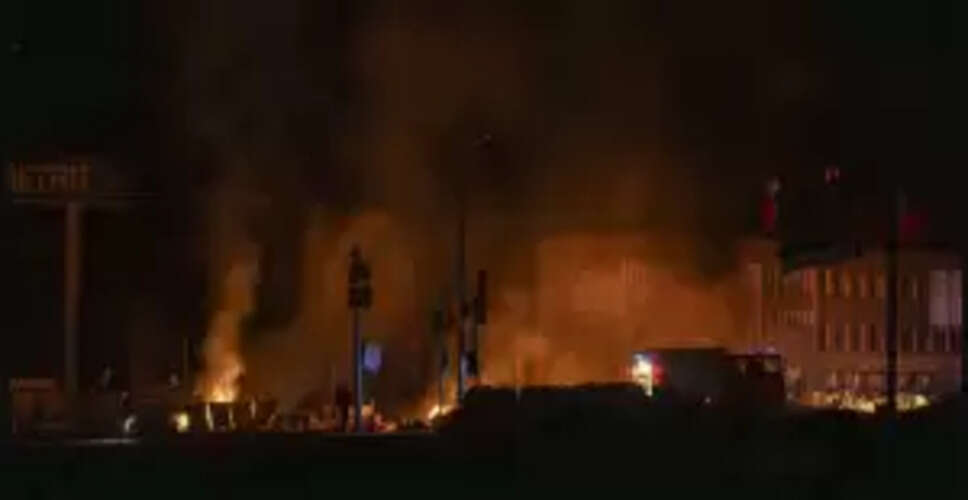
Recent Attacks in Ukraine
In a series of missile and drone strikes on Sunday, at least one individual lost their life in Ukraine, coinciding with the conclusion of a three-day dialogue between US and Ukrainian representatives aimed at resolving the ongoing conflict.
Local authorities reported that a drone strike in the northern Chernihiv region resulted in a fatality on Saturday night. Additionally, a combined missile and drone assault targeted infrastructure in Kremenchuk, leading to significant power and water disruptions. This city is notable for housing one of Ukraine's largest oil refineries and serves as a key industrial center.
Ukrainian officials, along with their Western allies, assert that Russia is attempting to dismantle the Ukrainian power grid, effectively depriving civilians of essential services such as heating, lighting, and running water for the fourth winter in a row. They describe this tactic as a form of 'weaponizing' the cold.
As these attacks unfolded, Ukrainian President Volodymyr Zelenskyy announced that he had a meaningful phone conversation with American officials involved in discussions with a Ukrainian delegation in Florida. He shared that he received updates from US and Ukrainian officials regarding the negotiations.
Zelenskyy expressed on social media, 'Ukraine is committed to collaborating sincerely with the American side to genuinely pursue peace.'
During the Reagan National Defence Forum, Keith Kellogg, the outgoing US envoy to Ukraine under President Trump, remarked that the efforts to conclude the war are nearing completion, stating they are in 'the last 10 metres.'
He indicated that the resolution hinges on two critical issues: the terrain, particularly in the Donbas region, and the status of the Zaporizhzhia Nuclear Power Plant.
Currently, Russia maintains control over most of the Donbas area, which includes Donetsk and Luhansk, regions it illegally annexed three years ago. The Zaporizhzhia Nuclear Power Plant, under Russian control since the onset of the invasion, is not operational but requires a stable power supply to cool its six inactive reactors and spent fuel to prevent any potential nuclear disasters.
Kellogg is set to depart his role in January and was absent from the Florida discussions.
In a separate development, leaders from the United Kingdom, France, and Germany are scheduled to meet with Zelenskyy in London on Monday.
Meanwhile, Kremlin spokesperson Dmitry Peskov expressed approval of the new national security strategy from the Trump administration. In remarks published by a Russian state news agency, he described the strategy as 'encouraging.'
He noted, 'The statements within it advocate for dialogue and the establishment of positive relations, moving away from confrontation.'
The document released by the White House on Friday emphasizes the US's desire to mend its relationship with Russia after years of viewing Moscow as a global outcast, highlighting that ending the war is a fundamental US interest aimed at 'reestablishing strategic stability with Russia.'