
Escalating Tensions: Pakistan Conducts Airstrikes in Afghanistan Amidst Military Disparities
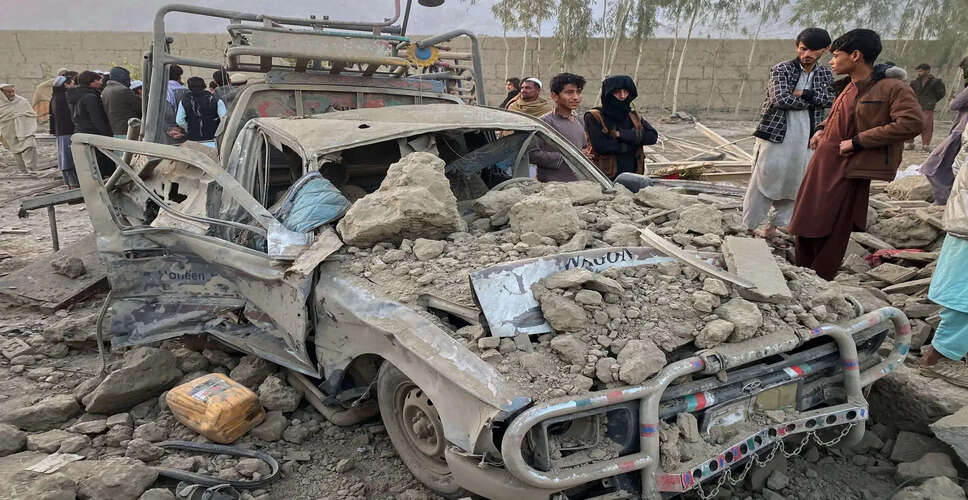
Pakistan's Airstrikes in Afghanistan
On Friday, Pakistan executed airstrikes across several Afghan cities, including Kabul, Kandahar, and Paktia province. The Pakistani government stated that these actions were a response to cross-border assaults. This escalation followed Afghanistan's retaliatory strikes against Pakistan earlier in the week. The Pakistani military reported the elimination of at least 70 militants during operations near the border, a claim that Afghanistan disputed, asserting that numerous civilians, including women and children, were casualties of the strikes. They condemned the attacks as violations of their airspace and sovereignty. This incident marks a significant increase in hostilities between the two neighboring nations, jeopardizing the ceasefire facilitated by Qatar and Turkiye.
As tensions rise, it is crucial to understand the military disparities between Pakistan and Afghanistan, as highlighted by data from the International Institute for Strategic Studies. Pakistan, a nuclear-capable nation, possesses approximately 170 warheads, while Afghanistan lacks any nuclear capabilities. The Pakistani military maintains a significant advantage over the Taliban forces due to ongoing recruitment, retention efforts, and technical support from China. Reports indicate that the Taliban's capacity to operate foreign military equipment has diminished, compounded by the lack of international recognition for their government, which hampers military modernization.
Pakistan's air defense capabilities surpass those of Afghanistan, boasting a fleet of 465 combat aircraft and over 260 helicopters, which include multi-role, attack, and transport helicopters. In contrast, Afghanistan has no operational fighter jets or air force. The Taliban reportedly has a limited number of aircraft, some dating back to the Soviet era, and 23 helicopters, though their operational status remains uncertain.
In terms of personnel, Pakistan's defense forces comprise 660,000 active members, with 560,000 in the army, 70,000 in the air force, and 30,000 in the navy. The Afghan Taliban's military strength is significantly lower, with only 172,000 active personnel. Furthermore, Pakistan possesses over 6,000 armored fighting vehicles and more than 4,600 artillery pieces. While Afghan forces have some armored vehicles, including Soviet-era tanks and personnel carriers, their exact numbers and artillery types remain unclear.