
Escalating Tensions: NATO's Response to Iranian Drone Attacks
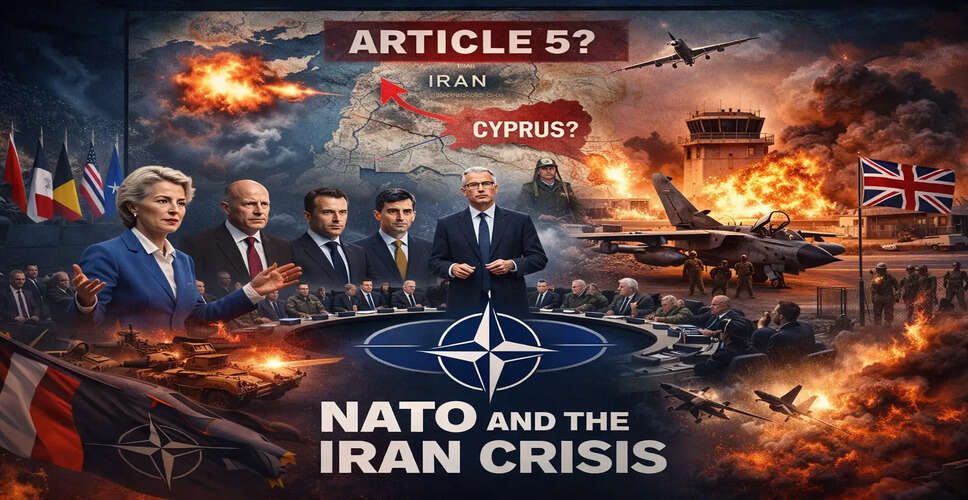
Iranian Drone Strikes British Base in Cyprus
On February 27, an Iranian drone, amidst ongoing assaults from Israeli and US forces, targeted a British runway in Cyprus shortly after the UK authorized the US to conduct airstrikes against Iran. Ursula von der Leyen emphasized the need for collective solidarity, while NATO's leading general indicated that the alliance is modifying its military stance. France has expressed its readiness to protect Gulf allies, and for the first time in decades, Germany is reportedly planning military actions alongside the US if Iran continues its aggression in the Gulf. However, the invocation of Article 5 remains untested, as the complexities of NATO's founding treaty are well understood by European leaders.
Political Shifts in Europe
Europe Has Already Crossed a Psychological Rubicon
Politically, a significant development occurred when France, Germany, and the UK issued a joint warning to Iran, indicating their readiness for defensive measures if attacks on their interests persist. This coordination among three of Europe’s most militarily capable nations signals a serious warning. Germany's involvement is particularly noteworthy, as sources indicate that Berlin is in discussions with the US regarding potential military actions, marking a significant shift from its post-World War II stance against offensive military operations.
Contradictory Responses from NATO Members
But Then There Are Contradicting NATO Voices Too…
Spain has rejected US fighter jets, denying access to its bases for strikes against Iran, while Turkey's President Erdoğan has condemned the attacks and refused to allow Turkish territory to be used for operations against Iran. This highlights the differing perspectives within NATO regarding the situation.
Geographical and Legal Complexities
The Geography Problem Nobody Wants to Solve Out Loud
NATO's Article 5 and Article 6 outline the conditions for collective defense, but the geographical nuances complicate matters. The RAF Akrotiri base in Cyprus, which was attacked, is situated in a unique legal status that raises questions about NATO's obligations. While some argue that the base falls under NATO's jurisdiction, others contend that it does not qualify as part of the UK or NATO territory.
Recent Developments on the Ground
What Actually Happened on the Ground
The British Royal Air Force base in Akrotiri was struck by an Iranian drone early Monday, with subsequent drones intercepted. Although there were no casualties, UK officials are taking precautionary measures. The ambiguity surrounding whether the attack was deliberate could influence the UK's response and the potential invocation of Article 5.
The UK’s Position and NATO's Language
The ‘Proportionality’ Shield and Britain's Position
The UK finds itself in a precarious situation, with Defence Secretary Healey describing Iran's actions as increasingly reckless. While the UK has not ruled out participation in strikes, it has not formally joined the US-Israel operation, complicating its legal standing.
NATO's Calculated Language
NATO's top commander has indicated that the alliance is adjusting its military posture, but this does not equate to a commitment to collective action unless Article 5 is invoked. Currently, NATO's response is characterized by consultation and solidarity without binding military action.
France's Role and Future Trajectories
The France Factor and the Gulf
France's naval base in Abu Dhabi was also targeted, and it has expressed readiness to defend Gulf nations. This shift, alongside Germany's involvement, indicates a coordinated European military stance that could escalate tensions further.
Three Plausible Trajectories
Three potential paths lie ahead: managed escalation without formal NATO involvement, a contested invocation of Article 5 if Iran escalates its attacks, or a fragmentation of NATO if consensus cannot be reached. Each scenario carries significant implications for NATO's credibility and unity.
The Russian Factor
The Russia Variable
As NATO leaders navigate this crisis, they are acutely aware of Russia's potential reactions. The situation serves as a test of NATO's collective defense commitment, and Germany's active military planning alters the strategic landscape significantly.
Conclusion
The ‘Endgame’?
NATO is unlikely to formally engage in this conflict unless the UK invokes Article 5, which it is striving to avoid. Instead, a coalition of the UK, France, and Germany may operate outside NATO's formal structure while coordinating military actions against Iran, marking a significant shift in European military dynamics.