
Escalating Tensions: Israeli Strikes on Iranian Fuel Sites Ignite Conflict
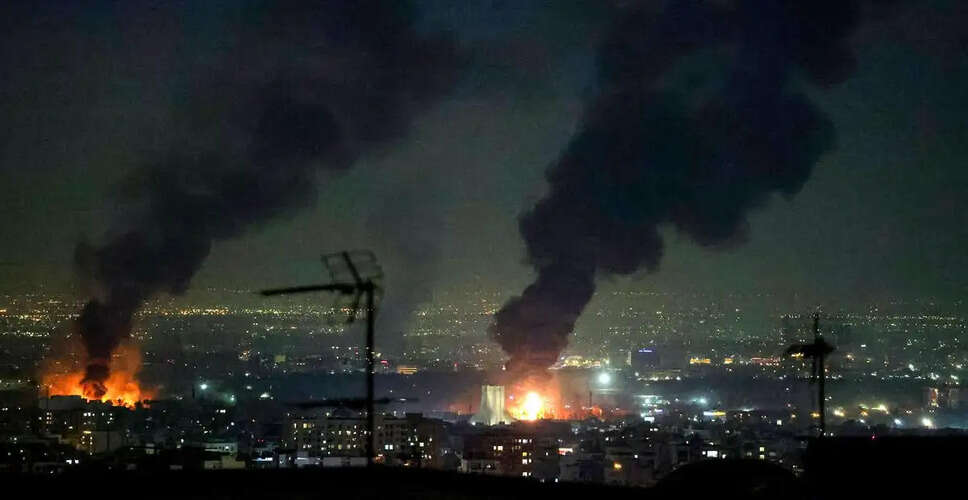
Israeli Military Strikes Iranian Fuel Depots
Late Saturday, the Israeli military targeted multiple Iranian fuel storage facilities, resulting in significant explosions and fires in Tehran and the nearby city of Karaj, according to reports.
Iran's Ministry of Oil confirmed that several oil depots in Tehran and Alborz provinces were hit. The Israeli military acknowledged the strikes, asserting that they targeted fuel storage and energy sites allegedly utilized by Iran's military.
On the same day, Iran's Foreign Minister Abbas Araghchi accused the United States of attacking a desalination plant on Qeshm Island, which is crucial for converting seawater into fresh drinking water.
Araghchi stated that the assault affected the water supply for 30 villages, warning that such attacks on Iran's infrastructure could lead to severe repercussions. He emphasized that the US had set a dangerous precedent.
Key Updates from the Ongoing Conflict:
- Iran's Islamic Revolutionary Guard Corps claimed to have retaliated by targeting the US Naval Support Activity in Bahrain, alleging that the base was involved in the earlier attack on the desalination facility. Desalination plants are vital for drinking water in the Gulf region.
- The Revolutionary Guards indicated that Iran could sustain an intense conflict with the US and Israel for at least six months, with spokesperson Ali Mohammad Naini stating that the Armed Forces are prepared for ongoing operations. They also claimed to have targeted over 200 locations associated with US and Israeli military bases in the area.
- As the conflict escalated into its second week, several Gulf nations reported missile and drone strikes. Saudi Arabia, Qatar, and Kuwait experienced new attacks, with explosions noted in Dubai and Manama.
- Kuwait's national oil company announced a precautionary reduction in crude production following missile and drone attacks. The military reported intercepting drones that entered its airspace, and a drone attack targeted fuel tanks at Kuwait International Airport.
- Authorities in Kuwait managed to control a fire at the airport fuel tanks, but efforts continued to contain a blaze at the Public Institution for Social Security building. The government also reported that its air defenses intercepted and destroyed three ballistic missiles, with two border security personnel losing their lives during the conflict.
- A loud explosion was reported near the US embassy in Oslo, prompting a significant police response. Authorities stated that the cause of the blast was unclear, and no injuries were reported.
The conflict erupted on February 28 after Israel and the US initiated a joint operation aimed at undermining Iran's capabilities. In retaliation, Tehran launched strikes against Israeli and US military installations and targeted major cities in neighboring Gulf countries.
The joint military actions by Israel and the US were fueled by rising tensions over Iran's nuclear program, with Washington acting as a guarantor of Israel's security. Israel has expressed concerns that Iran is nearing the development of a nuclear weapon, which could disrupt regional stability.
Tehran has consistently maintained that its nuclear ambitions are solely for peaceful purposes.
Rising Tensions
The US has persistently pressured Iran to abandon its nuclear program, warning of severe consequences if Tehran fails to comply.
Supreme Leader Khamenei had cautioned on February 1 that a US attack would trigger a regional war.
Israel had been preparing for potential conflict with Iran for several weeks prior to these events.
In June, a ceasefire was briefly established between Tehran and Tel Aviv after 12 days of hostilities, following US intervention.
During that period, the Israeli military targeted what it claimed were nuclear sites in Iran, leading to Iranian missile retaliation against Israel.
Both nations later accused each other of violating the ceasefire agreement.
The US had encouraged both countries to accept the ceasefire after Washington joined Israel's military efforts against Iran, claiming significant success in targeting Iranian nuclear facilities.
Despite claims of substantial damage to Iran's nuclear program, US intelligence assessments indicated that the strikes only delayed its progress by a few months.
Trump's renewed focus on Iran followed a military operation in Venezuela, where the US military detained President Nicolás Maduro and his wife.
Simultaneously, protests erupted in Iran over rising inflation, expanding into broader demands for an end to clerical rule.
In response, Trump announced the deployment of warships towards Iran, stating he was closely monitoring the situation.