
Escalating Tensions: Iran's Missile Strikes Prompt Regional Airspace Closures
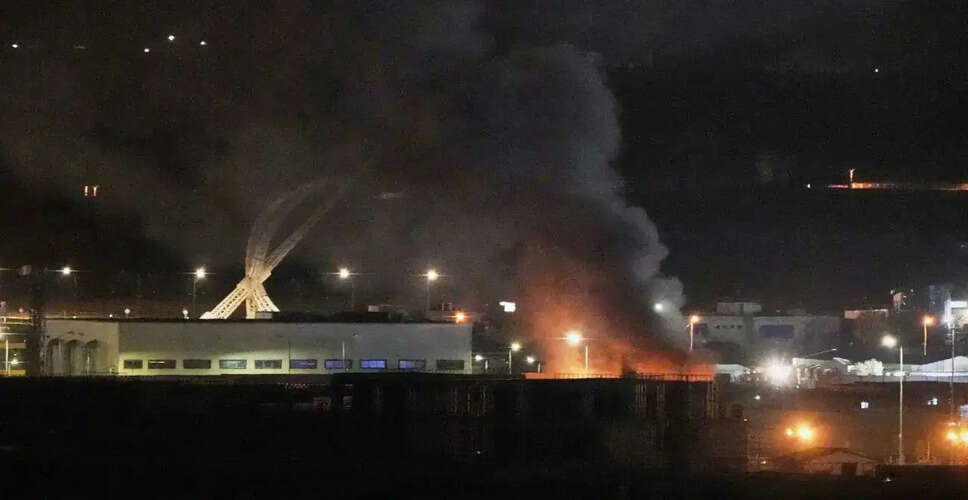

Iran's Missile Attacks Trigger Airspace Closures
On Sunday, Iran's missile strikes against Israel resulted in the closure of airspace throughout the region, raising security alerts amid escalating fears of a broader conflict. This incident marks a significant increase in regional tensions since the ceasefire between the US, Israel, and Iran was established in April. Following the missile launch aimed at Israel, Iran announced the closure of its western airspace. Majid Akhavan, spokesperson for the National Civil Aviation Organization, stated, "Due to safety and security assessments, the western part of the country's airspace has been closed until further notice," as reported by the IRNA news agency.
In response to the attacks, Iraq also temporarily shut down its airspace and halted air navigation for safety reasons, with the Iraqi Civil Aviation Authority confirming that the airspace would remain closed for 72 hours. Additionally, Syria closed its southern airspace for 12 hours and suspended operations at Damascus Airport.
Meanwhile, the US Embassy in Jerusalem announced the closure of its consular sections in both Jerusalem and the Embassy Branch Office in Tel Aviv for Monday. They advised all US government personnel and their families in Israel to shelter in place and be ready to move to secure areas in case of alerts regarding incoming missile, rocket, or drone threats.
The Israel Defense Forces (IDF) reported that sirens were activated in northern Israel as four missiles were launched from Iran, although air defense systems successfully intercepted the threats. Iranian state media claimed a third wave of missiles had been fired, but Israeli officials confirmed that all had been intercepted thus far. President Donald Trump indicated he would reach out to Israeli Prime Minister Benjamin Netanyahu to advise against retaliation for the missile attacks.
Brig. Gen. Efi Defrin, an IDF spokesperson, stated that Tehran had "made a grave mistake" and that the IDF was developing military strategies while continuing to target Hezbollah positions in Beirut. The Islamic Revolutionary Guard Corps of Iran declared that the missile launches served as a warning to Israel, threatening further regional attacks if Israeli strikes in Lebanon persisted. One of the targeted locations was Ramat David Air Base in northern Israel, according to the IRGC.
Iran's military asserted that Israel had "crossed all red lines" by intensifying its assaults in southern Lebanon and targeting the Dahieh suburb of Beirut. They warned that if Israel escalated its attacks or retaliated against Iran's actions, it would face severe repercussions and devastating strikes against itself and its allies. An IDF spokesperson indicated that following the military strike in Beirut and a situational assessment, the IDF was bracing for potential incoming fire in the hours ahead.