
Escalating Tensions: Iran's Missile Strikes on Israel
Rising Hostilities Between Iran and Israel
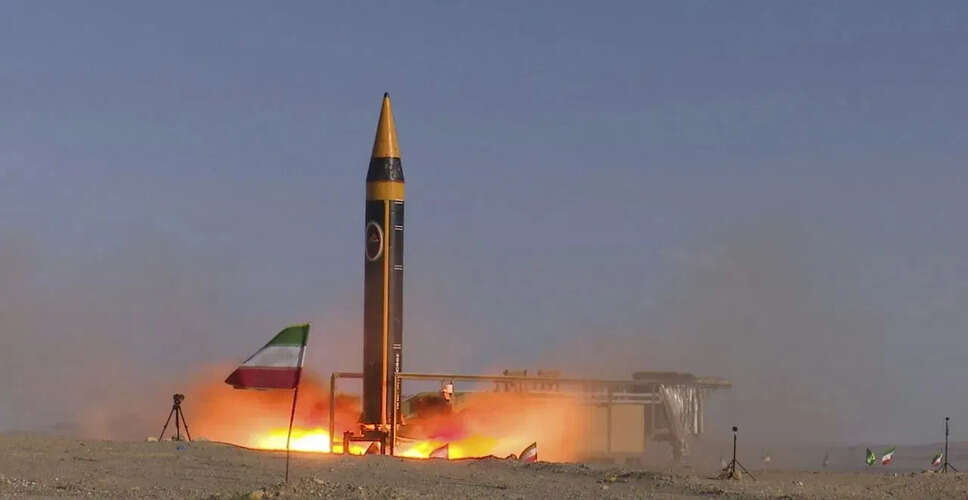
Tensions have once again surged between Iran and Israel. Following a strike by the United States on three Iranian nuclear sites, Iran retaliated within hours by launching a barrage of missiles towards Israel. Among these was the formidable Khorramshahr-4 missile, also known as Kheibar, which has left Israeli security agencies on high alert.
Details of the Iranian Attack
Reports indicate that Iranian missiles targeted key locations including Ben Gurion Airport, a biological research facility, a logistics base, and a command control center. In the 20th wave of attacks, Iran fired 40 missiles, resulting in 86 injuries and significant damage to numerous homes.
Understanding the Khorramshahr-4 Missile
The Khorramshahr-4 is regarded as Iran's most advanced ballistic missile. Named after a Jewish fortress, Kheibar, from the 7th century, this medium-range missile is powered by fuel and developed by Iran's Aerospace Industries Organisation.
Capabilities of the Khorramshahr-4
This missile boasts an impressive range of approximately 2,000 to 2,500 kilometers. It can carry multiple warheads, with a total weight of up to 1,800 kilograms. In flight, it reaches speeds of Mach 16 (16 times the speed of sound) and Mach 8 during descent.
Why is it Considered So Dangerous?
The Khorramshahr-4 can strike over 80 different targets simultaneously. Its warhead separates in the final stage, allowing for precise hits on targets, making it nearly impossible for enemy air defense systems to track.
Challenges for Israeli Defense Systems
Israel's Iron Dome defense system has struggled to intercept these missiles. Advanced systems like Davids Sling, Arrow-2, and Arrow-3 have also proven inadequate against the multiple attacks from the Khorramshahr-4.
Comparison with India's BrahMos
While the BrahMos and Khorramshahr-4 are technically different, their speed, target accuracy, and surprise attack capabilities elevate them to the status of super-weapons. This has led to the Khorramshahr-4 being referred to as Iran's equivalent of the BrahMos.