
Escalating Tensions: Iran's Missile Attack Challenges Israel's Ceasefire Efforts
Ceasefire Agreement Shattered
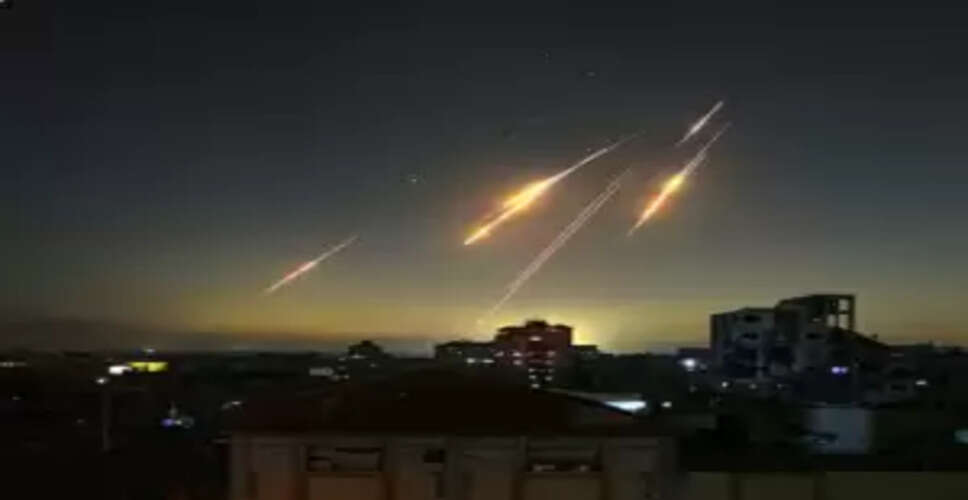
In Beersheba, a fragile ceasefire collapsed on Tuesday as Israel announced plans for retaliation following Iran's missile launch into its territory, occurring over two hours after the truce was meant to take effect.
Iran's military refuted claims of attacking Israel, according to state media, despite reports of explosions and sirens sounding in northern Israel during the morning hours. Both nations had previously agreed to a ceasefire to conclude their 12-day conflict.
Israeli Defence Minister Israel Katz condemned the missile strikes as a breach of the ceasefire, directing the military to resume aggressive operations targeting Tehran and its terror infrastructure.
The ceasefire was initially brokered by US President Donald Trump after Iran conducted a limited missile strike on a US base in Qatar the previous day.
Before the ceasefire commenced, Israel executed a series of airstrikes against Iranian sites, prompting Iran to retaliate with missiles that resulted in casualties in Israel.
An anonymous Israeli military source indicated that two missiles were launched by Iran shortly after the ceasefire began, but both were intercepted.
Israeli Finance Minister Betzalel Smotrich expressed confidence on social media, stating, 'Tehran will tremble' following the missile launches.
Netanyahu's Response to Ceasefire
The missile barrage occurred after regional leaders, including those from Saudi Arabia and Egypt, expressed support for the ceasefire announcement made by Trump.
Trump declared on social media, 'THE CEASEFIRE IS NOW IN EFFECT. PLEASE DO NOT VIOLATE IT!'
Prime Minister Benjamin Netanyahu confirmed Israel's acceptance of a bilateral ceasefire with Iran, coordinated with Trump, while warning of consequences for any violations. He informed Israel's security cabinet that the nation had met its war objectives, including neutralizing threats from Iran's nuclear and missile programs.
Netanyahu claimed that Israel had successfully targeted Iranian military leadership and government sites, gaining control over Iranian airspace.
Iranian officials remained silent following the ceasefire announcement, even as Israel reported intercepting additional missiles shortly after the ceasefire was declared. Earlier, Iran's foreign minister had indicated the country was ready to cease airstrikes.
Abbas Araghchi stated, 'As of now, there is NO agreement on any ceasefire or cessation of military operations,' but noted that Iran would halt its response if Israel ceased its aggression by a specified time.
Casualties and Damage from Hostilities
The ceasefire followed a day of escalating violence, with Iran launching a missile attack on a US military base in Qatar in retaliation for prior US strikes on its nuclear facilities. Iran reportedly fired 20 missiles at Israel before the ceasefire was set to begin, damaging several residential buildings in Beersheba.
First responders recovered four bodies from one building, with earlier reports indicating five fatalities. At least 20 individuals sustained injuries.
The aftermath revealed burned-out vehicles and debris scattered across the streets, as emergency crews searched for additional victims trapped in the wreckage.
Some injuries occurred even within reinforced safe rooms designed to withstand rocket attacks, highlighting the severity of the missile strikes.
Drone Attacks in Iraq
In a related development, military bases in Iraq, including those housing US troops, were targeted by drone attacks overnight, according to the Iraqi army and a US military official.
No casualties were reported, and no group has claimed responsibility for these attacks. Some Iran-aligned Iraqi militias had previously threatened to strike US bases in retaliation for American actions against Iran.
Iraqi army spokesperson Sabah Al-Naaman condemned the drone strikes as a 'treacherous and cowardly act of aggression,' noting damage to radar systems at military installations.
Trump's Role in Ceasefire Negotiations
Trump asserted that the ceasefire would officially conclude what he termed the '12 Day War,' despite Israel's intention to resume military operations.
The ceasefire was reportedly facilitated through direct communication between Trump and Netanyahu, with additional involvement from Secretary of State Marco Rubio and special envoy Steve Witkoff in discussions with Iranian representatives.
The White House indicated that recent military actions contributed to Israel's agreement to the ceasefire, with the Qatari government playing a role in brokering the deal.
The influence of Iran's Supreme Leader Ayatollah Ali Khamenei in the negotiations remains unclear, although he previously stated he would not capitulate.
Impact on Air Travel and Civilian Casualties
The missile attacks prompted Israel's Airports Authority to temporarily close the nation's airspace to emergency flights.
Some flights were diverted over the Mediterranean Sea as a precaution. Although Israel's airports had been closed since the onset of the conflict, a few emergency flights had recently resumed.
By Tuesday morning, Qatar Airways had restarted its flights after previously shutting down airspace due to the Iranian missile threat.
The ongoing conflict has resulted in significant casualties, with reports indicating at least 28 deaths and over 1,000 injuries in Israel, while Israeli strikes on Iran have led to at least 974 fatalities and thousands more injured.