
Escalating Tensions: Iran Targets US-Linked Vessel Amid Ceasefire Strain
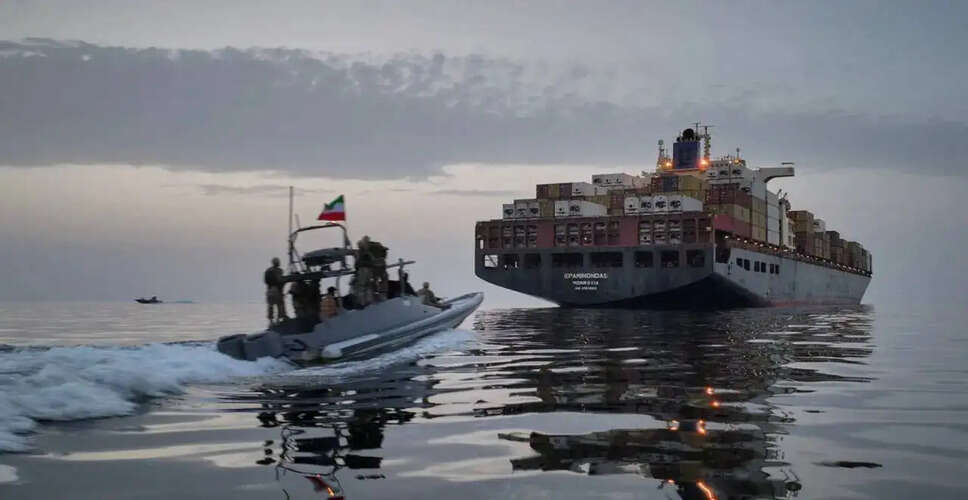

Iran's Military Actions in the Gulf
The Islamic Revolutionary Guard Corps (IRGC) of Iran has announced that it launched a missile at a Panama-flagged container ship, identified as the MSC Sariska V, which is reportedly linked to the United States. This incident occurs amidst ongoing tensions involving Iran, the US, and Israel, despite a fragile ceasefire. Iranian state media reported the missile strike following an attack on an Iranian vessel near Oman. These developments coincide with the US's ongoing efforts to enforce a maritime blockade on Iranian ports. On Saturday, US Central Command revealed that American forces intercepted a merchant ship attempting to reach an Iranian port, firing a missile into its engine room. The Gambia-flagged cargo ship, Lian Star, allegedly ignored over 20 warnings before being halted. US officials noted that the vessel was left adrift in the Gulf of Oman without being boarded. So far, six ships have been intercepted while trying to breach the blockade, with only one allowed to proceed. Since the blockade's initiation on April 17, 116 vessels have been redirected. The US has stated that these measures aim to limit Iranian trade and decrease revenue to Tehran.
Diplomatic Setbacks in US-Iran Relations
Status of US-Iran Peace Talks
Recent diplomatic efforts have hit a snag as Iran has decided to suspend negotiations with the United States. This announcement was made on Monday and was interpreted by Iranian media as a reaction to Israel's intensified military actions in Lebanon. The semi-official Tasnim news agency reported that the Iranian negotiating team would halt discussions and the exchange of texts via mediators. Iran's foreign ministry later stated that the US is directly accountable for both the ceasefire violations against Iran and the actions of the Israeli regime against Lebanon. This suspension complicates the pursuit of a broader resolution to the conflict, which escalated after the US and Israel initiated military operations against Iran on February 28, concerning Tehran's disputed nuclear program.
On the same day, US President Donald Trump mentioned that he had conversations with Israeli Prime Minister Benjamin Netanyahu and Hezbollah representatives regarding the situation in Lebanon. In a post on Truth Social, Trump stated, "I had a very productive call with Prime Minister Bibi Netanyahu, of Israel, and there will be no troops going to Beirut, and any troops that are on their way have already been turned back." He also claimed to have had a constructive discussion with Hezbollah, suggesting that both sides agreed to cease hostilities. The Lebanese embassy in Washington later confirmed that Hezbollah accepted a US proposal for a mutual cessation of attacks, stating that Israeli strikes on southern Beirut would cease in return for Hezbollah refraining from attacks on Israel. However, Israeli Prime Minister Netanyahu warned that military operations would continue if attacks persisted, asserting that the IDF would maintain its planned operations in southern Lebanon. Trump also claimed, without evidence, that discussions with Iran were ongoing at a rapid pace.