
Escalating Tensions: Iran Strikes US Embassy in Riyadh Amid Ongoing Conflict
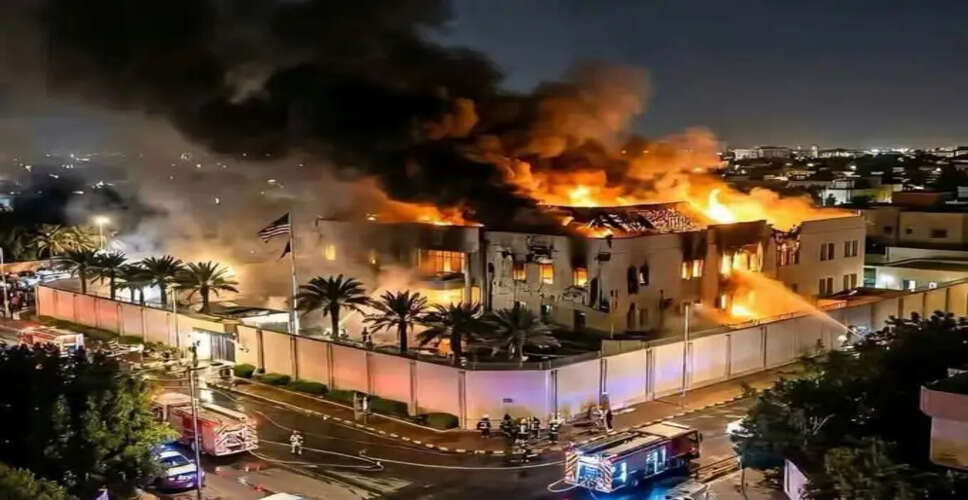
Drone Attack on US Embassy
In a significant escalation, Iran launched a drone strike on the US Embassy located in Riyadh, Saudi Arabia, early Tuesday morning. This attack is part of a broader pattern of Iranian retaliation across the region, coinciding with intensified airstrikes by the United States and Israel. President Donald Trump indicated that this military campaign could extend for over a month.
According to Saudi Arabia's Defence Ministry, the drone assault resulted in a minor fire and limited damage. This incident follows a similar attack on the US Embassy in Kuwait just a day prior.
The ongoing Iranian retaliation, coupled with the aggressive US and Israeli military actions, including the assassination of Iranian Supreme Leader Ayatollah Ali Khamenei, suggests a potential for a drawn-out conflict with significant implications.
Widespread Impact of the Conflict
Iran's retaliatory strikes have targeted various locations deemed safe havens in the Middle East, including two Amazon data centers in the UAE and a drone strike near another facility in Bahrain, which resulted in damage. Additionally, energy infrastructures in Qatar and Saudi Arabia have been attacked, alongside assaults on vessels in the Strait of Hormuz, a critical passage for global oil trade, leading to soaring prices for oil and natural gas.
In light of the escalating violence, the US State Department has advised American citizens to evacuate from over a dozen Middle Eastern nations due to safety concerns. Many individuals remain stranded as airspace closures complicate travel.
Trump has indicated that military operations could last four to five weeks, with the possibility of extending beyond that timeframe.
Casualties and Humanitarian Concerns
The Iranian Red Crescent Society reported that the US-Israeli operations have resulted in at least 555 fatalities in Iran, while 11 individuals lost their lives in Israel due to Iranian missile strikes. In retaliation, Israeli airstrikes against Hezbollah have also claimed numerous lives in Lebanon.
Amy Pope, the director general of the International Organisation on Migration, highlighted the humanitarian crisis, noting that military escalation could displace more families and severely impact civilians, with millions already displaced in the region.
The US military has confirmed the deaths of six American soldiers, all part of the same logistics unit stationed in Kuwait. Reports also indicate fatalities in the UAE, Kuwait, and Bahrain.
Targeting Nuclear Facilities
Iranian state media reported that airstrikes caused explosions at a broadcasting facility in Tehran, although no injuries were reported. Reza Najafi, Iran's ambassador to the International Atomic Energy Agency, stated that airstrikes targeted the Natanz nuclear enrichment site, dismissing claims that Iran seeks to develop nuclear weapons as false.
While Israel and the US have not confirmed strikes on the nuclear site, they maintain that their operations aim to dismantle Iran's missile capabilities and prevent the nation from acquiring nuclear weapons.
Israeli Prime Minister Benjamin Netanyahu asserted that Iran is actively rebuilding its nuclear capabilities, although he provided no evidence to support his claims.
Regional Escalation and Proxy Forces
The conflict has also drawn in proxy forces from the region, with Hezbollah launching missiles at Israel, prompting retaliatory strikes that resulted in significant casualties in Lebanon. The Israeli military has indicated that all options remain on the table, including a potential ground invasion.
Israel has conducted airstrikes targeting Hezbollah command centers and weapon storage facilities in Beirut, while Hezbollah has claimed to have launched drones at an Israeli airbase, which were subsequently intercepted by Israeli forces.