
Escalating Tensions: Iran and the US Engage in Ongoing Military Strikes

Intensifying Conflict in the Persian Gulf
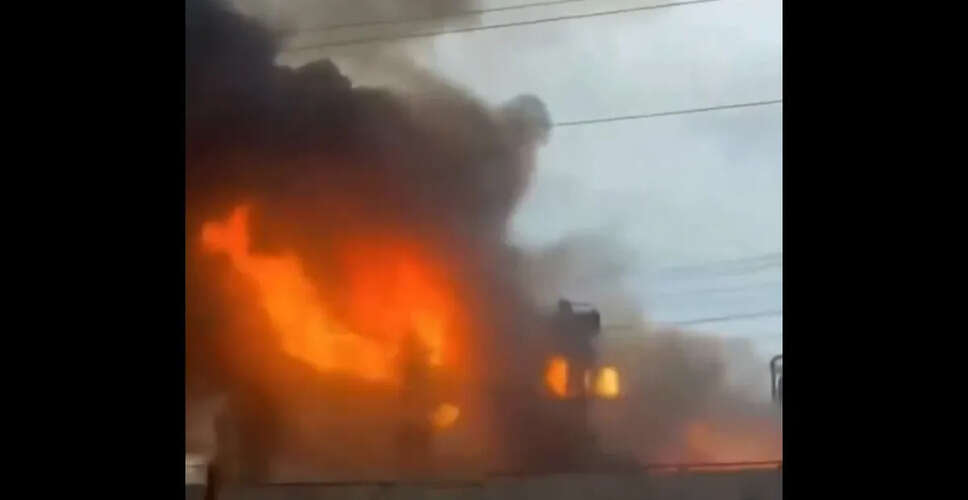
On Friday, Iran launched attacks on American positions in the Persian Gulf, while the US retaliated by targeting Iranian military installations, marking the 13th consecutive night of hostilities. The ongoing conflict shows no signs of de-escalation.
As tensions rise, both nations are taking steps that indicate a potential for further escalation. US embassies in the Middle East have begun warning American citizens that evacuation options may soon be limited, while Iran's Revolutionary Guard has advised residents in neighboring countries to avoid areas housing US troops.
Iranian Foreign Minister Abbas Araghchi emphasized that the nation will not succumb to US pressure, highlighting ongoing dialogues with China and Russia, two global powers often at odds with the US. He stated in an interview that Iran is neither intimidated by threats nor willing to yield.
US President Donald Trump characterized the current negotiations with Iran as the most serious to date, despite the ongoing airstrikes. He mentioned that the US is prepared for action but is also engaged in discussions, indicating no rush to conclude the conflict.
The Strait of Hormuz, a vital route for global energy supplies, remains at the center of the conflict, with Iranian assaults effectively disrupting traffic and causing fuel prices to surge, leading to significant economic instability.
US and Iranian Military Actions Intensify
In Irbil, Iraq, where American military advisors are stationed, security officials reported that US-led forces intercepted five drones laden with explosives. Explosions were heard throughout the city, and smoke was visible near the airport housing US forces. The US military has not commented on these incidents.
Iran's Revolutionary Guard claimed responsibility for targeting a US base in Udairi, Kuwait, destroying three ammunition storage facilities. They also asserted that they struck a watchtower belonging to the US Navy's Fifth Fleet in Bahrain.
The US Central Command has not responded to inquiries regarding these claims. Both Bahrain and Jordan reported intercepting aerial attacks from Iran on the same day.
As the US retaliated against Iranian positions, reports indicated strikes on a Revolutionary Guard naval base in northern Iran, as well as on Qeshm Island, a strategic location for Iranian naval operations. Additional attacks were reported in Isfahan province, known for its air base and nuclear facilities, as well as in Khuzestan and Fars provinces.
The US Central Command stated that these strikes aim to diminish Iran's capacity to threaten civilian shipping and commercial vessels in the region, as efforts continue to reopen the Strait of Hormuz, which is crucial for global oil and gas transport.
Iran's Strategic Position and Regional Implications
A diplomatic team from Oman, involved in mediating between the US and Iran, visited Tehran to discuss shipping traffic management in the Strait of Hormuz. Iran's capability to effectively close this passage gives it significant leverage in negotiations, especially as its Houthi allies have escalated tensions by targeting Saudi oil tankers in the Red Sea.
These actions fulfill the Houthis' threats to obstruct shipping linked to Saudi Arabia, impacting a critical trade route that connects the Red Sea to the Gulf of Aden, through which a substantial portion of global trade passes.
Saudi Arabia has been compelled to reroute millions of barrels of oil daily to avoid this strait. Trump has warned of severe military repercussions against the Houthis if their attacks persist.
Despite a slight decrease in Brent crude oil prices to around USD 96, the price remains significantly higher than before the conflict began, when it was approximately USD 72 per barrel. In the US, gas prices have risen to an average of USD 4.11 per gallon, according to AAA.
Humanitarian Crisis Amid Ongoing Conflict
The human cost of the conflict is becoming increasingly evident, with the Iranian Health Ministry reporting over 3,400 fatalities since the war's inception. Additionally, the International Maritime Organization has indicated that around 6,000 mariners are stranded on approximately 400 vessels near the Strait of Hormuz, prompting calls for urgent humanitarian assistance.
UN human rights chief Volker Turk has urged immediate action to support these seafarers, many of whom are left without basic necessities due to the ongoing fighting.
Negotiation efforts appear stagnant, with no visible progress. Pakistani Foreign Minister Ishaq Dar met with his Iranian counterpart, Araghchi, but the latter dismissed the need for further mediation, insisting that the US must alter its stance.
The US and Israel have previously targeted Iran, with shifting objectives that include regime change and the dismantling of its nuclear program. Recently, Israel indicated its readiness to re-engage in the conflict, with Prime Minister Netanyahu planning a visit to the US to meet with Trump.