
Escalating Tensions in West Asia: Missile Strikes on US Bases in Kuwait
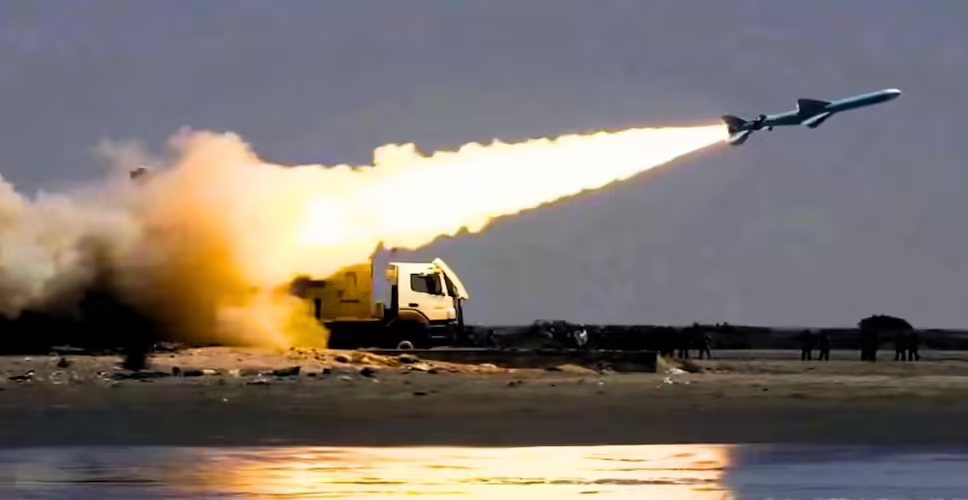

Missile Attacks Heighten Security Concerns
Kuwait/Washington/Tehran: Tensions in West Asia have surged to alarming levels once again. Reports indicate that a second missile strike occurred within two hours at a US military base in Kuwait, raising significant security alarms across the region. This incident, amidst ongoing hostilities between Iran and the US, has sparked fears of a new military confrontation. According to reports, air defense systems from the US and allied nations attempted to intercept several missiles and drones, while a high alert was declared in the area.
Second Attack in Two Hours Raises Alarm
Local media and regional sources report that air defense systems were activated as soon as missiles were detected targeting US military installations in Kuwait. Just as security agencies were assessing the situation following the initial strike, news of a second attack emerged within hours. This sequence of events has put US military officials and Gulf security agencies on high alert.
Conflicting Reports on Damage and Casualties
While various claims regarding damage and casualties have surfaced, US officials assert that most threats were neutralized in time. Personnel and troops stationed in the region have been relocated to safer locations under enhanced security measures.
Increasing Strain Between Iran and the US
In recent months, relations between the US and Iran have remained fraught with tension. The escalation of accusations and military activities has destabilized the entire Middle East. Iran has long accused the US of meddling in the region, while the US maintains that it is taking necessary steps to protect its interests and those of its allies.
Potential Strategic Message Behind Attacks
Analysts suggest that targeting US bases in Kuwait may not just be a military action but could also convey a broader strategic message. This indicates that regional conflicts could potentially engulf multiple nations.
Gulf Nations on High Alert
Countries including Kuwait, Bahrain, Saudi Arabia, and the United Arab Emirates have bolstered their security measures. Surveillance of sensitive military and energy facilities has been intensified. US forces deployed in the Gulf region have also been instructed to exercise heightened vigilance.
Global Community Expresses Concern
International organizations, including the United Nations, have urged restraint. Diplomatic efforts to de-escalate tensions are ongoing, but recent events have dealt a blow to these initiatives. Several nations have advised their citizens to exercise caution regarding travel to the region.
Implications for Regional Stability
Experts warn that if such attacks persist, they could severely impact regional stability. There is particular concern that damage to major military installations or oil infrastructure could disrupt global energy markets.
What Lies Ahead?
All eyes are currently on the next moves from the US and Iran. If retaliatory actions continue, tensions in the region may escalate further. Conversely, diplomatic negotiations and international pressure could play a crucial role in maintaining control over the situation.
Conclusion
The recent missile strikes on US bases in Kuwait underscore the fragile state of affairs in West Asia. The actions taken by both nations in the coming days will determine whether this tension remains contained or escalates into a larger military conflict.