
Escalating Tensions: Explosions Rock Southern Iran Amid US-Iran Conflict
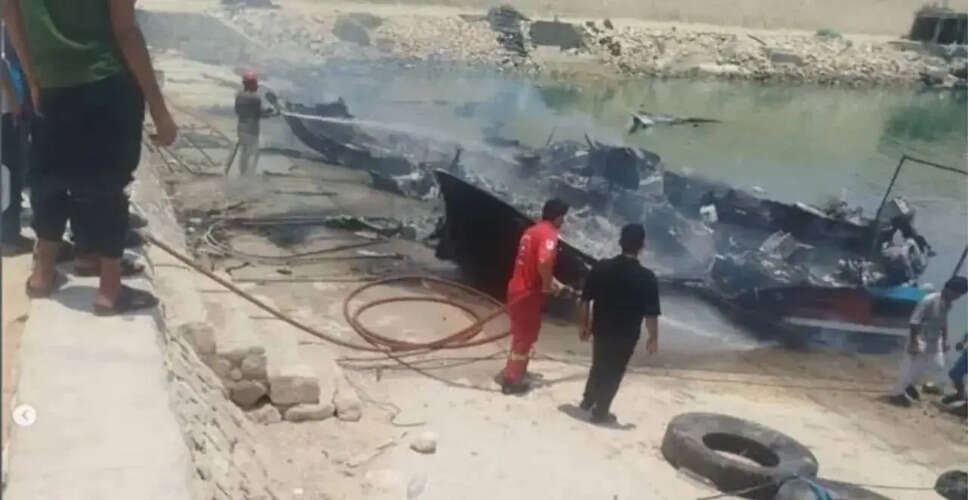

Ongoing Explosions in Southern Iran
For the third consecutive day, explosions were reported in southern Iran on Friday, particularly near Bushehr, where the nation's nuclear power facility is located. This surge in violence follows intensified clashes between the United States and Iran after a fragile ceasefire collapsed. Recent reports indicate that both nations exchanged strikes on Thursday, marking a significant escalation in hostilities. The exact cause of the explosions remains uncertain, although US officials clarified that American military forces were not currently conducting strikes within Iran, as per a report from a news outlet.
Residents in the vicinity of Bushehr and the nearby city of Choghadak reported hearing two distinct explosions. Additionally, blasts were noted in Bandar Abbas. Mehr News Agency also mentioned three explosions occurring in Konarak province, which is strategically located across the Gulf of Oman. Ehsan Jahanian, the deputy governor of Bushehr for political and security matters, stated that the explosions were a result of Iran's air defense response. He further noted that a military facility on the outskirts of Bushehr had been struck by what he referred to as a projectile.
Recent Military Actions
On Thursday, the US military reported that it had targeted over 170 locations across Iran within the previous 48 hours. Concurrently, Jordan announced that it had intercepted Iranian missiles in its airspace after Tehran launched attacks aimed at US facilities in the Gulf region. Iran claimed to have targeted American installations in Qatar, Kuwait, and Bahrain, warning that it could extend its attacks to additional US military sites in the area. This warning followed US President Donald Trump's declaration that the ceasefire was effectively "over." Iranian officials reported that the recent exchanges resulted in 14 fatalities and 78 injuries, stemming from the tit-for-tat strikes initiated after the US accused Iranian forces of attacking commercial vessels in the Strait of Hormuz.
The US military stated that its recent strikes were aimed at military targets along Iran's coastline to mitigate threats to commercial shipping in this vital waterway.
While Iran has not explicitly accepted responsibility for the attacks on vessels in the Strait of Hormuz, it has insisted that commercial ships adhere to designated routes through its territorial waters. Iranian officials also reported that US strikes had targeted a railway line connecting Tehran to Mashhad, where the late Supreme Leader Ayatollah Ali Khamenei was expected to be interred on Thursday. This burial followed several days of mourning ceremonies for Khamenei, who was killed in US-Israeli strikes at the conflict's outset, with ceremonies held in various Iranian cities. Just hours before the latest strikes, President Trump dismissed the possibility of further negotiations with Tehran, labeling them as "a waste of time." Iran's chief negotiator, Mohammad Bagher Ghalibaf, issued a stern warning: "Hit, and you'll be hit." However, upon returning to Washington, Trump claimed that Iran had reached out, expressing a strong desire to negotiate a deal, although Iran has not publicly confirmed any ongoing negotiations.