
Enhanced Security Measures in Delhi Ahead of Parliament's Monsoon Session
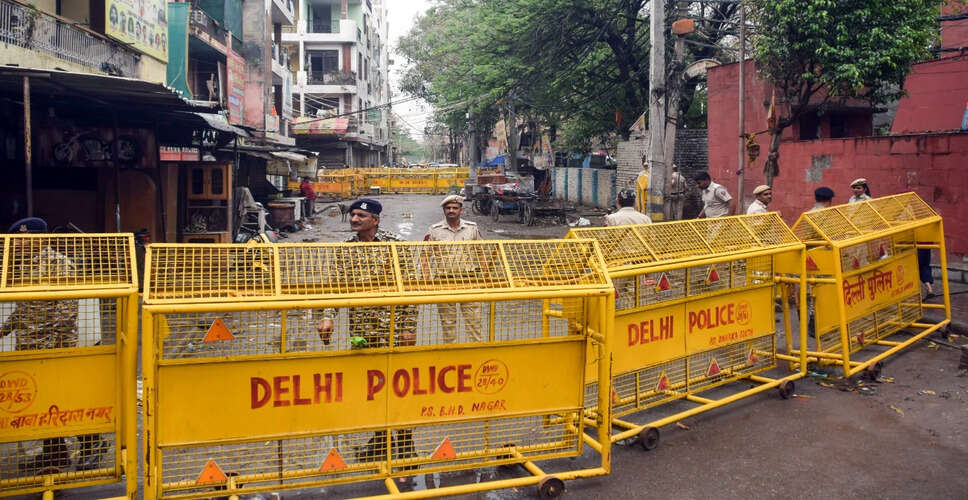

Unprecedented Security in Delhi
On the very first day of the Parliament's monsoon session, Delhi has witnessed extraordinary security arrangements. In response to the proposed 'Chalo Parliament' march by the Cockroach Public Party (CJP), the Delhi police are on high alert. Key areas in New Delhi, including Jantar Mantar, the Parliament building, and Central Vista, have been transformed into fortified zones. To ensure safety, the administration has enforced prohibitory orders under Section 163 of the Indian National Security Code (BNSS) in the New Delhi district.
Protests and Police Response
These security measures have been intensified as the CJP has called for a 'Chalo Parliament' march on Monday to protest alleged irregularities in the National Eligibility cum Entrance Test (NEET) and to demand the resignation of Union Education Minister Dharmendra Pradhan. Deputy Commissioner of Police (DCP) Sachin Sharma stated on the social media platform 'X' that no permission has been sought or granted for such protests or marches.
He reiterated that prohibitory orders under Section 163 of the BNSS are currently in effect in New Delhi.
Restrictions on Gatherings
The DCP emphasized that without prior approval, gatherings, marches, and demonstrations are prohibited, especially outside the designated protest site at Jantar Mantar, where five or more individuals are not allowed to assemble. Violators of these prohibitory orders will face legal action under Section 223 of the Indian Penal Code (IPC) and other applicable provisions.
He urged the public to adhere to the law, refrain from participating in unauthorized gatherings or marches, and assist in maintaining public peace, safety, and order.
Increased Police Presence
To bolster security, additional police forces have been deployed, barriers have been erected, and thorough vehicle checks are being conducted at major entry points. The police clarified that the CJP has not obtained any permission for the proposed march. Authorities stated, 'We will not allow any unauthorized march towards high-security areas. Preventive security measures will remain in place during the Parliament session.'
Heightened Surveillance
Multi-layered barriers have been established in parts of New Delhi, Central Delhi, and North Delhi, with strict monitoring and round-the-clock patrols. Several entry points have been declared high-security zones. A police officer mentioned, 'Every vehicle entering New Delhi is undergoing thorough checks. Additional checkpoints have been set up at strategic locations, and reserve forces are on standby for any emergencies.'
Surveillance through CCTV cameras has also been intensified in sensitive areas. Security has been heightened around Parliament Road, Central Vista, Connaught Place, Shankar Chowk, and other significant establishments, with rapid response teams deployed to handle any unforeseen situations.
Developments at the Protest Site
Meanwhile, events at the protest site are evolving rapidly. On Saturday, the Delhi police transported social activist Sonam Wangchuk, who was on a hunger strike, to Safdarjung Hospital, after which CJP founder Abhijit Deepke initiated an indefinite hunger strike. Wangchuk, in a message from the hospital, urged supporters to participate in large numbers in the 'Chalo Parliament' march scheduled for July 20.