
Empowering Women Through Sustainable Practices in Indore
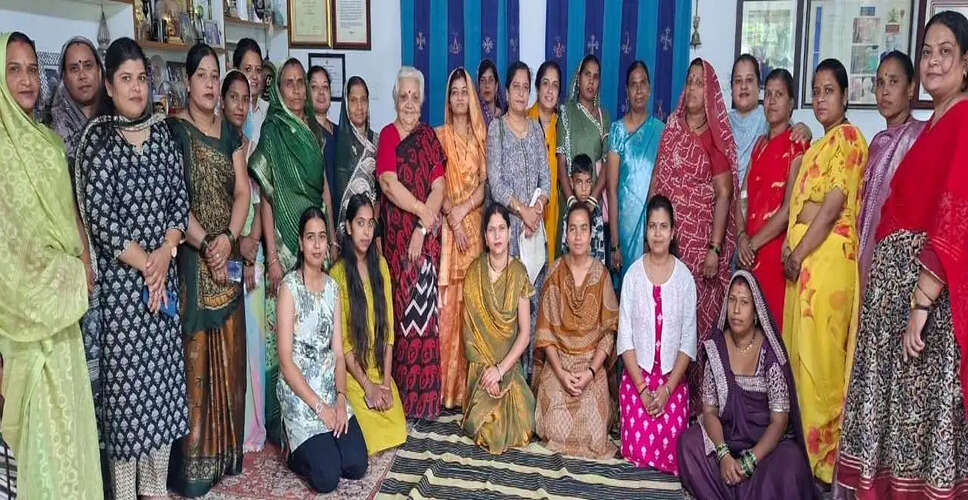

Women Learn Sustainable Livelihood Skills in Indore
In Indore, women from self-help groups engaged in vegetable and fruit sales, as well as daily wage labor, visited the Jimmy Magilligan Center for Sustainable Development to learn practical skills for sustainable livelihoods.
Dr. Janak Palta Magilligan, the director of the center, warmly welcomed the women and explained that the entire facility operates on wind and solar energy, achieving complete self-sufficiency in electricity. The women witnessed a demonstration of cooking without smoke using box and parabolic solar cookers, featuring organic lentils, rice, vegetables, kheer, cakes, cookies, and bread prepared with the help of sunlight.
The training included solar food processing techniques such as frying apples, roasting, and drying peas, fenugreek, green chilies, tomatoes, amla, and potato chips using a solar dryer. They were also taught how to create safe natural colors by drying and grinding marigold flowers, beets, and spinach leaves. The message conveyed to the women was to 'dry vegetables, increase earnings, and become entrepreneurs.'
The women were amazed and impressed by the rare trees in the facility, including sindoor, teak, mahogany, parijat, kadamba, reetha, ratanjot, mahua, and kabitha, as well as medicinal plants like giloy and punarnava, which are useful for treating fractures.
Accompanied by environmentalist Abha Tiwari, the women toured the entire facility. They received detailed information about the conservation of indigenous seeds, biodiversity, and traditional and scientific methods of organic and natural farming.
This exposure visit proved to be both enlightening and inspiring for the women, providing them with the opportunity to understand and adopt practical innovations in environmental conservation, natural and organic farming, and indigenous seed preservation. Discussions with Dr. Janak Palta Magilligan also covered the empowerment of rural girls, women's self-reliance initiatives, and the use of clean energy.
Participants expressed that this was their first opportunity to closely observe and understand such innovations and practical experiences. Project Manager Sapna Kumawat expressed heartfelt gratitude, stating that the visit was an incredibly inspiring and scientific experience. She committed to adopting these learnings within her community and sharing them with other women to promote positive initiatives in livelihood and environmental conservation.