
Empowering Rural Women: Training in Aromatic Plant Cultivation in Himachal Pradesh
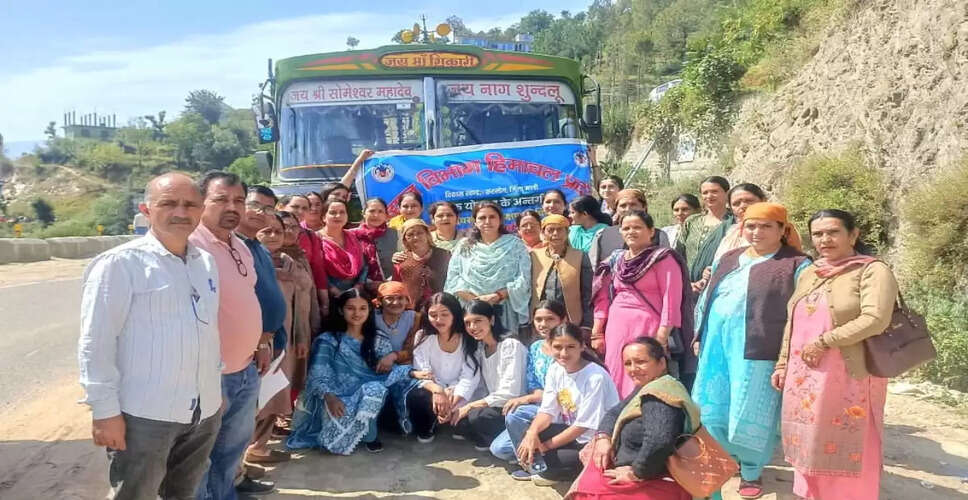
Training Program for Women Farmers in Mandi
Munish Sood
MANDI: A notable initiative aimed at empowering women in rural areas and fostering sustainable agricultural practices has commenced. A group of 30 women farmers from Karsog, located in the Mandi district of Himachal Pradesh, has embarked on a five-day training program focused on the cultivation of aromatic plants at the Horticulture and Forestry Training Institute in Thunag.
The training, scheduled from June 2 to June 6, is part of the ‘MAHAK’ scheme initiated by the Horticulture Department. This flagship program is designed to promote the commercial cultivation of high-value aromatic crops, providing both financial support and expert guidance.
Dr. Vijay Kumar, the Horticulture Development Officer of Karsog, is leading the delegation, which includes women from various remote agrarian villages such as Pangna, Mahunag, Gwalpur, Choridhar, and Khanyol Bagra. The group was officially sent off by Dr. Chameli Negi, a Subject Matter Specialist in Horticulture, who will also play a crucial role as a trainer during the training.
“This initiative transcends agriculture; it aims to transform women into agripreneurs by providing them with essential knowledge and tools to generate sustainable income,” stated Dr. Chameli Negi.
Hands-On Learning for Practical Implementation
The training is structured to offer hands-on learning experiences, covering modern and scientific cultivation techniques. Participants will learn about the identification and classification of aromatic plants, nursery development, soil management, scientific planting and irrigation methods, integrated pest and disease management, as well as post-harvest handling, drying, storage, and value addition.
This practical training also emphasizes market readiness and small-scale processing, equipping participants with skills they can readily apply in their local farming environments.
Fostering Rural Self-Reliance
Officials underscored the program's overarching aim of enhancing economic conditions through agriculture-based livelihood opportunities, particularly for women who have historically been underrepresented in commercial farming.
“The department offers subsidies and technical assistance for those interested in pursuing aromatic crop farming on a commercial basis. Women farmers are encouraged to seize this opportunity,” Dr. Negi added.
Aromatic plants like lemongrass, rosemary, lavender, and citronella are increasingly popular in global markets for their applications in essential oils, cosmetics, and natural remedies. The climatic conditions in the mid-hill and high-altitude regions, such as Karsog, provide a unique advantage for cultivating these crops.
Support from Department Officials
Senior officials from the department, including Dr. Narayan Thakur, Dr. Vijay Kumar, and Yuvraj Verma, were present at the departure event. They expressed optimism that this training would pave the way for greater economic involvement among rural women.
By integrating scientific methods into agriculture and providing opportunities directly to rural communities, the Thunag training camp signifies a hopeful advancement in Himachal Pradesh’s commitment to inclusive and sustainable agricultural practices.