
Empowering India's Youth: The Viksit Bharat Young Leader Dialogue Initiative
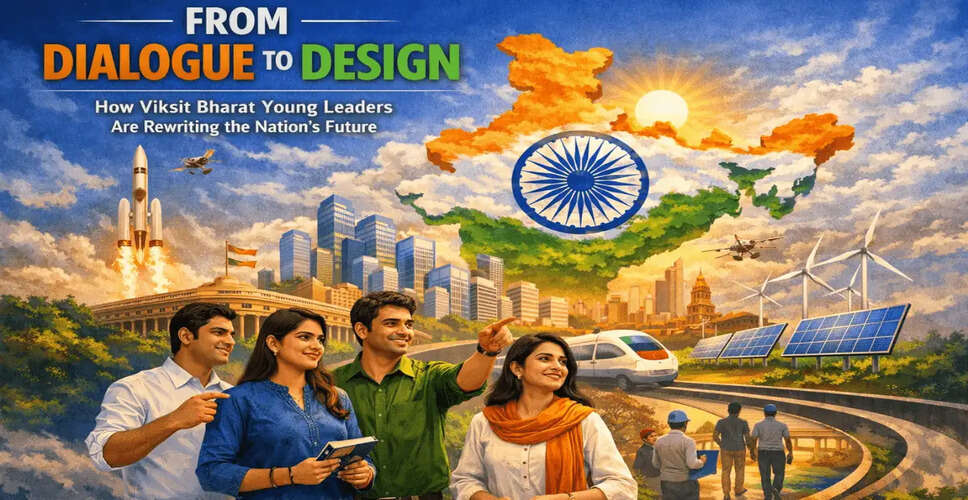
A New Era of Youth Governance in India
Dr. Amrik Singh Thakur
A Policy Editorial on Youth Governance, the Viksit Bharat Young Leader Dialogue Initiative, and the Architecture of a Transformed India
India proudly holds a significant statistic: its median age is 28, positioning it among the youngest major economies globally. This demographic advantage comes at a time when the competition for talent and innovation is fierce. With over 65% of its population under 25 and a projected working-age population nearing one billion by 2041, the vision of Viksit Bharat 2047 emphasizes the need for exceptional human capital. Thus, India's demographic dividend presents both a remarkable opportunity and a substantial responsibility.
The real question isn't whether the youth can lead this transformation; it's whether the systems in place to prepare them are genuinely designed with their involvement or merely for them.
Across India's educational institutions, a concerning trend persists: students engage, perform, and graduate, yet they seldom participate in governance or decision-making processes that affect their education and future. Governance bodies are often filled with administrators and senior faculty whose experiences may not align with the realities today's students will face. Curriculum committees frequently decide educational content without input from the very students who will be learning it.
In response to this gap, the Viksit Bharat Young Leaders Dialogue, held annually during the National Youth Festival and expanding into its 2026 edition, stands out as a pivotal initiative aimed at converting demographic potential into active democratic engagement. Unlike typical youth forums, this dialogue is a merit-based platform where young Indians aged 15 to 29 present actionable solutions to national issues directly to top leadership, including the Prime Minister.
This distinction is crucial. While many youth forums exist where young voices are acknowledged, the Viksit Bharat Young Leaders Dialogue is structured differently. Its selection process, which includes essays and quizzes on the MY Bharat platform, focuses on identifying genuine talent and commitment to public service rather than political connections. Participants tackle real national challenges across four thematic tracks: Cultural and Innovation, Viksit Bharat Challenge, Design for Bharat, and Hack for Social Cause, emphasizing solutions over mere opinions.
This initiative marks a shift from dialogue to actionable design, transforming young voices into impactful contributors. A notable aspect is the Diaspora Youth Track, which invites young Indians from over 22 countries to engage in discussions about India's development. This inclusion acknowledges the need for integrating global perspectives and experiences into India's growth narrative. The Indian diaspora is a highly successful community, and connecting its youth to national ambitions fosters a bridge between domestic goals and global engagement.
To align with the vision of Viksit Bharat Young Leaders Dialogue, Indian universities must adapt by creating meaningful roles for student representatives in governance and curriculum development. Education should be co-designed with students, making their involvement a standard practice rather than an exception. Furthermore, student-led innovations should receive institutional support and recognition as vital components of university life.
The Sustainable Development Goals emphasize youth participation as central to the 2030 agenda, and the National Education Policy 2020 has opened avenues for this transformation. The Viksit Bharat Young Leaders Dialogue has shown that when given a serious platform, young Indians can generate ideas worthy of national consideration.
However, India's demographic dividend is not everlasting. It represents a unique, finite opportunity that, once lost, cannot be regained. The youth currently competing for selection in the Viksit Bharat Young Leaders Dialogue will be at their professional peak by 2047. They are not just the future; they are the architects of the present, awaiting recognition and action from the institutions around them.
For India to evolve, its youth must not be sidelined in decision-making processes. The Viksit Bharat Young Leaders Dialogue exemplifies that their involvement is essential. The pressing question remains: will Indian institutions—universities, ministries, governance bodies, and industries—commit to this transformative approach?
Dr. Amrik Singh Thakur
Director
Centre for Tibetan Studies Central University
of Himachal Pradesh Dharamshala 176215