
Emerging Trends in Terror Modules in India: A Shift Towards Self-Inspired Groups
New Patterns in Terrorism
Photo: IANS
New Delhi, April 8: Recent investigations into various terror modules aimed at attacking India have uncovered a significant shift in their operational patterns. Unlike before, these groups are not solely affiliated with a single organization. For instance, while the Faridabad module included members linked to Jaish-e-Mohammad, their predominant ideology was influenced by the Islamic State.
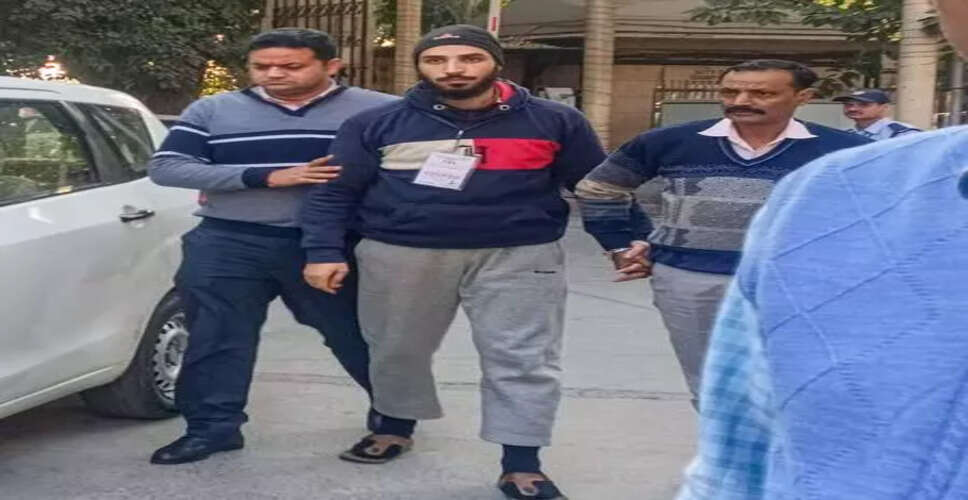
In a recent operation, the Delhi Police and the Maharashtra Anti-Terrorism Squad (ATS) apprehended two individuals with connections to both the Islamic State and Jaish-e-Mohammad, highlighting this trend.
An official from the Intelligence Bureau noted that this new tactic involves individuals forming modules independently, inspired by various terror ideologies rather than being tied to a specific group. This indicates a troubling development where individuals are self-organizing into terror factions, aligning with the objectives of the ISI, which appears to encourage this decentralized approach.
In light of India's stringent anti-terror stance, particularly following the Pahalgam attack, Pakistan has opted for a strategy that avoids direct involvement in establishing terror networks. Instead, it has recruited individuals within Pakistan, who are not directly affiliated with established terror groups, to disseminate propaganda through social media channels.
Post Operation Sindoor, intelligence agencies have observed a significant increase in the propaganda efforts from various Pakistani accounts. This mirrors the long-standing tactics of the Islamic State, which has effectively attracted youth through relentless exposure to radicalizing content, motivating them to form their own terror groups.
Numerous instances have emerged where young individuals have attempted to act independently. An official elaborated that initially, these individuals are inundated with Jihadi literature via social media or encrypted messaging platforms. The handlers monitor the engagement with this material closely, identifying groups of individuals who exhibit similar consumption patterns before facilitating their networking.
These Pakistani operatives then connect these individuals, enabling them to collaborate and establish a terror module.
Aside from the recent terror incidents in Jammu and Kashmir, most attacks have been linked to self-motivated terror groups.
For example, Jamesha Rubin, who plotted to detonate a bomb at a temple in Coimbatore, was driven by self-inspiration, influenced by the ideology propagated by Zahran Hashim, the mastermind behind the Sri Lanka Easter Bombings. Similarly, Mubeen acted independently, raising funds for his operation largely on his own.
The Rameshwaram Cafe explosion in Bengaluru on March 1, 2024, was executed by two terrorists inspired by the Islamic State, Mussavir Hussain and Abdul Mateen Talha. Additionally, Mohammad Shariq and Syed Yasin, involved in the unsuccessful Mangaluru blast, were also motivated by the Islamic State.
An official confirmed that each of these incidents was independently orchestrated, with investigations revealing no direct links among the perpetrators. The common thread among them was their self-inspired nature and shared ideological beliefs.
The ISI's new strategy allows recruits to select their preferred terror group without coercion, as instructed by their handlers.
Propaganda will be disseminated, enabling recruits to choose their terror affiliations based on this updated strategy.
Moreover, the individuals responsible for flooding social media with Jihadi content do not belong to any specific terror organization, according to officials. This evolving strategy is expected to be increasingly adopted by the ISI, as it provides plausible deniability, reduces operational risks, and is cost-effective.