
Emerging Patterns in the Iran Conflict: A Focus on Munitions and Strategy

The Evolving Landscape of the Iran Conflict
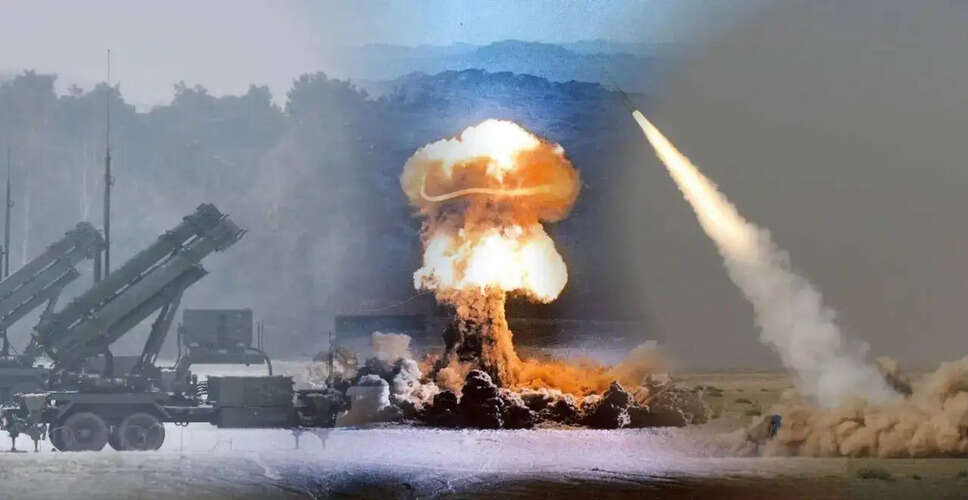
A notable trend is surfacing in the ongoing conflict involving Iran, extending beyond mere battlefield engagements. Each missile launched, every drone intercepted, and every long-range strike is gradually depleting a critical resource: munitions stockpiles. Under the initiative known as Operation Epic Fury, the consumption rate of munitions has escalated to a level that is prompting strategic reassessments both within and outside Washington. The figures are significant; since the onset of hostilities, Iran is believed to have fired nearly 1,200 ballistic missiles and approximately 4,000 Shahed-type cruise drones targeting Gulf regions. The interception of these threats is not straightforward, as missile defense protocols typically necessitate deploying multiple interceptors for each incoming missile, complicating the situation further.
Rapid Increase in Missile Defense Demands
Conservative estimates suggest that over 2,400 interceptor missiles have already been utilized, if not more. The majority of these are from the Patriot missile system, specifically the PAC-3 and GEM-T variants. Prior to the conflict, Gulf nations collectively possessed fewer than 2,800 of these interceptors, according to foreign military sales data and expert evaluations. This creates a precarious situation.
Even with supply chains in place for replenishment, the rapid consumption rate has compelled military planners to operate on shorter timelines—days and weeks rather than months. The United States is working to expedite production, with Lockheed Martin planning to significantly increase PAC-3 output in the coming years. However, production cannot meet immediate demands, which continue to outpace supply.
Offensive Operations Complicate the Situation
Defensive measures represent only one aspect of the conflict. On the offensive side, the United States has launched hundreds of Tomahawk cruise missiles, each costing around $2 million, along with over 1,000 Joint Air-to-Surface Standoff Missiles (JASSMs), which are designed for precise strikes against high-value targets. These munitions serve different purposes and cannot be interchanged.
These weapons are categorized as part of the 'high-end' arsenal, intended for use in contested environments, including potential future confrontations with technologically advanced adversaries. Before the conflict, the US had approximately 4,000 Tomahawk missiles in its inventory, with an annual production rate of around 100. This disparity is significant.
Transition to More Economical Munitions
To manage expenses and preserve high-end weaponry, some operations have shifted towards Joint Direct Attack Munitions (JDAMs), which are less expensive and more readily available. However, JDAMs come with their own set of limitations, requiring closer-range deployment and more favorable air conditions. In regions of Iran where air defenses remain active, stand-off weapons like Tomahawks and JASSMs are still crucial. Thus, the depletion of munitions continues, albeit quietly and steadily.
Emerging Strategic Concerns
This leads to a shift in discourse, not in public briefings where officials assert that 'all necessary munitions' are accessible, but within defense circles focused on long-term strategy. A prominent concern arises: are weapons intended for a potential conflict with China being utilized in a regional war? Peter Layton, a former officer in the Royal Australian Air Force, bluntly states that the extensive use of high-end weapons implies that the US believes it either won't need to confront China or can achieve a swift victory.
Allied Nations Observing Closely
The ramifications extend beyond the United States. European and Gulf allies have begun to recognize the strain on resources. Some systems and interceptors initially designated for other regions, including Ukraine, are now being considered for reassignment to the Middle East. This redistribution carries significant implications.
German defense officials have already cautioned that prolonged US engagement in Iran could impose 'substantial strain' on available resources. The concern is less about immediate shortages and more about long-term resilience.
A War Defined by Resource Consumption
Conflicts are typically assessed based on territory, casualties, or political outcomes. However, this conflict is also being evaluated in terms of resource expenditure—not just financial but also material. The tally includes missiles launched, interceptors consumed, and production capabilities stretched. The United States still maintains a strategic advantage with its vast arsenal and unmatched industrial capacity. Nevertheless, even extensive systems have limitations when consumption accelerates beyond anticipated levels. This is the fundamental shift occurring. Operation Epic Fury has evolved beyond mere strikes and counter-strikes; it is transforming into a war of inventory, where the focus is not only on what can be targeted but also on how long the current operational tempo can be sustained.