
Elon Musk's Terafab: A Bold Step Towards a Galactic Civilization
Introduction to Terafab
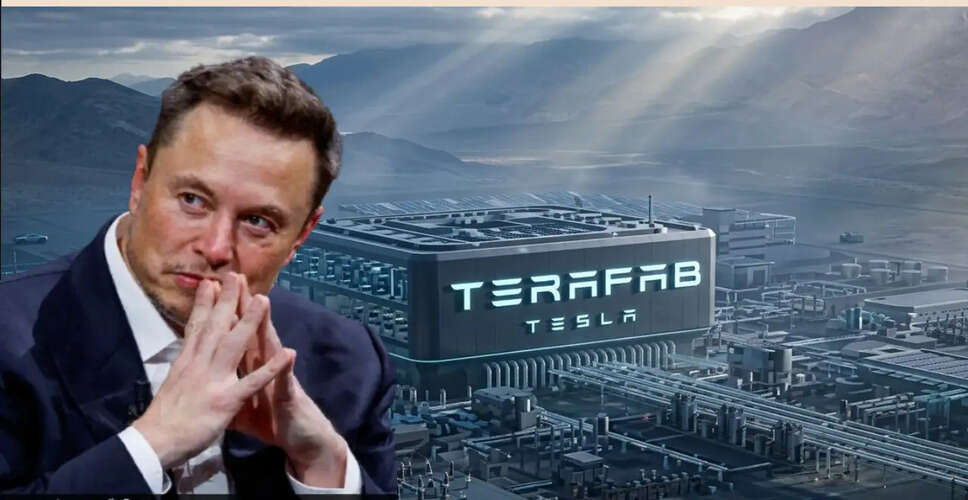
On March 21, 2026, Elon Musk introduced Terafab, an ambitious semiconductor megafactory project with an estimated cost of $20–25 billion. This initiative is a collaboration between Tesla, SpaceX, and xAI, and the announcement was made during a live-streamed event from Austin, Texas. While much of the media focused on the factory's immediate aim of producing custom AI chips for Optimus robots, robotaxis, and data centers in orbit, Musk presented the project in a much broader context.
Musk's Vision for the Future
During his keynote address, Musk referenced the Kardashev scale, a concept from 1964 that categorizes civilizations based on their energy consumption capabilities. He described Terafab as a significant milestone on the journey toward humanity evolving into a Kardashev Type II civilization, which would harness the total energy output of its star, the Sun. Musk expressed optimism that we could achieve this status within the next 50 years.
The Terafab Project Breakdown
Unprecedented Chip Production
Terafab is set to produce chips at an extraordinary scale, generating up to 1 terawatt of computing power annually. This output will support millions of Optimus humanoid robots and extensive AI data centers in space, with around 80% of the production designated for extraterrestrial applications.
Space Exploration and Resource Mining
Equipped with Terafab chips, Optimus robots will be dispatched via Starship to the Moon, near-Earth asteroids, and beyond. Their mission will involve mining essential resources such as silicon, metals, and rare elements, as well as constructing additional factories in space.
Self-Replicating Factories
Once established, these off-world factories will utilize local materials to produce more chips, robots, Starships, and satellites, creating a self-replicating cycle.
Building a Dyson Swarm
The ultimate goal is to create a Dyson swarm, consisting of billions to trillions of solar-power satellites orbiting the Sun, designed to capture a significant portion of its energy output.
Energy Transmission to Earth
The solar energy collected will be converted into microwaves or lasers and transmitted back to Earth, potentially providing an almost limitless source of clean energy.
Matrioshka Brain Concept
With abundant energy in space, Musk has advocated for the Matrioshka Brain, a theoretical mega-structure that would utilize stellar energy for unprecedented computational power. He envisions this system as the foundation for superintelligence, capable of simulating entire universes and solving complex problems.
The Importance of Terafab
Currently, humanity operates at approximately Kardashev Type 0.73, utilizing only a small fraction of Earth's energy resources. Achieving Type I status would address climate change, poverty, and resource scarcity, while Type II would eliminate physical limitations on civilization, transforming challenges like food and water supply into engineering tasks.
Musk argues that the primary constraints today are computing power and energy. Terafab aims to eliminate the computing bottleneck by producing chips in-house, while space-based solar energy and self-replicating robotics will address energy and material shortages, paving the way for a Dyson swarm and Type II civilization.
Public Reaction and Skepticism
The announcement has sparked widespread excitement on social media, with many interpreting Musk's vision as a pathway to near-divine intelligence. However, skeptics highlight challenges such as the feasibility of building orbital factories, the complexities of energy transmission, and Musk's historically optimistic timelines.
Despite these concerns, Musk has a track record of achieving ambitious goals, including reusable rockets and mass EV production. If Terafab succeeds, it could significantly accelerate advancements in robotics, AI, and the space industry.
Ultimately, Terafab is not merely a factory; it represents a pivotal step toward transforming humanity from a planet-bound species into a civilization capable of harnessing stellar energy. Whether the 50-year timeline for achieving Type II status is realistic or extends to 100 years, Musk's commitment to robotics, AI, and space industrialization is clear.