
Elon Musk Steps Down from Role as Special Government Employee
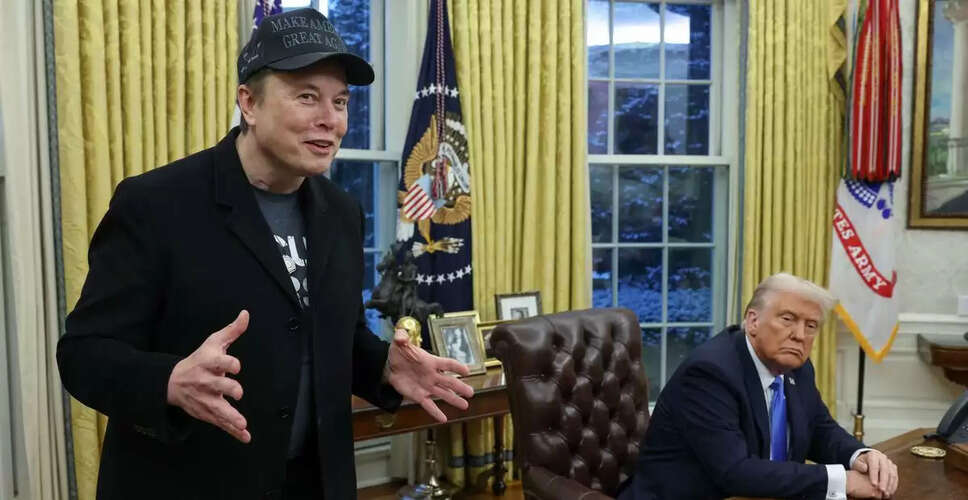
Musk's Departure from Government Role
Billionaire entrepreneur Elon Musk announced on Thursday that he is resigning from his position as a special government employee within the United States Department of Government Efficiency, a role he held during the Trump administration.
In a social media post, Musk expressed gratitude to President Trump for the chance to help reduce unnecessary government spending as his term comes to a close.
He emphasized that the department's mission would continue to grow stronger as it becomes ingrained in government operations.
Established by an executive order on Trump's first day in office, the Department of Government Efficiency aimed to enhance federal technology and software to improve efficiency and productivity.
This entity is not classified as an official government department, which can only be created through congressional action, but rather functions as an advisory body. Its current mandate is set to conclude on July 4, 2026.
Musk led the department, initially indicating he would serve as a volunteer. However, the White House later clarified that he would be classified as an unpaid special government employee, a designation for those working no more than 130 days per year.
His term was expected to end around May 30, as reported by various sources.
As my scheduled time as a Special Government Employee comes to an end, I would like to thank President @realDonaldTrump for the opportunity to reduce wasteful spending.
— Elon Musk (@elonmusk) May 29, 2025
The @DOGE mission will only strengthen over time as it becomes a way of life throughout the government.
According to reports, a White House official stated that Musk's departure process would commence that evening. Another official indicated that Musk did not have a direct conversation with Trump regarding his exit, which was determined at a senior staff level.
The specific reasons behind Musk's resignation remain unclear.
On the previous day, Musk had criticized a tax bill proposed by Trump, labeling it costly and detrimental to his efforts at the Department of Government Efficiency.
As the CEO of Tesla, Musk had previously mentioned on April 22 that he intended to reduce his government involvement to concentrate on his business ventures.
The Department of Government Efficiency has reportedly reduced the federal civilian workforce by approximately 12%, equating to around 260,000 positions, primarily through threats of termination, buyouts, and early retirement offers.