
Election Commission Warns Against AI Misuse in Assam Elections
AI Misuse Warning by Election Commission
On Sunday, the Election Commission of India (ECI) revealed the schedule for the Assembly elections in Assam and four other states. Chief Election Commissioner Gyanesh Kumar cautioned against the potential misuse of artificial intelligence (AI) and deepfake technology during the electoral process.
During a press conference in New Delhi, Kumar stated that the Commission has established mechanisms to oversee misleading digital content and will enforce strict measures against any violations.
He emphasized, "Our nodal officers in each state will monitor misinformation and deepfakes, taking necessary actions such as content removal or filing FIRs when needed," in response to inquiries about the increasing use of AI in political campaigns.
Controversy Surrounding AI in Assam
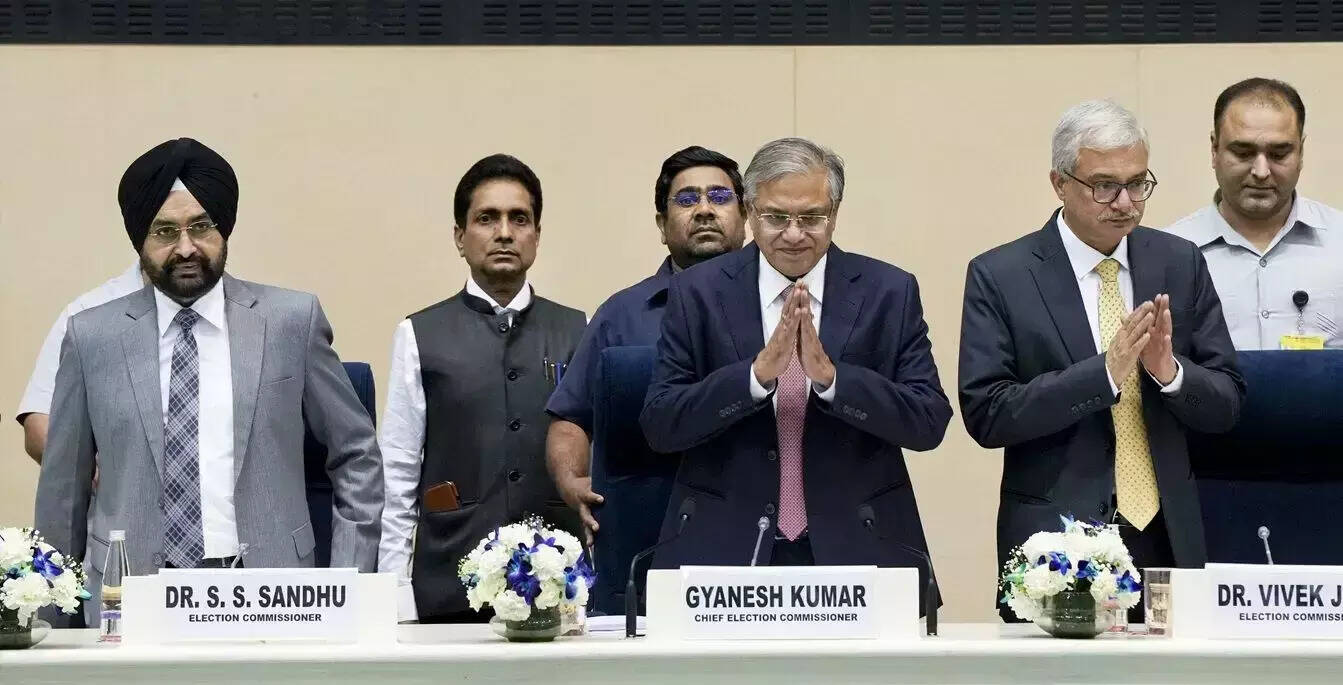
Chief Election Commissioner Gyanesh Kumar (centre) with Election Commissioners at Vigyan Bhawan in New Delhi, on Sunday. (Photo:PTI)
This warning is particularly relevant in Assam, where AI-generated political content has already sparked controversy ahead of the crucial Assembly elections.
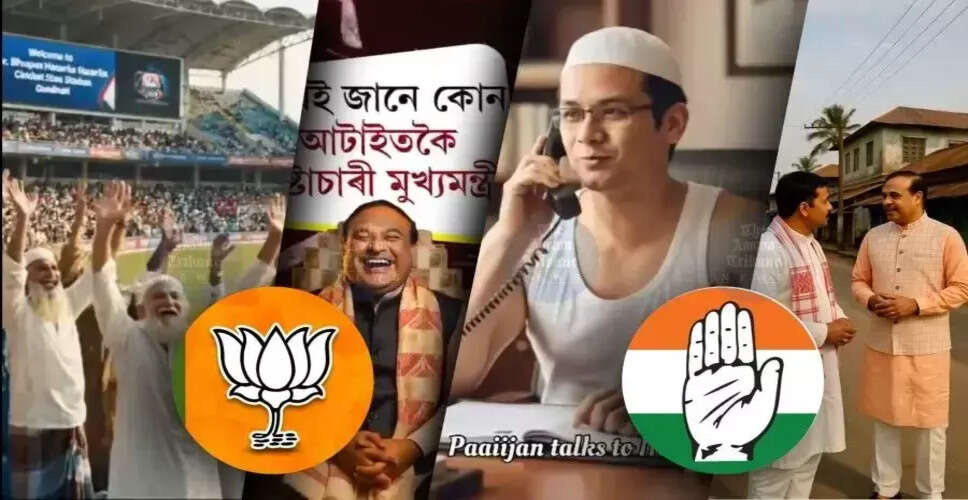
Recently, social media has witnessed a rise in digitally created political content, with both the Assam BJP and the Assam Pradesh Congress Committee sharing AI-enhanced videos and graphics.
The situation escalated when an AI-generated video surfaced online, allegedly depicting Chief Minister Himanta Biswa Sarma symbolically shooting members of a minority community, leading to public outrage and a police complaint from the Congress.
Political Parties Respond
In light of the backlash, the BJP dismissed a member of its social media team. The controversy has also reached the judiciary, with petitions filed challenging the dissemination of AI-generated political content.
Assam BJP spokesperson Rupam Goswami acknowledged the rapid evolution of political communication due to digital platforms, stating, "There has been a shift already. One barely reads print media today, even television is less watched. My son does not watch television but is updated with every news."
Goswami remarked that AI is simply a tool, and its impact is contingent on its usage. He noted, "If you create wrong or misinformed content using AI or any other method, it will mislead. It depends on the intention of the individual or party. AI itself is just a tool," while admitting that distinguishing between authentic and AI-generated videos has become increasingly challenging.
Concerns Over AI Content
Congress spokesperson Bandip Dutta expressed concerns that AI-generated content could mislead voters if not properly regulated. He stated, "AI-generated content can mislead people in Assam because what matters is the purpose of using such tools. Politics is a serious business," adding that current AI tools still exhibit visible errors that discerning viewers might catch.
"Some people may recognize such videos as fake while others may believe them to be real. That is where the danger lies," Dutta emphasized, advocating for stricter legal regulations on the use of AI in political campaigns.
Voter Awareness of AI Campaigns
Voters are already noticing the prevalence of AI-generated political content. Anushriya Mahanta, a 24-year-old student from Guwahati, mentioned, "I often scroll through Twitter for news updates and I regularly see AI-generated content by political parties," adding that she tries to identify manipulated videos by looking for inconsistencies like unnatural blinking or mismatched lip movements.
For her, AI in politics presents both advantages and risks. "It’s like two sides of a coin. AI can help spread governance messages widely, but it can also mislead voters because it reaches so many people," she explained.
Another local resident, businessman Dilip Hazarika, voiced concerns that many viewers might find it difficult to differentiate between authentic and manipulated content. He remarked, "For many people it is difficult to differentiate between real videos and AI-generated ones," noting that social media often leads individuals to accept what they see without verification.
Legal Gaps in AI Regulation
Legal experts have highlighted that India currently lacks specific legislation governing artificial intelligence. Advocate Anisur Rahman pointed out that existing provisions under the Information Technology Act, 2000 are being utilized to address these issues.
"There is no specific AI law in India. However, provisions under the IT Act such as cybercrime under Section 66 or intermediary rules may apply depending on the nature of the offence," he explained.
Rahman added that AI-generated videos could lead to defamation cases if they misrepresent individuals. "If a video shows a political leader making controversial remarks that were never made, legal remedies are available depending on the impact caused," he stated.
However, he warned that such content could threaten social harmony if misused. "If someone posts an AI video depicting attacks on a community or religious site, it could easily trigger unrest," Rahman cautioned, suggesting restrictions on AI-generated political content until clearer regulations are established.
The Future of AI in Political Campaigning
Despite the ongoing controversy, political parties seem unlikely to abandon AI-driven communication in the near future. Goswami described the technology as an essential aspect of modern campaigning, stating, "If we do not adopt new technologies, we will become outdated. Today even poor sections of society use smartphones. AI is becoming unavoidable."
Observers note that the increasing use of memes, simulated videos, and digital narratives signifies a broader transformation in political campaigning, presenting new challenges for regulators striving to balance technological innovation with electoral integrity.