
Election Commission to Enhance Police Observer Deployment in West Bengal
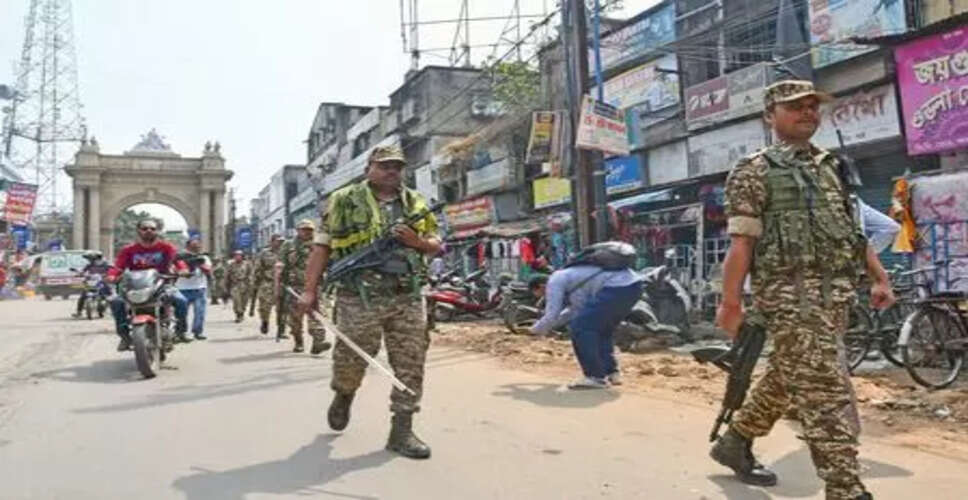
Strategic Planning for Upcoming Assembly Elections
Kolkata, March 13: The Election Commission of India (ECI) is set to utilize sensitivity-mapping to guide its decisions regarding the deployment of police observers across districts for the upcoming Assembly elections in West Bengal, which are scheduled for later this year.
An insider from the Chief Electoral Officer's (CEO) office in West Bengal revealed that the ECI is considering several factors for district-wise sensitivity-mapping.
“The sensitivity-mapping will categorize districts into three groups. The first includes those with an International Border adjacent to Bangladesh. The second group consists of districts that have experienced significant poll-related violence in the last three elections, whether before, during, or after the voting. The third group will encompass districts that meet the criteria of both the first and second categories,” explained the insider from the CEO’s office.
Murshidabad, Malda, and Cooch Behar are prime examples of districts falling into the third category, as they share borders with Bangladesh and have a history of severe electoral violence.
Conversely, districts like Howrah, which is near Kolkata, exemplify the second category. Although they do not border Bangladesh, they have recorded instances of intense political violence.
Given these considerations, the ECI is contemplating an increase in the number of central observers across all categories, particularly police observers in these sensitive areas, according to the source.
During the 2021 West Bengal Assembly elections, the ECI deployed 170 general observers, 84 expenditure observers, and 37 police observers.
“The ECI's headquarters in New Delhi has already informed the CEO’s office that there will be a significant rise in the number of observers across all three categories this time, especially police observers. The Commission has indicated that at least 100 police observers will be appointed for West Bengal, which is nearly three times the number from 2021,” the insider noted.
He elaborated on the rationale behind the tripling of police observers this election cycle.
“This time, police observers will be granted enhanced authority, particularly concerning the movement of Central Armed Police Forces (CAPF) personnel. In previous elections, District Magistrates, who also serve as District Electoral Officers, were responsible for determining CAPF movements while the Model Code of Conduct (MCC) was in effect.
“However, this time, the ECI has decided that police observers appointed by the Commission will oversee CAPF movements in their respective districts. Additionally, district-specific composite teams will be established to evaluate the deployment needs for CAPF, with the police observers' decisions being final,” he added.
Sources from the CEO’s office confirmed that these district-specific teams will assess the requirements for CAPF deployment, ensuring that the police observers' decisions are conclusive.