
El Niño's Impact: What to Expect for the Hindu Kush Himalaya This Winter
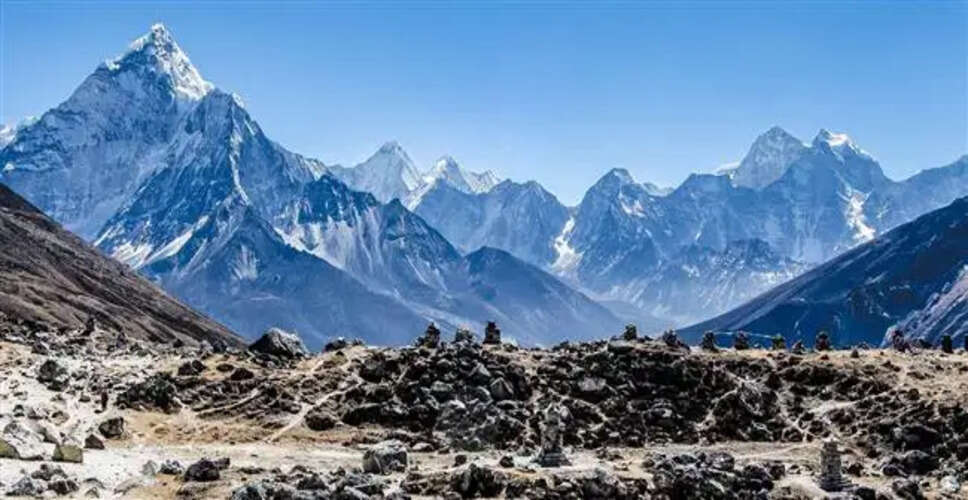

Winter Outlook for the Hindu Kush Himalaya
Kathmandu: A significant El Niño event is anticipated to lead to increased rainfall across the Hindu Kush Himalaya region, raising the likelihood of floods, landslides, and avalanches in Nepal this winter, as indicated by a recent report.
The 'Hindu Kush Himalaya Winter Outlook 2026', developed collaboratively by the International Centre for Integrated Mountain Development (ICIMOD) in Kathmandu, Beijing Normal University, and the Institute of Atmospheric Physics from the Chinese Academy of Sciences, predicts wetter conditions for nations such as Nepal, Afghanistan, and Bangladesh.
The report cautions that intense rainfall could result in localized flooding, landslides, and avalanches particularly in the western Himalaya, while certain areas may face dry spells, increasing the risk of forest fires.
This outlook coincides with findings from the US National Oceanic and Atmospheric Administration (NOAA), which indicates a strong-to-very-strong El Niño, with a 60% chance of it being the most intense since 1950.
According to ICIMOD scientists, this weather phenomenon is likely to enhance rainfall in the Himalayan foothills and boost snowfall at higher altitudes.
This report follows a notably destructive monsoon season in Nepal and Bhutan, characterized by disasters associated with alterations in high-altitude glaciers and permafrost.
The catastrophic Bhotekoshi floods that hit Nepal in August resulted in over 1,500 fatalities and left more than 5,000 individuals unaccounted for, with damages estimated at USD 4.7 billion for relief and reconstruction efforts.
The forecast also suggests that snow levels will be deeper than usual in parts of Afghanistan, Pakistan, northern India, and Nepal, while shallower snow is expected in Bhutan and eastern Xizang in China.
Snow depth is vital for maintaining river flows and ensuring water availability in the upcoming year. Reduced snow levels could negatively impact irrigation, hydropower production, and spring water flows, the report warns.
Despite a wetter winter, the risk of fires remains, as other regions in the HKH are predicted to experience dry spells, leaving vegetation susceptible to burning.
The report also anticipates a high likelihood of forest and grassland fires in southeastern Xizang and certain areas of Myanmar.
"Preparedness must extend beyond the monsoon season. As rainfall patterns become more unpredictable and severe, local authorities require seasonal forecasts to strategize and short-range local predictions to determine when and where to take action," stated Manish Shrestha, a hydrologist at ICIMOD.
ICIMOD plans to present these findings at an international conference titled 'Advancing Science, Policy and Regional Cooperation for the HKH Cryosphere', set to take place in Kathmandu from November 25 to 27.