
Eid al-Fitr 2026: Celebrating Amidst Conflict and Loss
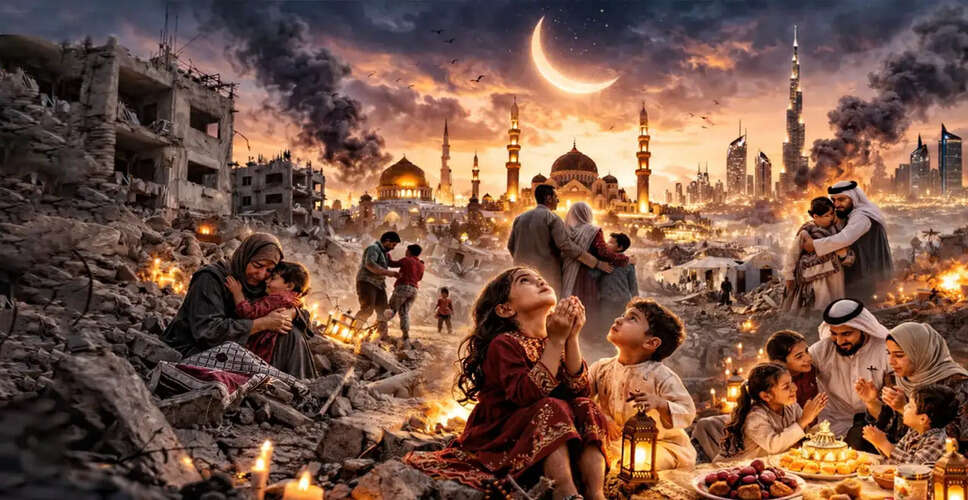
A Different Kind of Eid Celebration
Each year, the celebration of Eid begins with the sighting of the moon. Whether it's a cleric, a family, or a community committee, eyes turn skyward after sunset, searching for the crescent that signifies the end of Ramadan and the start of festivities. This moment is highly anticipated in the Islamic calendar, as billions of people collectively await the ‘Eid ka Chand’ to commence their celebrations after a month of fasting. However, this year presents unique challenges. In countries like Iran, Saudi Arabia, Qatar, Oman, and the UAE, the skies are filled with more than just the awaited moon; they are overshadowed by drones, fighter jets, and the aftermath of weeks of bombardment. The traditional moon-sighting committees are struggling to fulfill their roles amidst ongoing conflicts, making the cherished ritual of Eid genuinely difficult to observe.
This year's Eid is distinct, not because the Gulf nations have never celebrated amidst war, but because the conflicts are now internal, making the moon seem even more elusive. When one cannot safely gaze at their own sky, a fundamental loss is felt. For millions of Muslims, this Eid begins not with joy, but with a profound sense of loss.
Eid in Gaza: A Time of Grief
Two Wounds, One Festival
Gaza is experiencing its second Ramadan amidst devastation. Seventeen months after the world witnessed the tragedy unfold, the violence continues unabated. For Palestinian families, Eid is not merely a celebration; it embodies grief disguised as festivity, as the children who should be joyfully collecting their Eidi are absent. The questions of right and wrong can be debated later, but the reality remains: the dead are gone, and the rubble is a constant reminder of loss. This Eid, like the previous one, is being observed in the ruins of homes, where families have lost count of their loved ones.
Millions are marking Eid this year in active conflict zones, not as mere statistics, but as families who have spent Ramadan fasting, praying, and hoping for change that has yet to arrive. Recently, Iran, a nation with a Muslim majority of 90 million, has also felt the weight of war. Regardless of one's views on the Iranian government or the geopolitical implications of military operations, the individuals fasting during Ramadan under bombardment are not military leaders; they are ordinary people seeking solace in their faith.
The Changing Atmosphere of Eid in the Gulf
Traditionally, Saudi Arabia, the UAE, Jordan, and Bahrain were the go-to destinations for Eid celebrations, filled with lights, bustling malls, and festive gatherings. This year, however, the atmosphere is markedly different. While decorations were put up and greetings exchanged, the overall mood felt subdued and heavy. Governments spoke of de-escalation, but the populace was glued to their screens, witnessing the same distressing footage as everyone else. The disconnect between official narratives and the lived experiences of people has always existed, but this year, it was particularly stark.
Empathy in Times of Grief
What the World Owes This Moment
For both Muslims and non-Muslims, this is not a distant grief to observe. When nearly two billion people enter a festival carrying the weight of loss, that burden resonates globally. Empathy does not necessitate agreement on political matters. One does not need to share a stance on Iran, Gaza, Qatar, or Israel to acknowledge that those preparing Eid meals in cities like Tehran, Rafah, or Khartoum deserve recognition as human beings first. Their grief transcends political discourse, and a child awaiting Eidi in a war-torn city is not merely a geopolitical statistic.
The Resilience of Eid
Because Eid, Even a Broken One, is Still Eid
The remarkable aspect of Eid, and indeed any festival of faith, is that it does not wait for ideal circumstances. It arrives regardless of the situation. People celebrate in refugee camps, displacement centers, and homes with taped windows, bringing out sweets and raising their prayers, holding their children a little closer. Someone will still look up tonight in search of the crescent moon, as is tradition on Eid al-Fitr. Because even a fractured Eid remains a celebration of faith.