
Egypt's Diplomatic Move Shakes Turkey Amid Iran-Israel Conflict
Egypt's Strategic Initiative
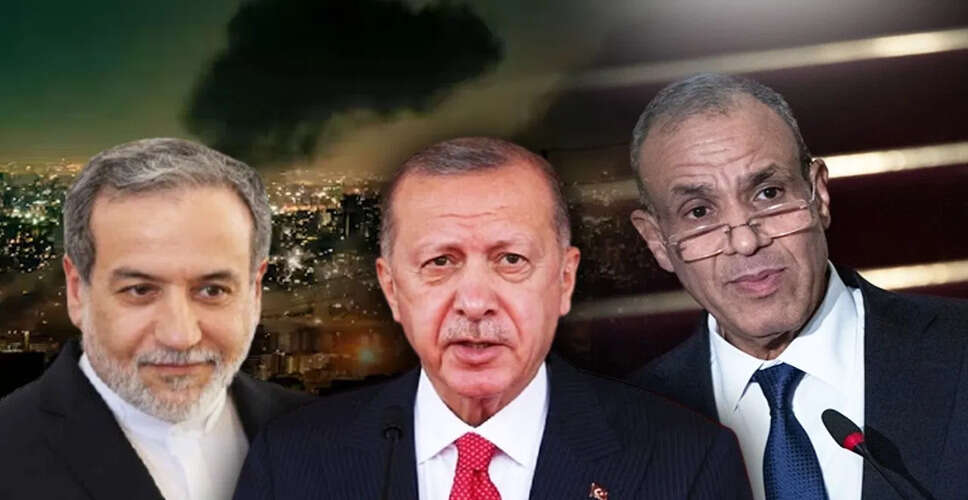
In the midst of the ongoing Iran-Israel conflict, Egypt has dealt a significant blow to Turkey, a known adversary of India. On Tuesday, Foreign Minister Sameh Shoukry engaged in discussions with Iran's Foreign Minister Abbas Araghchi and the U.S. Special Envoy for the Middle East, Steve Hanke. This diplomatic effort by Egypt is seen as a setback for Turkey, which has been attempting to position itself as a mediator amid the escalating tensions between Iran and Israel.
Turkey's Mediation Attempts
President Recep Tayyip Erdoğan has been actively seeking dialogue with various nations to bring an end to the Iran-Israel hostilities. His outreach has included conversations with U.S. President Donald Trump, as well as leaders from Kuwait, Oman, and Sudan, among others in the Middle East. Additionally, Turkey's Foreign Minister has reached out to counterparts in the UK and Russia in a bid to facilitate peace. However, Turkey's efforts have largely remained preparatory, while Egypt has taken decisive steps towards establishing a ceasefire.
Statements from Egypt's Foreign Minister
Egypt's Foreign Minister Sameh Shoukry emphasized the need for diplomatic solutions during separate phone calls with both Araghchi and Hanke. He highlighted the importance of managing the crisis through political dialogue, warning that ongoing hostilities could lead to regional instability with far-reaching consequences.
Consequences of Escalating Violence
Shoukry cautioned that without an immediate ceasefire, the situation could spiral out of control, resulting in increased violence in the Middle East. He asserted that military action is not the solution, advocating instead for dialogue as the only sustainable path forward. His remarks come at a time when tensions between Israel and Iran are intensifying.
Turkey's Ongoing Efforts
President Erdoğan has consistently advocated for resolving the Iran-Israel dispute through discussions with various heads of state. The Turkish government has engaged with multiple countries, including the U.S., Russia, Kuwait, Oman, Sudan, and the UK. Previously, Turkey had also played a mediating role during the Russia-Ukraine conflict.
Erdoğan's Motivations for Mediation
Erdoğan's push for mediation in the Iran-Israel conflict appears to be driven by strategic interests. Recently, Ali Akbar Velayati, a senior advisor to Iran's Supreme Leader, revealed that Turkey aims to establish a corridor connecting Azerbaijan to Turkey via Armenia's Syunik province. This corridor could undermine Iran's strategic reach, which is why the project faced delays. It is believed that Erdoğan seeks to strengthen ties with Iran to advance this initiative.