
Efforts Underway to Preserve Assam's Flood-Damaged Manuscripts

Restoration Challenges for Assam's Manuscripts
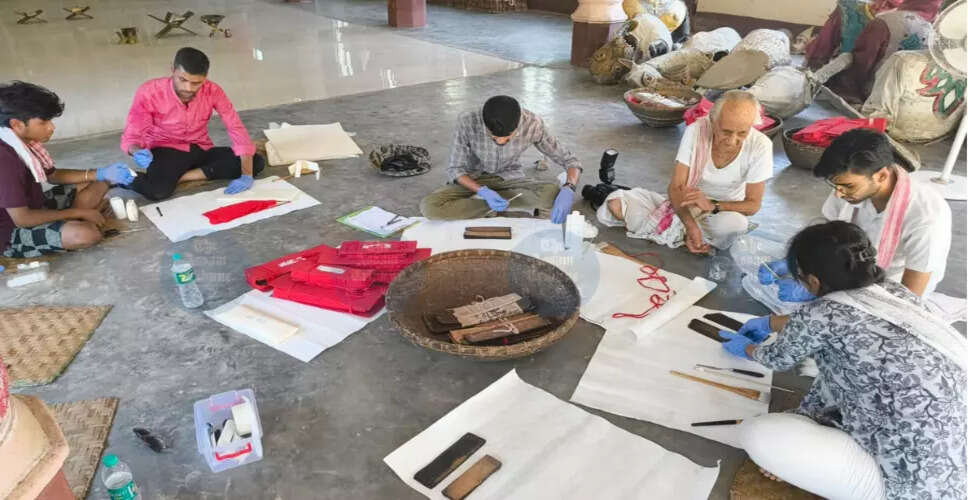
A team from Assam State Museum working in the restoration of flood-damaged manuscripts (Photo: Assam State Museum)
In various locations such as trunks, wooden boxes, libraries, satras, monasteries, and family prayer rooms, manuscripts that endured days of flooding in Upper Assam are now facing a more gradual yet serious threat—moisture, mud, fungus, and potential irreversible damage.
At Sri Sri Medhijan Gajala Satra in Amguri, conservationists discovered families preserving centuries-old Puthis in their homes. Similarly, at Khatpar Satra in Hahchara, around 68 manuscripts were identified as significant, including an 1891 manuscript of Maharaj Prithu Naat.
However, the risk extends beyond the satras traditionally linked to Assam’s manuscript heritage.
A team from Gauhati University found manuscripts submerged in a family prayer area, lacking any protective covering from floodwater, mud, and silt.
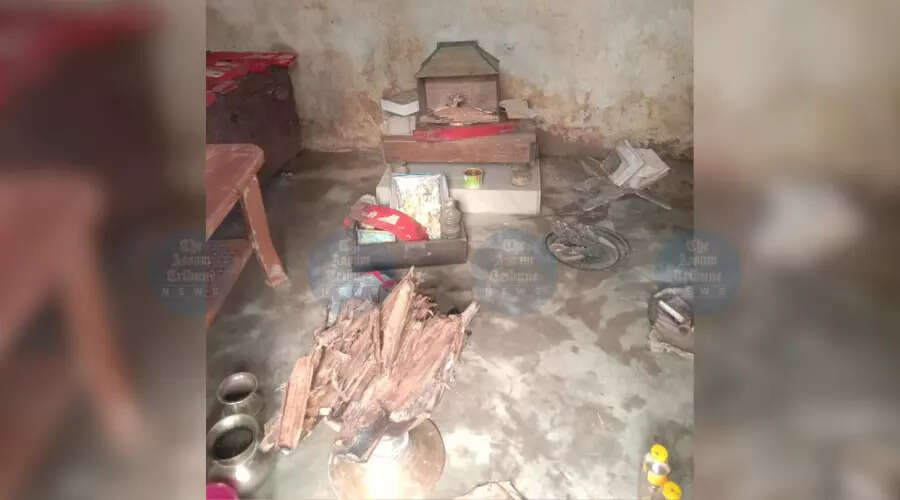
Flood ravaged Namghar housing centuries old manuscripts, damaged in the recent Upper Assam deluge (Photo: Diganta Hazarika)
The Assam State Museum team discovered significant collections at Nazira College and Chalapathar Buddhist Monastery.
For conservationists, museum professionals, and manuscript experts, the challenge has shifted from saving manuscripts from floodwaters to addressing the aftermath of the damage left behind.
“Our focus was not solely on rescuing the manuscripts from the flood, but rather on combating the secondary threat posed by water, silt, moisture, and fungus,” explained manuscript expert and preservationist Diganta Hazarika.
The scale of the task is daunting, with the meticulous treatment of a single manuscript taking anywhere from 15 days to a month.
Currently, the priority is to halt further destruction from water, mud, and fungus before any detailed treatment can commence.
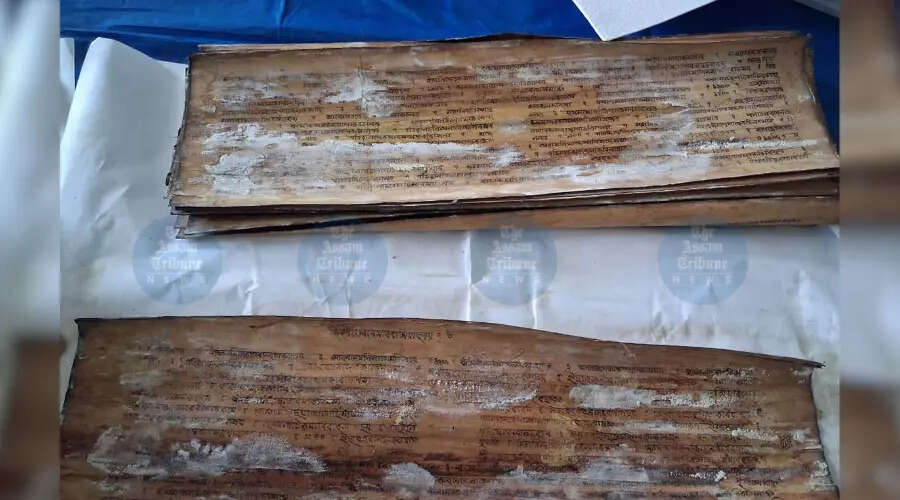
Fungus forms on historic manuscripts after days of exposure to floodwaters (Photo: Dhanjit Talukdar)
Experts emphasize that saving a manuscript does not equate to restoring it. Once soaked, the pages, ink, and fibers may never revert to their original condition.
The Assam State Museum’s assessment indicates that extensive physical or biological deterioration may render complete restoration impossible, even if fragments of text remain for documentation or digitization.
Sanchipat's Unique Challenges
The situation becomes particularly intricate when dealing with manuscripts written on Sanchipat, a material that poses specific conservation challenges in Assam.
Hazarika, who prepares Sanchipat himself, noted that his experience has provided insight into how it reacts to prolonged water exposure.
While its preparation requires soaking for a limited time, extended submergence can lead to rotting.
He also pointed out that manuscript studies outside Assam typically do not specialize in Sanchipat, and there is a lack of research and practical training focused on its preservation.
“Water damage is not the sole issue. A common instinct after flooding is to place wet manuscripts in the sun, which can cause additional harm,” he cautioned.
Experts advocate for controlled drying methods and pressure to keep the material flat, techniques that families are often untrained to implement.
The Assam State Museum has similarly advised custodians against exposing manuscripts to direct sunlight or intense heat, or using hair dryers, heaters, aggressive rubbing, or force to separate stuck pages.
“The first principle is to avoid forcing the manuscript open or separating pages while they are wet,” the museum team advised, recommending that manuscripts be carefully removed from standing water, properly supported, and placed in a clean, well-ventilated area.
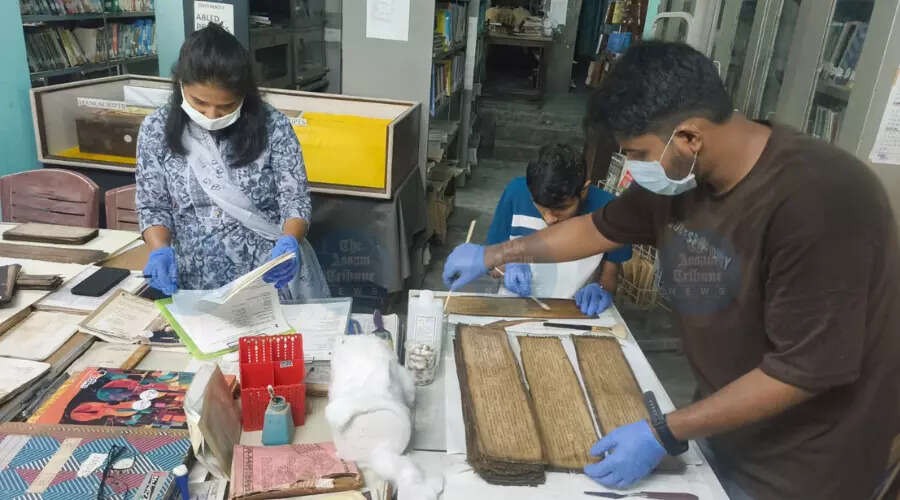
Assam State Museum team carefully working on centuries old manuscript protection (Photo: Assam State Museum)
The museum has also warned against using chemicals, disinfectants, bleach, or household fungicides without professional advice.
The urgency is amplified by Assam’s humid climate, where fungal growth can occur within 24 to 48 hours under favorable conditions when paper remains wet.
Beyond the satras
Some of Assam’s ancient manuscripts were nearly discarded after floodwaters left their pages crumbled, stuck together, or covered in fungus.
To the untrained eye, they seemed irretrievable. However, conservationists recognized them as damaged heritage that could still be salvaged.
Experts noted that some families were on the verge of throwing away old manuscripts post-flood, but conservation teams intervened just in time.
“People are losing lives, loved ones, and homes. In such dire circumstances, heritage often takes a backseat,” remarked Dhanjit Talukdar, a manuscript expert and archival specialist leading a Gauhati University team.
Consequently, conservation teams are racing against time, limited facilities, and a shortage of specialists capable of performing curative conservation.
“While locals attempted to remove manuscripts from water and placed them in the sun, merely taking them out of floodwaters does not constitute rescue in our field,” Talukdar stated.
His team frequently had to operate in makeshift conditions. In one instance, specialists found a dry area, spread acid-free paper on the floor, and began carefully separating the pages one by one, as fungus had already begun to develop.
Experts from Gauhati University preserving manuscripts damaged by floods and fungal infestation at a satra in Sivasagar district. (Photo: Dhanjit Talukdar)
“We found a dry space, laid acid-free paper on the ground, and began to carefully separate the pages one by one, even as fungus had already started to form,” Talukdar explained, adding that the team then used acetone to clean the manuscripts.
What Happens After Rescue?
However, saving a manuscript from immediate destruction is merely the first step. The more challenging question is where it will go afterward.
If a stabilized manuscript is returned to the same box, room, or building that previously left it vulnerable to flooding, what safeguards it from future disasters?
Sheila Bora, State Convener of INTACH and an adviser at Assam Royal Global University, emphasized the lack of scientific storage in many satras. “There, manuscripts are often stored in ordinary boxes instead of acid-free ones,” she noted.
The Assam State Museum’s assessment similarly highlights that conservation efforts cannot conclude with emergency rescue.
Elevated storage, water-resistant arrangements, proper shelving, environmental monitoring, emergency evacuation plans, and disaster preparedness are essential to protect collections from future calamities.
“Every institution housing heritage materials should ideally have a basic collection emergency plan that identifies what needs to be moved first, where it will be relocated, and who will be responsible for the response,” the museum stated.
Currently, various initiatives are underway to prevent the permanent loss of flood-damaged manuscripts.
A Secondary Line of Defense
Digitization could serve as a secondary line of defense, although experts stress that it cannot replace the physical manuscript.
Bora mentioned that previously rescued manuscripts are already being digitized, with teams developing methods to document them at the satras since custodians are sometimes hesitant to allow manuscripts to leave their premises. Digital copies are numbered, labeled, and provided to the satradhikars.
She is also seeking funding for a scanner that she believes could help recover lost writing from damaged manuscripts. “The potential is significant, but the immediate priority remains physical stabilization,” she added.
For the Assam State Museum, digitization is part of a long-term strategy, not a substitute for conserving the original.

Manuscripts forming an inevitable part of Assam's heritage left to dry after floods (Photo: Diganta Hazarika)
“The immediate priority is physical stabilization, but once manuscripts are sufficiently stable, high-quality digitization can create a valuable secondary record of their contents,” the museum stated, emphasizing that “a digital image preserves information, but it cannot replace the original manuscript as a historical and material object.”
For these manuscripts, survival is no longer about restoring them to their pre-deluge state. It is about preserving whatever remains: a page, a script, a fragment, perhaps a piece of knowledge yet to be deciphered.
However, the real challenge begins once the rescuers depart. Unless Assam can provide these fragile records with safer storage, scientific care, and protection, what has survived the water could still be lost forever.