
Efforts to Protect Wildlife: New Mitigation Measures on Indian Railways
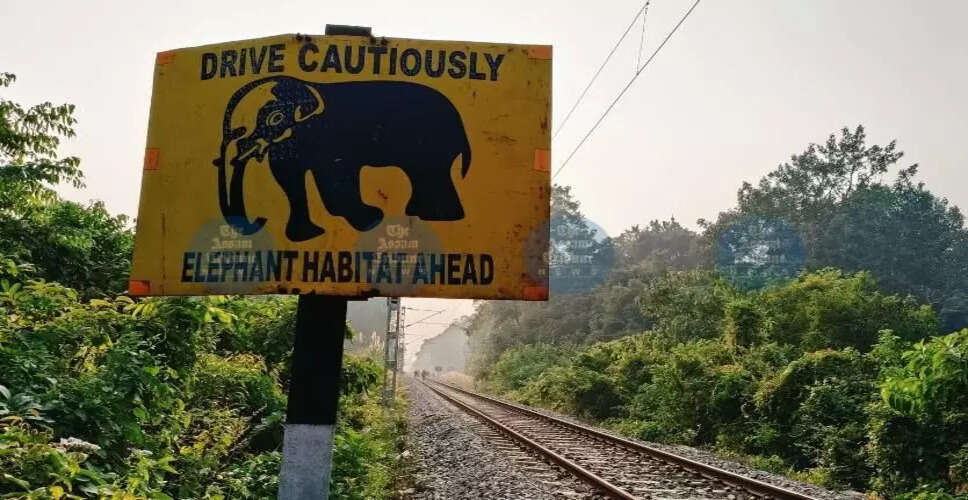
Addressing Wildlife Mortality on Railways
New Delhi, Mar 13: To combat the increasing number of wildlife fatalities on railway tracks, the Ministry of Environment, Forest and Climate Change, in collaboration with the Ministry of Railways, has pinpointed 110 railway segments within elephant habitats and 17 segments in two tiger habitats. A total of 705 mitigation strategies have been proposed to facilitate safe animal crossings, as reported by an official on Thursday.
During a two-day national workshop titled “Policy Implementation for Minimising Elephant Mortalities on Railway Tracks” at the Wildlife Institute of India in Dehradun, the official elaborated on the mitigation measures recommended for these critical areas. This package includes 503 ramps and level crossings, 72 bridge modifications, 39 fencing or trenching installations, four exit ramps, 65 new underpasses, and 22 overpasses, all aimed at enhancing wildlife safety and minimizing train collisions.
Following a thorough evaluation of 127 railway stretches covering 3,452.4 km, 77 stretches across 14 states, totaling 1,965.2 km, were prioritized for these mitigation efforts based on wildlife movement patterns and the potential for animal fatalities. Joint field surveys conducted by teams from Project Elephant, the Wildlife Institute of India, state forest departments, and Indian Railways assessed specific ecological conditions and proposed tailored mitigation solutions for each site.
The workshop, which took place on March 10–11, was organized by the Information Project Elephant Division of the Ministry of Environment, Forest and Climate Change in partnership with the Wildlife Institute of India. Approximately 40 participants attended, including senior officials from the ministry’s Project Elephant Division, the Ministry of Railways, forest departments from elephant-range states, and prominent conservation scientists.
Key railway zones represented included East Central Railway, East Coast Railway, North Eastern Railway, Northeast Frontier Railway, Northern Railway, South Eastern Railway, Southern Railway, and South Western Railway.
The event featured technical discussions on elephant ecology, infrastructure planning, and biodiversity conservation, highlighting the necessity for coordinated planning at the intersections of railway lines and wildlife corridors.
“Participants analyzed state-level data, case studies, and the primary factors contributing to animal-train collisions, such as habitat fragmentation, land-use changes, train speeds, night operations, and seasonal elephant movements,” stated a report. “Regional working groups evaluated mitigation strategies across significant landscapes, including the Shivalik-Gangetic Plains, Central India, Eastern Ghats, North-East India, and the Western Ghats, identifying gaps and proposing landscape-specific strategies. Best practices discussed included early-warning systems, sensor and AI-based detection technologies, GIS monitoring, and community alert and patrolling networks,” it concluded.