
Efforts to Preserve Delhi's Water Bodies Stalled by Bureaucratic Delays

Challenges in Protecting Water Bodies in Delhi
In New Delhi, attempts to safeguard rapidly vanishing water bodies are hindered by bureaucratic sluggishness and a lack of coordination among government departments. Over the past five years, the Delhi State Wetland Authority has reminded land-owning agencies in north-west Delhi eight times about the deteriorating condition of these water bodies, yet no satisfactory improvements have been observed. The authority has acknowledged in its records that no effective actions have been taken thus far. Delays in correspondence and action have been noted, but concrete measures for the conservation of these water bodies are still awaited.
Institutional Barriers to Conservation Efforts
This situation exemplifies the institutional barriers faced in conserving water bodies in Delhi. Seventy-year-old Ram Naresh Kaushik was appointed as one of 27 'Wetland Friends' by the Delhi government in 2021. This voluntary initiative aimed to engage the public in efforts to protect and rejuvenate water bodies. Kaushik, a retired electrical engineer, began documenting the status of seven water bodies in the Rampura and Shakurpur areas of north-west Delhi using revenue maps, khasra records, and government correspondence. Despite writing over 50 letters to various government departments, he claims that not a single complete map of any water body has been prepared, nor have they been officially demarcated. Once covering a total area of 6.3 acres, these water bodies have been shrinking due to neglect, with some completely disappearing.
Lack of Concrete Action Despite Complaints and RTIs
Kaushik's efforts to save the water bodies extended beyond mere letter writing. He provided maps and khasra details to the relevant authorities, filed Right to Information (RTI) applications, and participated in meetings to advance the cause. Nevertheless, the identification and demarcation of the water bodies remain incomplete.
The Delhi State Wetland Authority has repeatedly written to the concerned departments. According to available correspondence, the most recent reminder was issued on April 29, 2026, urging the District Magistrate of Central North Delhi to take prompt action.
Ongoing Administrative Challenges
Prior reminders were sent on October 23, 2025, June 17, 2022, April 26, 2023, September 21, 2023, March 18, 2024, May 21, 2024, and August 14, 2025. These letters indicate that over the past five years, the issue has been passed around among the Delhi State Wetland Authority, the engineering and land management departments of the Delhi Development Authority (DDA), district administration, sub-divisional magistrate offices, and the revenue department.
In 2022, the DDA finally agreed to initiate the demarcation process for the water bodies. However, this work has stalled due to the lack of clear maps necessary for accurately determining their boundaries. Kaushik alleges that the District Magistrate of north-west Delhi, who was the nodal officer for complaints related to these water bodies, also failed to take effective action.
New Administrative Structure, Same Problems
This year, a significant administrative reorganization occurred in Delhi's districts. Consequently, the area in question fell under the jurisdiction of the new Central North district administration. After the Wetland Authority sent a letter to the new District Magistrate, Kaushik personally visited them. However, he was informed that the matter had been forwarded to the relevant sub-divisional magistrate (SDM).
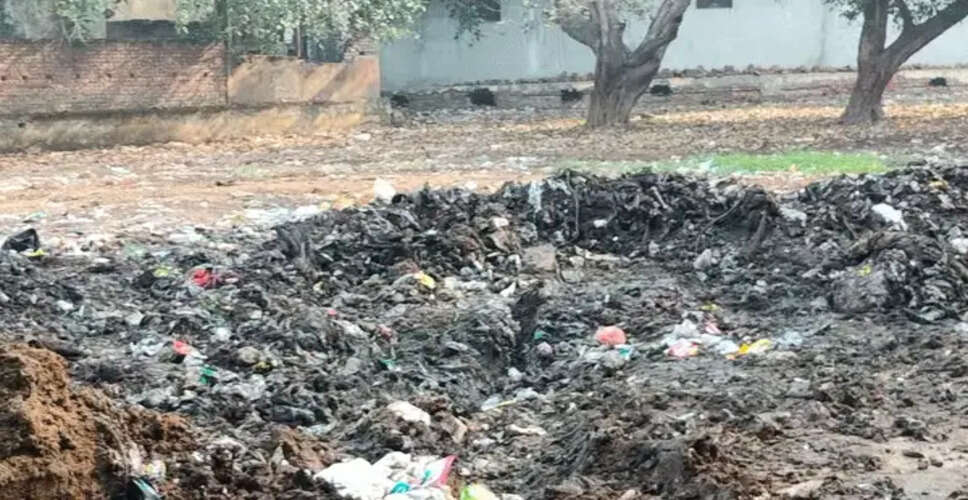
Kaushik expressed surprise at this situation, noting that the new District Magistrate's office is located just 10 meters from one of the completely dried-up water bodies, which is littered with garbage. Despite this proximity, no improvements have been made to the condition of the water body.
Continued Advocacy for Water Body Protection
On August 1 of the previous year, Kaushik also wrote to Delhi's Environment Minister Manjinder Singh Sirsa, drawing attention to the issue. He complained that the identification, physical survey, and boundary demarcation of the water bodies had not yet been completed.
Following this complaint, he received two letters from the Minister's Officer on Special Duty (OSD), addressed to the Principal Secretary and Secretary of the Environment Department. However, Kaushik asserts that despite these letters, no significant changes have occurred on the ground. Responses were sought from the District Magistrate, the Environment Minister's office, the Delhi State Wetland Authority, and the DDA, but no replies were received by the time of publication.
A Broader Crisis for Water Bodies in Delhi
The challenge of preserving water bodies is not limited to Rampura and Shakurpur. The National Green Tribunal (NGT) is also monitoring the status of Delhi's water bodies under a pending case. In 2024, the Wetland Authority informed the tribunal that a significant number of water bodies could not be identified through satellite imagery. According to the authority, this may be due to illegal filling or encroachments, yet no effective action has been taken in this regard.
In a March affidavit, the Delhi State Wetland Authority acknowledged that many water bodies have been encroached upon. According to the authority's records from 2022, 1,045 water bodies are documented in revenue records. Additionally, 322 other water bodies have been identified through satellite images. However, despite these large numbers, the demarcation of all these water bodies remains incomplete.
The Importance of Timely Action
The authority informed the National Green Tribunal that the Delhi Development Authority has only managed to demarcate 124 water bodies so far. This highlights that despite the presence of water bodies in government records, the actual determination of their status and boundaries on the ground is significantly lagging.
Preserving water bodies in Delhi is crucial for maintaining groundwater levels, rainwater harvesting, and balancing the local environment. If the processes for identifying, demarcating, and removing encroachments continue to be delayed, the risk of these water bodies disappearing entirely will increase. Ram Naresh Kaushik's five years of efforts and over 50 letters illustrate that merely having water bodies recorded in government documents is insufficient. Timely action, improved coordination among departments, and effective conservation efforts on the ground are essential for their survival.