
Dr. B.R. Ambedkar: Champion of Equality and Social Justice
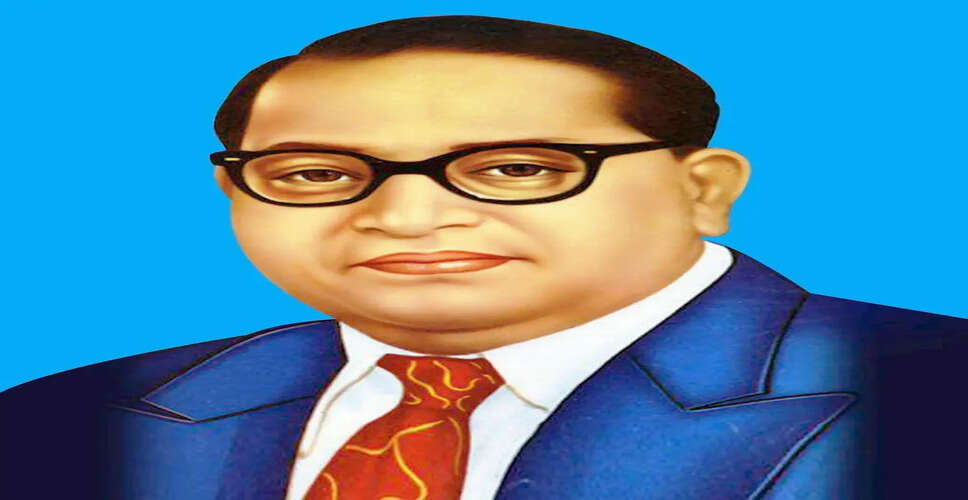

Celebrating the Legacy of Dr. B.R. Ambedkar
-Dr. Ambedkar's Struggle for Equality, Brotherhood, and Social Justice
-A Special Tribute on the 125th Birth Anniversary of the Constitution Architect
Jaipur. Jawaharlal Nehru, the first Prime Minister of India, referred to Dr. B.R. Ambedkar as the architect of modern India and a pioneer of social reforms. As the Minister of Law, Dr. Ambedkar introduced the Hindu Code Bill in Parliament to secure equal rights for women, which included provisions for property and divorce rights. He believed that the social status of women is a reflection of a society's progress, emphasizing that education is the most significant means of social change. Dr. Ambedkar was born on April 14, 1891, in Mahu, Madhya Pradesh.
His guiding principle was 'Educate, Organize, and Agitate,' reflecting his vision for social empowerment and collective progress. He regarded Mahatma Jyotirao Phule as his mentor, deeply influenced by his ideas and social movements. He also considered saints like Kabir and Gautam Buddha as his philosophical guides, adopting Buddha's principles of equality and brotherhood throughout his life. Dr. Ambedkar frequently encouraged women, laborers, and marginalized communities to pursue education. He played a crucial role in ensuring rights for workers, including work hours, minimum wages, and other entitlements. His vision led to the establishment of the Reserve Bank of India.
Dr. Ambedkar was a key architect of the Indian Constitution, a social reformer, economist, advocate for women's rights, and a champion for laborers and the Dalit community. He dedicated his life to the fight for equality, brotherhood, and social justice, raising his voice against caste-based discrimination and ensuring fundamental rights for the oppressed, women, and workers through the Constitution. He served as the chairman of the drafting committee of the Constitution, which guaranteed justice, liberty, and equality for all citizens. He fought a long battle against untouchability and initiated publications like 'Mooknayak' and 'Bahishkrit Bharat' to raise awareness among the masses. His historical contributions to labor rights, equality, and security included reducing work hours from 14 to 8, maternity leave for women, minimum wages, and the introduction of employee state insurance. He recognized trade unions and secured legal rights against exploitation through the Constitution, ensuring the right to organize and collective bargaining for workers. Provisions against bonded labor, child labor, and equal pay for equal work were included in Articles 23, 24, 39, and 43 of the Constitution.
In 1942, during the 7th Indian Labour Conference, he implemented the rule to reduce working hours in factories from 14 to 8. He also drafted the Minimum Wages Act, which was enacted as law in 1948. In 1944, he introduced the Payment of Wages (Amendment) Bill, which included provisions for dearness allowance, leave benefits, salary revisions, overtime pay, and subsidized meals.
Dr. Ambedkar fought a historic battle for women's equality, education, and property rights through the Hindu Code Bill. As a Constitution maker, he ensured equal rights for women, including divorce, adoption, and inheritance rights. Through the Indian Constitution, he guaranteed women's voting rights, equal pay for equal work, and equality in education and employment. He introduced the Hindu Code Bill to grant women the right to divorce, inherit property from their fathers, and adopt children. Although it was not passed immediately, its provisions were later adopted as Hindu law.
He inspired women to pursue education and build self-confidence, famously stating that women's education is more crucial than men's. He strongly opposed social evils like child marriage, purdah, and the devadasi system, encouraging women to lead dignified lives. Dr. Ambedkar advocated for maternity rights for women in the workplace. He emphasized that the government should prioritize the safety of Hindus and Buddhists living in Kashmir, a prediction that proved accurate as Hindus and Buddhists were expelled from Kashmir in the 1990s. If only the government had taken his words seriously, the outcomes might have been different. During the partition of India and Pakistan, he advised Hindus remaining in Pakistan to leave quickly, as their future there was uncertain. This prediction is now being validated, as Hindus in Pakistan face ongoing persecution and forced conversions.
In conclusion, it can be said that this great man did not receive justice in his time. However, today his thoughts are being discussed beyond university seminars and are resonating in public gatherings. The narrative of Ambedkar's contributions is being shared, and the number of his followers continues to grow.

-Dr. Lokesh Kumar
Independent Journalist