
Diverse Weather Conditions Expected for Fourth of July Celebrations Across the U.S.

Weather Extremes for Independence Day
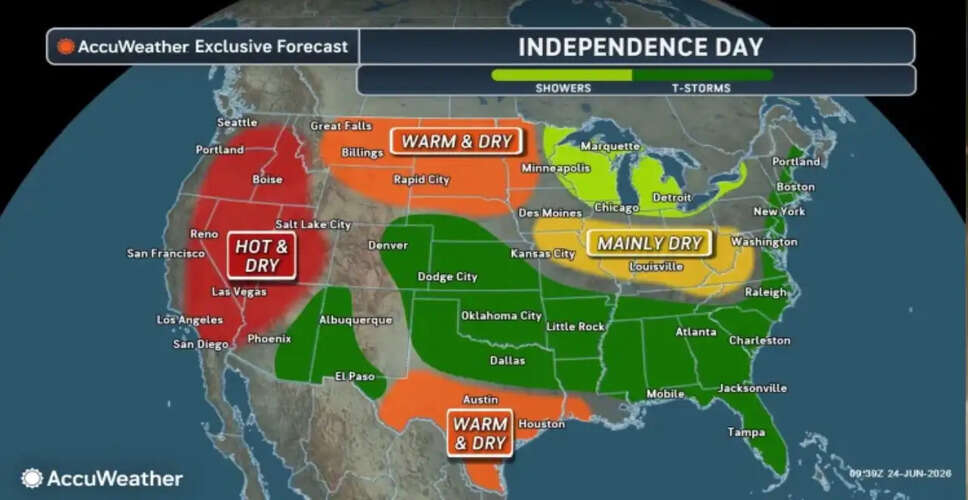
This Fourth of July, Americans may encounter contrasting weather patterns, with a severe heat wave affecting much of the Western U.S. and Texas, while thunderstorms could disrupt festivities in parts of the Plains, Southeast, and East Coast. Meteorologists advise that millions attending parades, barbecues, concerts, and fireworks should brace for either extreme heat or unpredictable weather based on their location.
Heat Dome Impacting the West and Texas
As per AccuWeather, a significant heat dome is set to envelop a large portion of the western United States in the days leading up to Independence Day, driving temperatures into the 90s and even surpassing 100 degrees in certain regions. The hottest areas are anticipated to be California, Nevada, Utah, Idaho, Oregon, Washington, and parts of Arizona. Additionally, southern Texas and southwestern Louisiana are predicted to experience hot and dry conditions. The combination of soaring temperatures and dry vegetation raises concerns about wildfires, prompting officials to warn that fireworks could ignite rapidly spreading fires. Many communities may impose restrictions on fireworks or cancel displays if conditions deteriorate.
AccuWeather's senior meteorologist, Chad Merrill, highlighted that worsening drought conditions and dry thunderstorms could heighten wildfire risks across the interior West. "Increasing drought and dry thunderstorms in the interior West will elevate the wildfire threat," Merrill stated, noting that smoke from significant fires could drift into the Rockies, Plains, and parts of the Midwest.
Thunderstorms May Interfere with Celebrations
While the West swelters under extreme heat, unstable weather is anticipated to form along the periphery of the heat dome, leading to scattered thunderstorms in parts of the central and eastern United States. Rain and thunderstorms could impact areas of the Great Plains, Southeast, and sections of the East Coast, potentially disrupting outdoor Independence Day activities and fireworks displays. Some regions in the Upper Midwest may also see isolated showers, although rainfall there is expected to be less widespread.
Ideal Locations for Fourth of July Weather
The most favorable weather conditions are predicted for much of the Midwest and certain areas of the Ohio Valley and Mid-Atlantic. States likely to experience mainly dry and pleasant weather include parts of Iowa, Missouri, Illinois, Indiana, Kentucky, Ohio, West Virginia, Pennsylvania, Virginia, North Carolina, and Tennessee. "The Ohio Valley and Northeast are expected to have the best weather on the Fourth of July, with greater chances of remaining dry and not excessively hot," Merrill noted.
Travelers Advised to Stay Informed
Meteorologists warn that summer weather can shift rapidly, particularly in areas where thunderstorms are forecasted. Authorities are urging travelers and event organizers to stay updated on local weather reports and adhere to any fire safety or fireworks restrictions issued by local officials before heading out for Independence Day celebrations.