
Distribution of Solar Chargers and Lamps to Rural Households in Kangra
Empowering Rural Communities with Sustainable Energy
Kangra
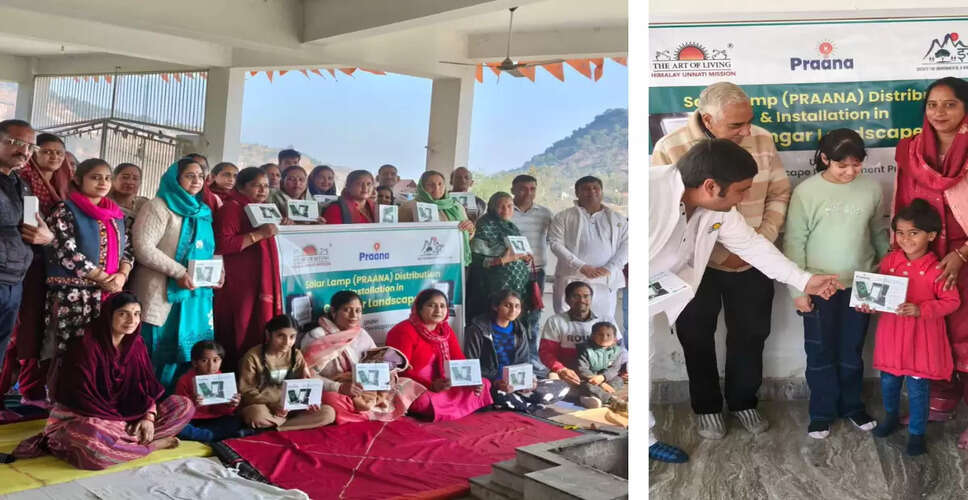
A distribution event for PRAANA mobile chargers and solar lamps took place in the Changar Landscape, located in the Khundian block of Kangra district. This initiative, part of the HUM–SSRDP x PRAANA program, was executed with the assistance of the Art of Living organization. The primary goal was to offer clean and sustainable energy solutions to rural households that have been affected by disasters and lack energy access.
During this initiative, 90 solar-powered mobile chargers and solar lamps were given to families in need. Organizers highlighted that this initiative would alleviate daily hardships, enhance household safety, and maintain mobile connectivity during power outages and emergencies.
Community Engagement and Support
The event was led by the Himalay Unnati Mission – Sri Sri Rural Development Programme (HUM–SSRDP), with significant contributions from its partner, the Society for Environmental and Rural Awakening (ERA), and support from PRAANA. Local leaders, volunteers, and a dedicated field team, including Mr. Pradeep Sharma (Director, ERA), Mr. Satish Kumar, Mr. Balram Garg, and Mr. Munish Kumar, were instrumental in the program's successful execution.
Community Voices and Impact
At the event, Mr. Amit Mehta, Program Director of Himalay Unnati Mission, remarked:
“Guided by the vision of the Art of Living, HUM–SSRDP, along with partners like ERA, is dedicated to enhancing community resilience in the Himalayan region through sustainable and people-focused solutions.”
Families who received the solar lamps and chargers expressed their appreciation, stating that these resources would greatly enhance their safety, communication, and overall living conditions.
A Commitment to Sustainable Development
Organizers reiterated that this initiative showcases the shared commitment of the Art of Living, HUM–SSRDP, ERA, and PRAANA towards fostering sustainable development, disaster resilience, and inclusive growth in the Himalayan region.