
Discovery of Rare Himalayan Bee in Arunachal Pradesh
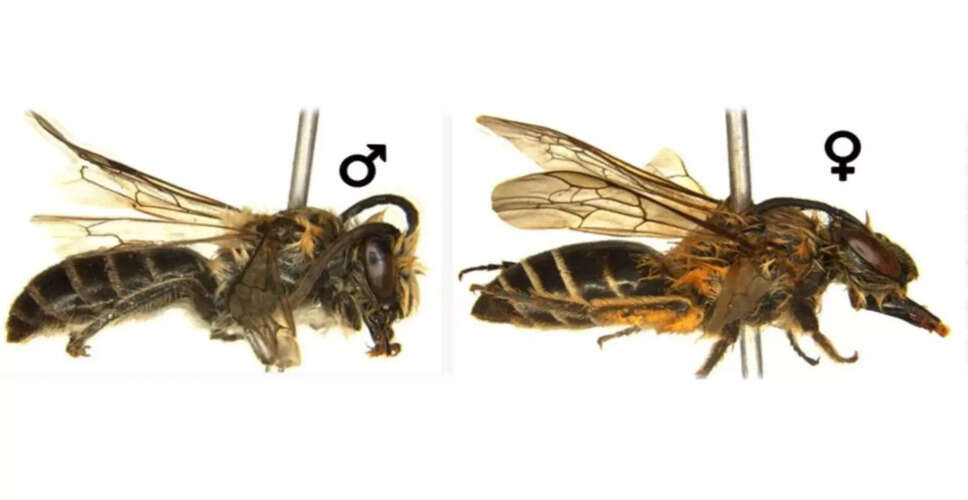

First Record of Colletes bhutanicus in India
A rare solitary Himalayan bee, Colletes bhutanicus. (Photo:@ChownaMeinBJP/X)
Itanagar, Aug 12: Scientists from the Zoological Survey of India (ZSI) have identified a rare solitary bee species, Colletes bhutanicus, for the first time in India, specifically in the Tawang district of Arunachal Pradesh.
This discovery was made during a recent survey conducted by ZSI researchers Dibyajyoti Ghosh, K A Subramanian, and Dhriti Banerjee.
The bee was observed at altitudes between 1,500 and 3,800 meters, visiting a variety of 25 flowering plants, such as mustard, buckwheat, coriander, beans, chili, and eggplant.
Unlike honeybees, Colletes species are solitary creatures that do not form large colonies. Each bee typically nests alone and plays a crucial role in pollination by transferring pollen and nectar between flowers.
This finding enriches the understanding of bee diversity in the eastern Himalayas, according to officials.
Previous taxonomic research has recorded C. bhutanicus in Bhutan and certain regions of China. A study published in 2014 in Zootaxa included this species among the Colletes bees found in China.
Scientific observations from Xizang have also noted this species at various high-altitude sites, including locations above 3,800 meters, showcasing its adaptation to the Himalayan ecosystem.
Arunachal Pradesh is recognized for its diverse altitudes, climates, and vegetation, making it a significant area for biodiversity in India. This recent finding underscores the importance of ongoing biodiversity assessments in the state's remote mountainous regions, where many species remain inadequately documented, according to officials.
Deputy Chief Minister Chowna Mein expressed pride in the discovery of this rare bee in Tawang, emphasizing its potential contribution to supporting agriculture in mountainous areas.