
Diplomatic Talks in Islamabad: Uncertainty Surrounds Iran's Participation

Diplomatic Efforts in Islamabad
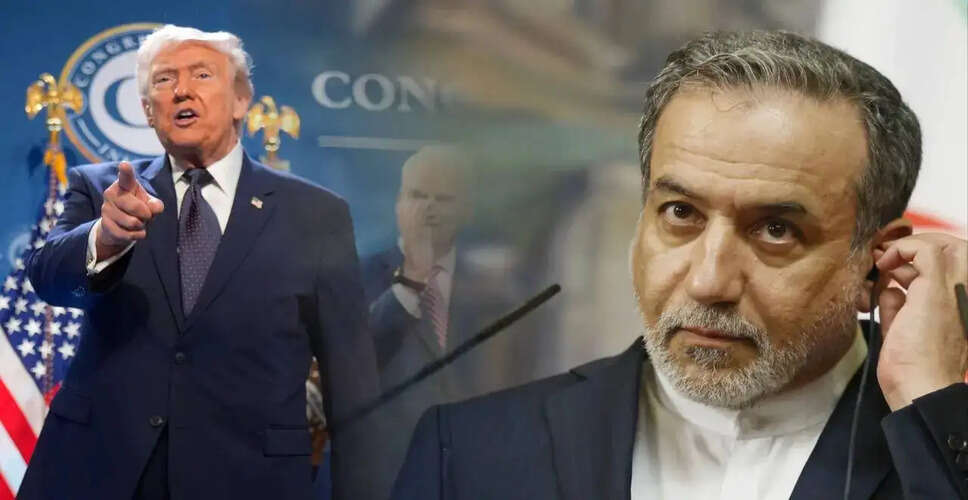
Islamabad is gearing up for crucial diplomatic discussions, yet a significant participant may be absent. As efforts to mediate the ongoing conflict involving Iran escalate, the anticipated peace negotiations in Pakistan's capital are shrouded in uncertainty. Reports confirm the arrival of a US delegation, but conflicting information regarding Iran's involvement has left the future of the talks uncertain.
Initial reports indicated that an Iranian delegation, headed by Foreign Minister Abbas Araghchi and Parliament Speaker Mohammad Bagher Ghalibaf, had arrived in Islamabad on Thursday night. However, Iranian news sources, including Mehr and Fars, have firmly denied any such arrival, leading to confusion about the feasibility of the discussions.
US Delegation Ready and Waiting
US Delegation In Place, Waiting For Counterpart
On the American front, preparations are well underway. The White House has confirmed that Vice President JD Vance is at the helm of the delegation, which includes notable figures such as Jared Kushner and special envoy Steve Witkoff. A 30-member advance security and tactical team had previously arrived at Nur Khan Air Base to manage logistics and security, indicating that the US is treating these talks as confirmed, despite the ongoing uncertainty regarding Iran's participation.
Iran's Mixed Signals
Iran’s Silence And Mixed Signals
The current uncertainty revolves around Iran. While Western sources suggest that Iranian representatives are either en route or may have already arrived from Baku, official Iranian media have denied any such developments. This discrepancy has resulted in a scenario where one party is prepared and present, while the other remains ambiguous. Such mixed signals are not unusual in high-stakes negotiations, especially when issues of leverage and narrative are at stake.
Objectives of the Islamabad Talks
What The Talks Are Meant To Achieve
Should the talks proceed, they are expected to tackle several vital issues. Central to the discussions is a ceasefire framework, reportedly based on a 10-point proposal that includes stopping hostilities, reopening key trade routes like the Strait of Hormuz, and discussing sanctions relief. The talks are also anticipated to address broader regional security matters, with Pakistan acting as a mediator to avert further escalation.
The timeline reflects the ongoing uncertainty. While initial reports suggested that negotiations would commence on Friday, updates now indicate that the first round may occur on Saturday, contingent on both delegations being present. The delay and conflicting reports highlight the delicate nature of the process. Currently, the United States is prepared to engage, while Iran's participation remains uncertain. Until this issue is clarified, the Islamabad talks, viewed as a potential turning point in the conflict, remain in a state of limbo. In diplomacy, presence is crucial, and at this moment, that presence is still uncertain.