
Did Trump Really Mediate Between India and Pakistan? Unpacking His Claims
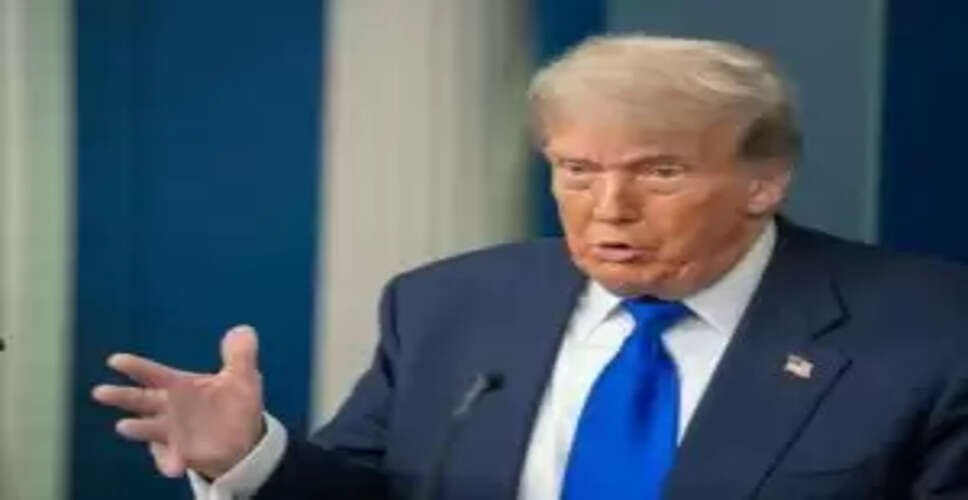
Trump's Bold Assertions on India-Pakistan Conflict
New York/Washington: On Tuesday, US President Donald Trump reiterated his claim that he played a crucial role in averting a potential war between India and Pakistan, stating that five aircraft were downed during the tensions.
He suggested that the conflict could have escalated into a nuclear confrontation, saying, "We stopped wars between India and Pakistan, as well as between the Democratic Republic of the Congo and Rwanda," during a gathering at the White House with members of Congress.
Trump elaborated, "They shot down five planes, and it was a back-and-forth situation. I intervened, warning them that trade would cease if hostilities continued. Both nations are nuclear powers, and the situation could have spiraled out of control, but I intervened."
He also claimed that the US had dismantled Iran's nuclear capabilities and had a hand in resolving disputes between Kosovo and Serbia.
Trump questioned whether current President Joe Biden could achieve similar results, expressing skepticism about Biden's awareness of these international issues.
In a recent statement, Trump mentioned for the first time that five jets were indeed shot down during the conflict, emphasizing the severity of the situation between the two nuclear nations.
Meanwhile, Acting US Representative Ambassador Dorothy Shea addressed the UN Security Council, highlighting the US's ongoing efforts to mediate disputes globally, including those between India and Pakistan.
She noted that the US had facilitated de-escalation in various conflicts, including those involving Israel and Iran, and praised the resolutions achieved under Trump's leadership.
India's Permanent Representative to the UN, Ambassador Parvathaneni Harish, spoke about the Pahalgam terror attack, for which a Pakistan-based group claimed responsibility, stressing the need for accountability for cross-border terrorism.
Harish pointed out that India had launched Operation Sindoor in response to the attack, which resulted in the deaths of 26 tourists, and emphasized that India's military response was measured and focused.
Since Trump's announcement of a ceasefire between India and Pakistan on social media, he has repeatedly claimed credit for easing tensions, asserting that he encouraged both nations to engage in trade to maintain peace.
Prime Minister Narendra Modi and Trump were expected to meet during the G7 Leaders' Summit in Canada, but Trump returned to Washington early. Modi later clarified that there was no discussion of a trade deal or US mediation during the ceasefire negotiations.
The US has designated The Resistance Front as a Foreign Terrorist Organization, reflecting its commitment to countering terrorism and ensuring justice for the Pahalgam attack.