
Dibrugarh University Unveils Extensive Online Archive of Sanchipat Manuscripts

Celebrating Nabakanta Barua's Legacy
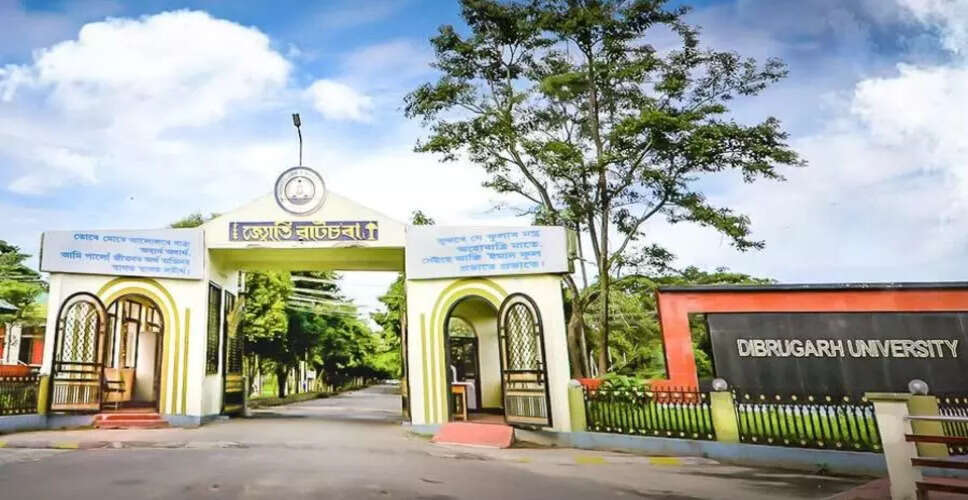
Dibrugarh University (Photo - @DibruUniv / X)
Dibrugarh, Oct 8: In honor of the centenary of esteemed Assamese poet Nabakanta Barua, Dibrugarh University launched the nation’s largest online archive of rare Sanchipat manuscripts on October 6. This initiative aims to make thousands of pages of significant literary and cultural heritage accessible to individuals worldwide.
The digital archive, managed by the Department of Assamese, was officially inaugurated by Vice Chancellor Prof Jiten Hazarika during a two-day seminar dedicated to Barua’s centenary. The archive is available for free at https://duasmdig.assamarchive.org.
Featuring 53,275 pages of rare Sanchipat manuscripts from the Leela Gogoi Memorial Manuscript Museum, the collection includes texts in Assamese, Tai, and Sanskrit, allowing researchers and the public to access these unique materials from anywhere.
Additionally, 72,867 pages of rare books from the personal library of the esteemed critic Mahendra Bora have also been digitized and included in the archive.
This digital initiative was established through a partnership between Dibrugarh University and the Nanda Talukdar Foundation. University officials noted that this Sanchipat collection stands as the largest online repository of its kind in India.
The archive's launch is part of a series of events celebrating Nabakanta Barua, a pivotal figure in Assamese literature.
The two-day ‘Nabakanta Barua Birth Centenary Seminar’ commenced at the university’s Sri Sri Aniruddhadeva Bhawan, featuring a welcome address from the head of the Department, Prof Jayanta Kumar Bora. The seminar was inaugurated by Vice-Chancellor Prof Jiten Hazarika, with a keynote address by Prof Pranjit Bora from Krishna Kanta Handique Assam State Open University, discussing various aspects of Barua’s literary impact.
On the first day, three academic sessions took place. The first, led by Madan Sharma, explored the intellectual and socio-political contexts influencing Barua’s work, with contributions from Munin Bayan and Diganta Oja.
The second session, chaired by Nirajana Mahanta Bezbarua, included presentations by Bibhas Choudhury and Juri Dutta, focusing on Barua’s intellectual stance and his works through the lens of new historicism.
The final session, overseen by Bibhas Choudhury, delved into the socio-political aspects of Barua’s literature, his connections with Gautama Buddha, and his literary ties with Rabindranath Tagore, featuring papers from Arindam Barkataki, Devabhushan Bora, and Pallavi Deka Buzarbaruah.