
Dibrugarh Press Club Assesses Erosion Control Efforts Along Brahmaputra
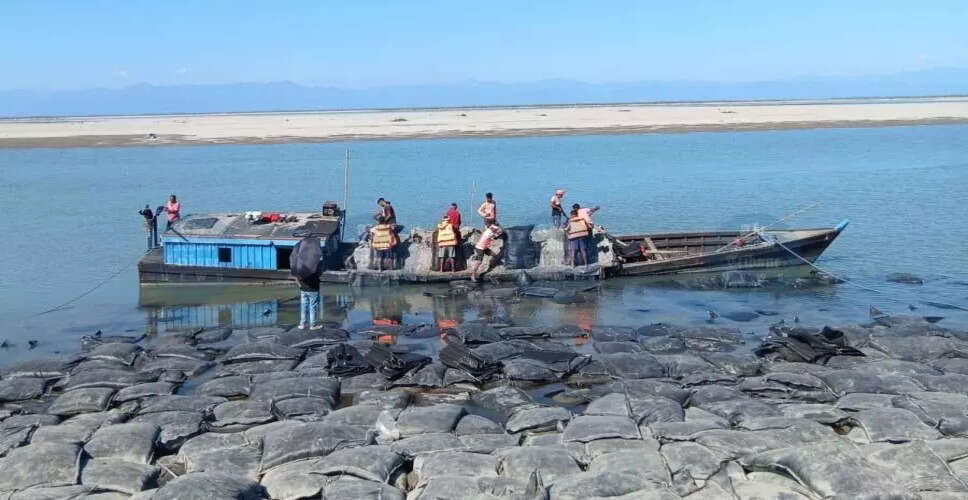

Dibrugarh Press Club Evaluates Erosion Impact
Dibrugarh, Dec 8: On Saturday, a group from the Dibrugarh Press Club (DPC) visited the banks of the Brahmaputra at Nagaghuli, which have been severely affected by erosion over the past decade. They aimed to assess the significant damage and review the ongoing protective measures.
During their visit, officials from the Water Resources Department provided insights into various anti-erosion initiatives being implemented along an 800-meter stretch upstream of Nagaghuli. The current strategy integrates modern C-type geo-bag screening with traditional RCC porcupine structures to combat the river's powerful erosive forces.
Led by president Manash Jyoti Dutta and general secretary Ripunjoy Das, the DPC team traveled by boat alongside departmental engineers to examine the vulnerable riverbank areas. This excursion allowed the media representatives to witness firsthand the extent of land erosion and the effectiveness of the ongoing stabilization efforts.
A significant aspect of the protective measures involves the use of geo-textile bags manufactured by SKAPS Industries, a company engaged in a collaboration between India and the USA. Officials explained that these large, sand-filled geo bags are strategically placed to absorb the force of the water flow and reinforce the most vulnerable sections of the riverbank.
Additionally, reporters learned that similar erosion control projects are underway along the Brahmaputra from Maijan to Mohanaghat, creating a comprehensive defense line for Dibrugarh. Officials highlighted the urgency of the situation, noting that work is being conducted continuously throughout the winter to enhance the city's defenses ahead of the monsoon season and potential renewed erosion.
The broader initiative also encompasses the reinforcement of river spurs near Dibrugarh. This system includes eight stone spurs, three permeable spurs, and 47 wooden spurs, all strategically positioned to redirect the river's current and mitigate its erosive impact.
By
Staff Correspondent