
Devastating Floods Transform Lives in Nazira: Heartbreaking Accounts

The Catastrophe Unfolds
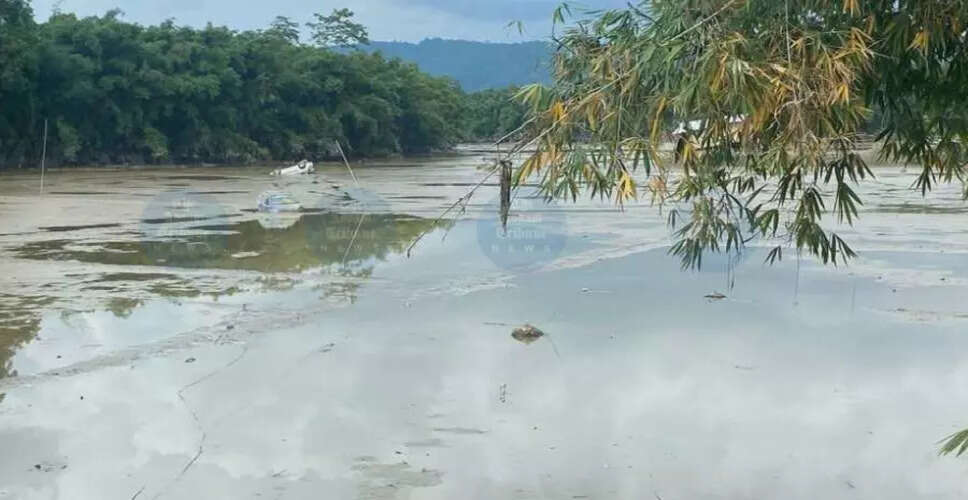
Homes were swept away beneath the raging floodwaters after the July 19 deluge.
For many years, the residents of Hulang Katoni in Nazira regarded the Dikhow River as a peaceful companion. However, on July 19, it transformed into a devastating force.
In mere hours, homes vanished under the furious waters, families were separated, and decades of dreams were washed away.
As the floodwaters gradually recede, they leave behind not only mud-covered houses and ruined possessions but also lives irrevocably changed.
Pinki Neog's Heartbreaking Loss
Pinki Neog stands before her destroyed home, grappling with her grief. The floods took her father, Roj Neog, who went missing on July 19, with his body found on July 22.
Recalling that fateful evening, Pinki described how rain had been relentless. As her family stayed indoors, the power went out, and water began to infiltrate the fields.
Concerned about the electricity, she urged her father to fetch candles. He returned empty-handed from the nearby shop but borrowed her sister's bicycle to try again.
"That was the last time we saw him," she lamented. Shortly after he left, the floodwaters surged dangerously high.
"Our house was engulfed in minutes. We had no time to save anything," she recounted, her father still missing. By nightfall, the water had risen even more.
"We hoped he found shelter somewhere. He could swim, so we believed he would be okay," she said.
But the candles never made it home, nor did Roj Neog.
The Aftermath of Destruction
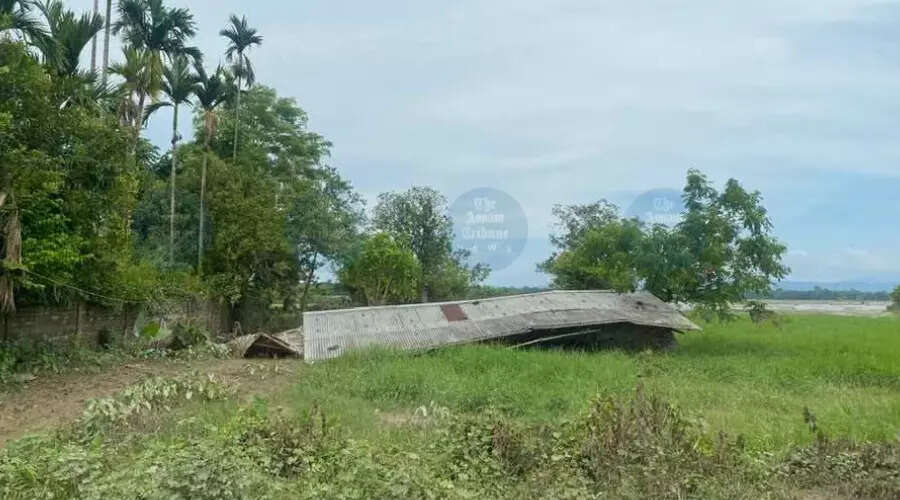
Half-built concrete house, now buried under layers of mud after flood wreaked havoc in Nazira
"We searched for him on Monday, but there was no sign. On Tuesday, still nothing. It was Wednesday when someone spotted his bicycle, and later, his body was found by the roadside. I had asked him to go buy candles," she said, breaking down as she pointed to their half-finished concrete house, now covered in mud.
Her father was a daily wage laborer, and her mother worked tirelessly to realize their dream home. That dream was shattered by the floods.
"I had just graduated and wanted to find a job so my father could rest. He was 52 and had worked hard all his life. We envisioned living together in this new house. That dream is now lost," Pinki expressed.
Widespread Devastation
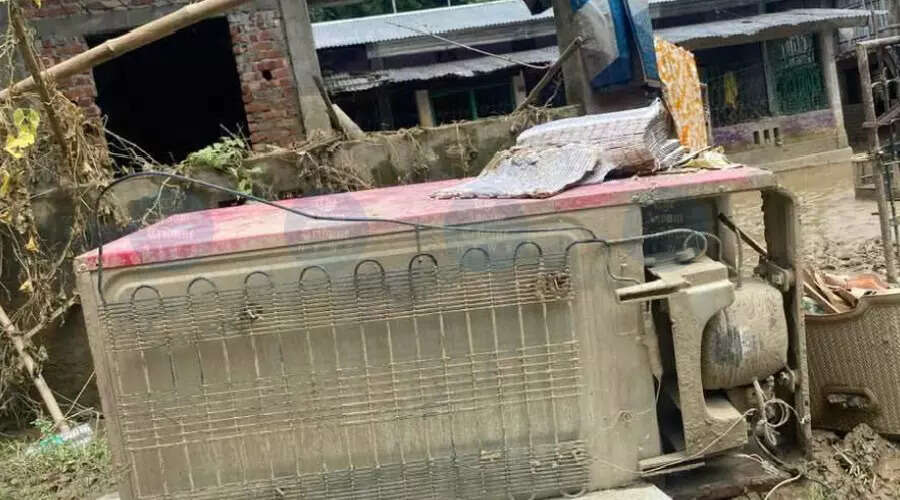
Inside almost every house lie the remnants of televisions, refrigerators, damaged vehicles and furniture, all buried beneath layers of sludge.
Countless families across Upper Assam have faced similar tragedies during the catastrophic floods, losing loved ones and everything they had worked for. Today, Hulang Katoni resembles a war-torn area after the wrath of the Dikhow River.
Eighty-two-year-old Basanta Dutta, a lifelong resident of Hulang Katoni, was unprepared for the scale of this disaster.
"I lost 26 sacks of paddy. We couldn't save anything. At least my family survived," he said.
Dutta noted that he had never seen floods of this magnitude in Nazira. Reflecting on the 1950 earthquake, he stated that Hulang Katoni had never experienced flooding like this before.
"I remember the 1950 earthquake, but we had never seen flooding like this since then. Initially, we thought it was just the usual water entering the fields," he recalled.
Heartbreaking Stories of Loss
A similar tragedy unfolded in Rajapul Duwara village. Navajyoti Duwara, known as Deep, lost both his younger sister and aunt in the floods.
He still struggles to comprehend how to rebuild his life. What haunts him is his sister Nisha's last desperate cry: "Dada, muk bosa."
"By evening, a little water had entered the paddy field in front of our house. That wasn't unusual; it had happened before. We even went fishing in the field that Sunday. But as the rain intensified, we brought my aunt over to our house," he recounted.
The disaster struck at 7 pm when a sudden rush of water flooded their home.
He described how the floodwaters rose so quickly that there was hardly any time to react. With roads submerged, the family decided to leave their belongings behind and seek refuge on the roof of a neighboring house.
While his aunt and sister moved ahead, Navajyoti stayed back to secure the house. Moments later, he heard his aunt scream as she slipped into the raging waters.
"My sister tried to save her, but she too was swept away," he recalled.
Without hesitation, Navajyoti, a swimmer, jumped into the turbulent waters.
"I saw my sister clinging to a pole, crying for help. I tried to reach her, but the current was too strong. I couldn't get to her. Right before my eyes, both my sister and aunt vanished into the floodwaters," he said.
A Desperate Search for Help

A file image of Navajyoti's aunt and his sister Nisha
A week later, Navajyoti still grapples with the trauma of that night.
He explained that they managed to climb onto the roof of a nearby house and repeatedly called for help from the district administration. They were instructed to share their live location, which they did multiple times, but no rescue came.
The next day, they saw a helicopter overhead and waved a red cloth, but it flew past.
"Forget rescuing my sister and aunt. Not even a drop of drinking water reached us," he said, tears welling in his eyes.
Recalling the ordeal, he mentioned that rainwater sustained them on the first day. When the rain ceased, they had no choice but to drink muddy floodwater.
"There was a one-year-old child with us. The baby cried constantly from hunger and thirst, and we had to feed the child the same muddy water," he said.
Navajyoti, Basanta, and Pinki's experiences are just a few among the many heartbreaking stories emerging from Nazira, where the floods have left a path of unimaginable devastation.