
Devastating EF-4 Tornado Strikes Enid, Oklahoma, Causing Significant Damage
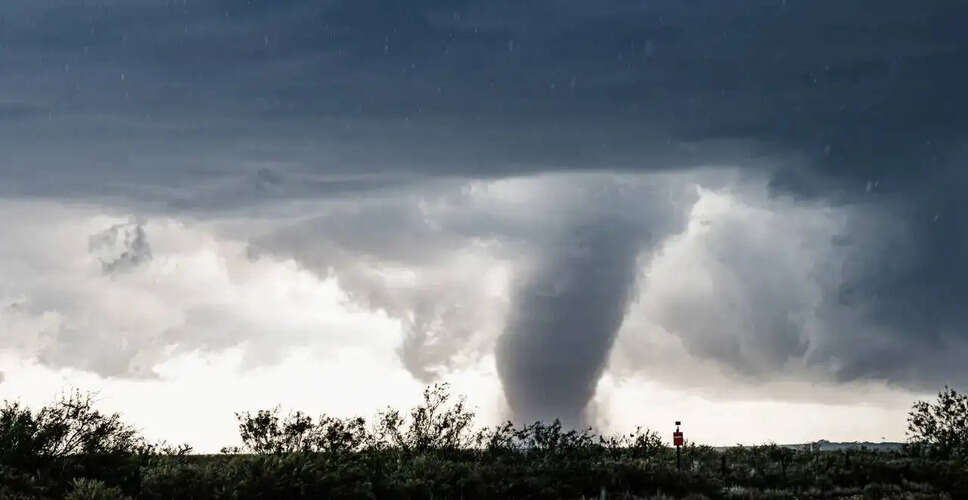

Overview of the Tornado Incident
A powerful tornado struck Enid, Oklahoma, on Thursday night, receiving an EF-4 classification, indicating one of the highest levels of tornado intensity. The storm resulted in injuries to at least 10 individuals and caused damage to approximately 40 homes. Aerial images captured the following morning revealed extensive destruction across entire neighborhoods.
Details of the Tornado's Path
What Occurred in Enid
The tornado made landfall south of Enid at around 8:13 p.m. on Thursday, traversing Vance Air Force Base and Highway 81. By 8:25 p.m., officials had declared a tornado emergency. Aerial footage from Sky 5 the next day illustrated the devastation, showcasing blocks of homes completely obliterated.
Official Confirmation of Tornado Rating
BREAKING: Enid, Oklahoma tornado rated as a EF-4. - news conference pic.twitter.com/PWyyDgdDL7
— AZ Intel (@AZ_Intel_) April 24, 2026
Rick Smith from the National Weather Service confirmed the EF-4 rating, marking the first occurrence of such a powerful tornado in Garfield County since April 26, 1991. This also represents the first EF-4 tornado to impact Oklahoma since Barnsdall in 2024.
Understanding EF-4 Tornadoes
What Constitutes an EF-4 Tornado?
Tornadoes are rated on a scale from 0 to 5, with EF-4 being near the top of this scale, just below the most severe classification. The "EF" stands for Enhanced Fujita, a system used by meteorologists to assess tornado damage post-event. EF-0 tornadoes cause minimal damage, while EF-5 tornadoes result in complete destruction. EF-4 tornadoes are categorized as "violent," with wind speeds ranging from 166 to 200 miles per hour.
Impact of EF-4 Tornadoes
What Damage Can an EF-4 Cause?
At such high wind speeds, the level of destruction is immense. Sturdy brick homes can be completely flattened, vehicles can be tossed around effortlessly, and trees can be uprooted entirely. Everyday items, including wooden planks and metal pipes, can become lethal projectiles, traveling hundreds of meters through the air. Typically, an EF-4 tornado creates a path about 27 miles long and nearly 610 yards wide, nearly double the size of an EF-3 tornado. These storms are not brief; they can remain on the ground for over an hour.
Rarity of EF-4 Tornadoes
How Common Are They?
EF-4 tornadoes are quite rare, constituting only about 2% of all tornadoes reported in the United States. Most tornadoes encountered are EF-0 or EF-1, which, while dangerous, are often survivable in a sturdy structure. An EF-4 tornado presents a significantly different threat. These tornadoes only develop within supercell thunderstorms, which are rotating storm systems characterized by specific and hazardous interactions between updrafts and downdrafts. Even among supercells, those that produce an EF-4 tornado are uncommon.