
Denmark's Election Results Leave Prime Minister's Future Uncertain
Election Outcome and Political Landscape
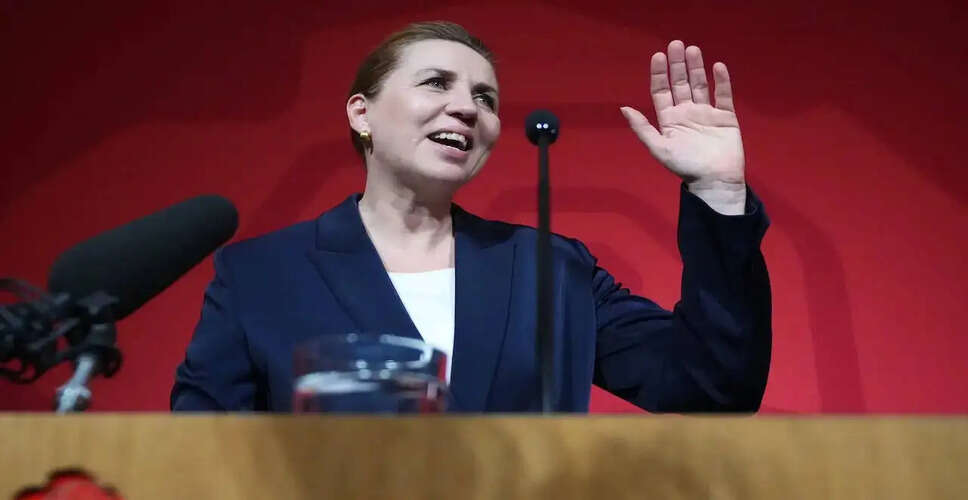
The recent election in Denmark concluded without a clear winner, casting doubt on the future of Prime Minister Mette Frederiksen. The campaign primarily revolved around everyday issues rather than her management of the situation regarding US President Donald Trump's interest in Greenland. Preliminary results indicated that Frederiksen's center-left Social Democrats experienced a decline in support compared to the previous election in 2022, alongside her coalition partners. Neither the left nor right factions secured a parliamentary majority, positioning Lars Lokke Rasmussen, the seasoned Foreign Minister and former prime minister, as a potential kingmaker. His centrist Moderate party holds 14 seats in the 179-member parliament, giving them significant influence over Frederiksen's chances of a third term leading the EU and NATO member state.
Frederiksen expressed her willingness to continue as prime minister, emphasizing the need for a stable and capable government amid global uncertainties. She stated, “The world is unsettled. There are strong winds around us.”
Calls for Unity and Coalition Building
Rasmussen urged political rivals from both sides to soften their stances and collaborate for the nation's benefit. He highlighted Denmark's small population of 6 million amidst global turmoil, including conflicts in Iran and Ukraine, advocating for unity rather than division.
However, Defense Minister Troels Lund Poulsen, the leading center-right contender, made it clear that his Liberal party would not partner with Frederiksen's Social Democrats again. Despite the Social Democrats remaining the largest party with 21.9% of the vote, this figure fell short of the 27.5% they achieved in 2022.
Frederiksen's Early Election Call and Campaign Challenges
Frederiksen initiated the election in February, hoping her strong stance against Trump's Greenland ambitions would resonate with voters. However, rising living costs and issues like pensions and potential wealth taxes became focal points during the campaign, leading to a decline in her support.
Denmark's proportional representation system typically results in coalition governments, and Frederiksen's administration was notable for bridging the left-right divide. Lawmaker Morten Klessen acknowledged the government's challenges, particularly regarding the focus on Ukraine, which may have impacted domestic voter support.
Greenland's Role in the Election
Despite the significant attention Greenland received from the government recently, it was not a major topic during the election. There is a consensus on Greenland's status within the kingdom, and Frederiksen previously warned that a US takeover would jeopardize NATO's integrity. Following Trump's withdrawal of threats regarding tariffs, discussions between the US, Denmark, and Greenland about Arctic security have resumed.
Denmark's parliament, the Folketing, consists of 175 seats for Danish lawmakers, with two each allocated to representatives from Greenland and the Faroe Islands. Over 4.3 million citizens were eligible to cast their votes in this election.