
Demographic Shifts in Karbi Anglong: A Historical Perspective
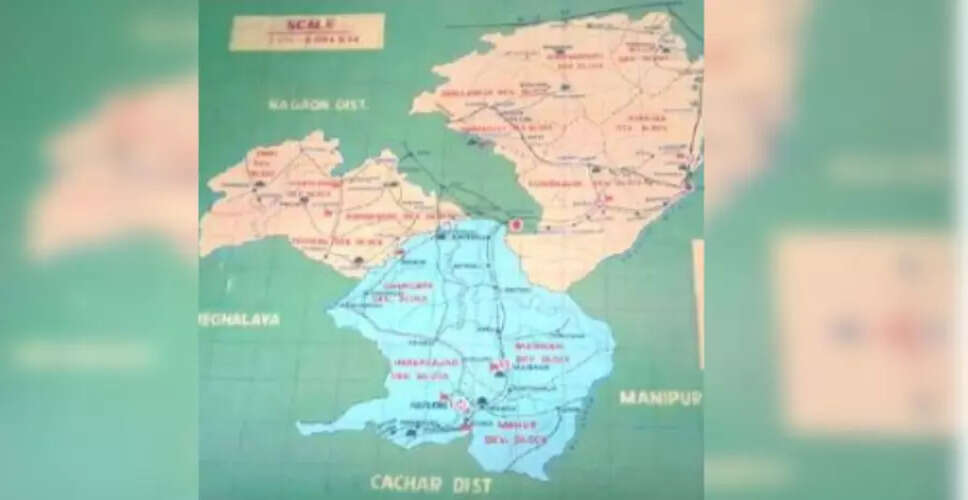

Transformations in Karbi Anglong's Demographics
Historical census data indicate that population growth experienced a steep acceleration after the 1950s.
Diphu, May 17: Since the first elections post-independence in 1952, the demographic profile of Karbi Anglong and West Karbi Anglong has significantly evolved due to various factors including migration, administrative changes, urban growth, and economic progress.
This evolution has notably altered the ethnic makeup of these hill districts.
Once primarily inhabited by indigenous tribes such as the Karbis, Bodos, Dimasas, Kukis, Hmars, and Rengma Nagas, the area now showcases a diverse demographic landscape.
Local organizations and researchers emphasize the impact of these demographic changes on land ownership, electoral politics, language use, and inter-ethnic relations across the two autonomous districts.
Historical census records reveal a dramatic increase in population growth post-1950s, with the population of the undivided Karbi Anglong district rising from around 126,000 in 1951 to over 956,000 by 2011.
This demographic transformation is largely due to significant migration from Assam's plains, Bihar, Bengal, and neighboring areas, particularly following improvements in road infrastructure, resource extraction, railway expansion, and agricultural initiatives.
The development of settlements near urban hubs like Diphu, Bokajan, Howraghat, and Dokmoka, along with industrial activities in the Bokajan cement region, has drawn in non-tribal populations.
Scholars have noted a significant demographic transition during the 1970s and 1980s, with population growth rates in these hill districts surpassing state averages. Census data indicates particularly rapid growth between 1961 and 1991.
The formation of the Karbi Anglong Autonomous Council under the Sixth Schedule aimed to protect tribal identity and land rights.
However, indigenous groups have raised concerns about encroachments on tribal lands, grazing areas, and protected zones by migrants from outside communities.
In recent years, demographic issues have increasingly influenced political discussions in the hill districts. Protests over land rights and settlement issues intensified in West Karbi Anglong in 2025, leading to ethnic tensions and internet shutdowns in the area.
Political analysts suggest that the changing population dynamics are altering electoral landscapes. The 2023 delimitation process improved Scheduled Tribe representation in the autonomous districts and modified constituency boundaries in West Karbi Anglong.
Despite these demographic changes, tribal communities still represent a significant portion of the population. According to the 2011 census, Scheduled Tribes made up over 50 percent of the district's inhabitants.
Nonetheless, many indigenous groups worry that ongoing migration and land pressures could marginalize them in certain regions.
Experts argue that the autonomous administration faces the challenge of balancing constitutional protections for indigenous populations with the demands of economic growth and social harmony in an increasingly diverse society.
As Karbi Anglong and West Karbi Anglong move forward in the 21st century, demographic changes will continue to play a crucial role in shaping the region's political dynamics, community identities, and future development paths.